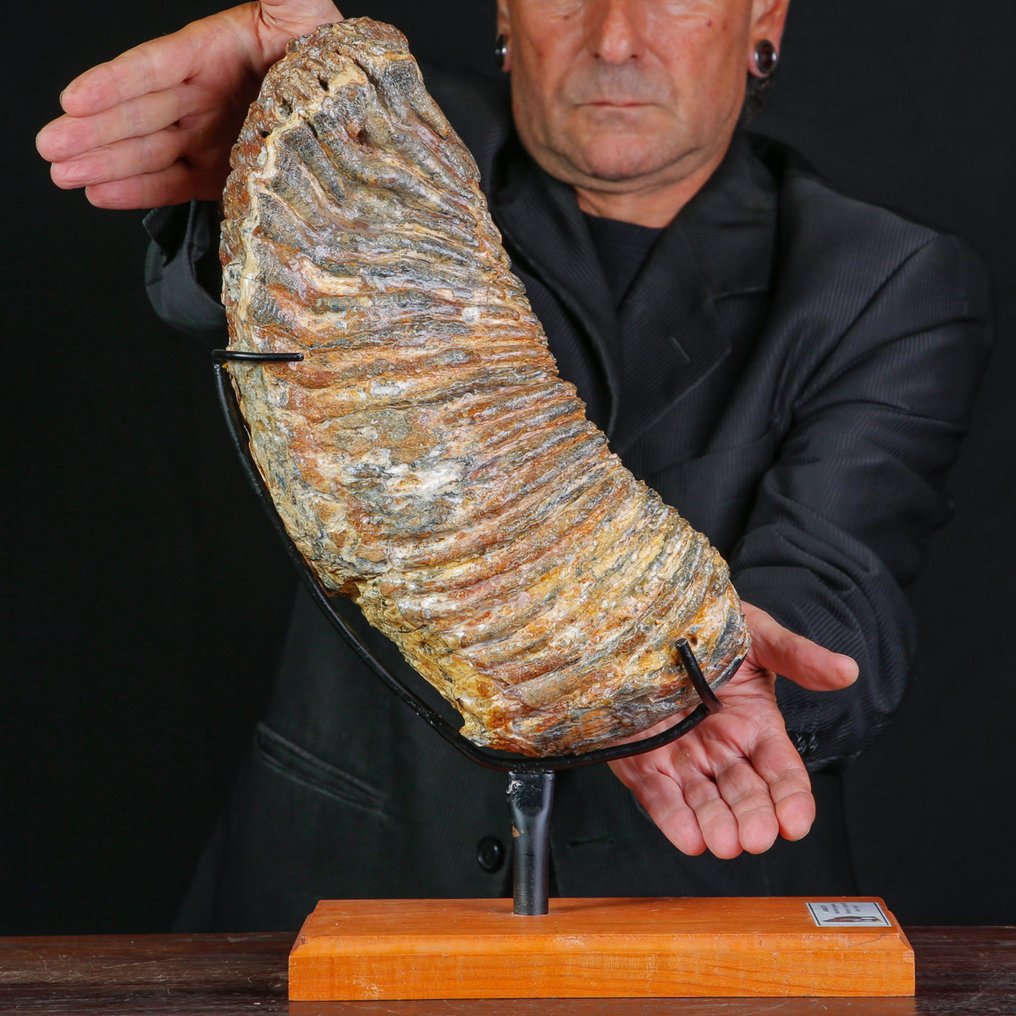
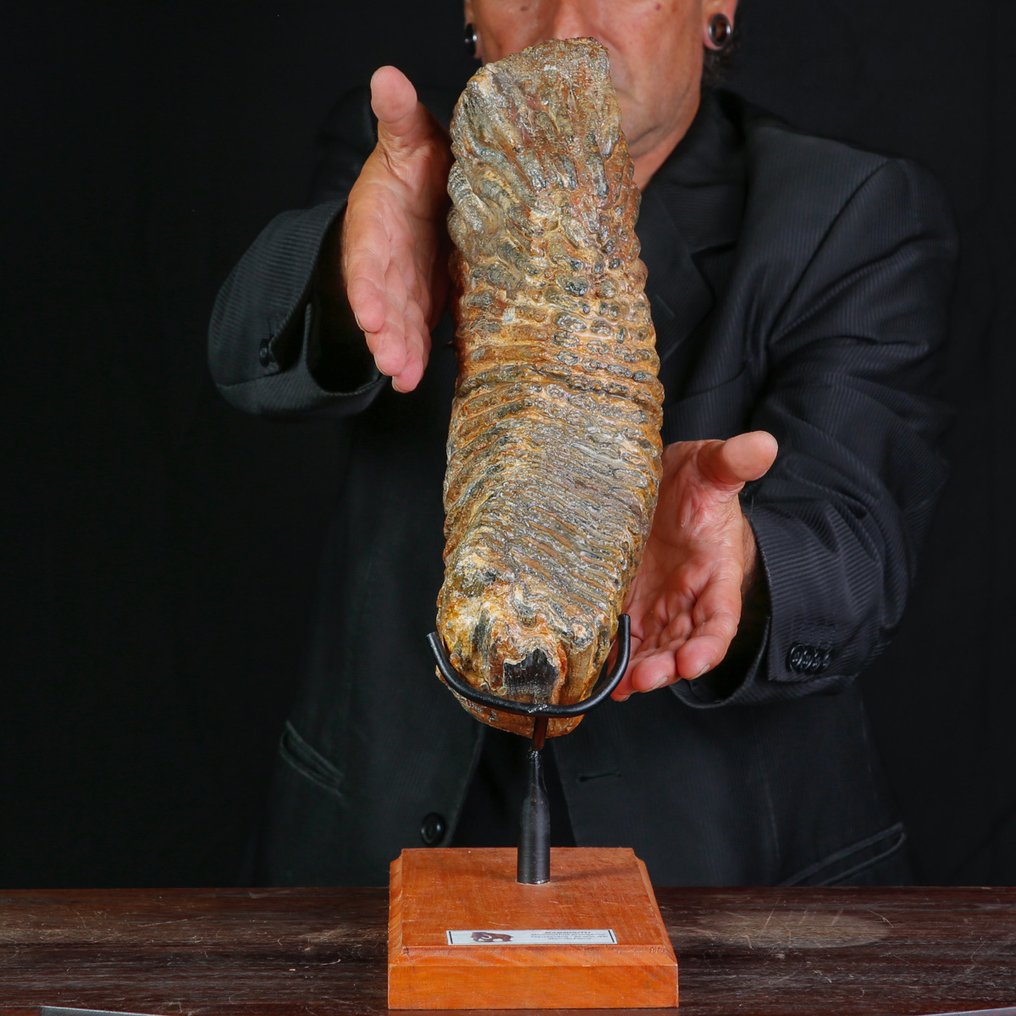
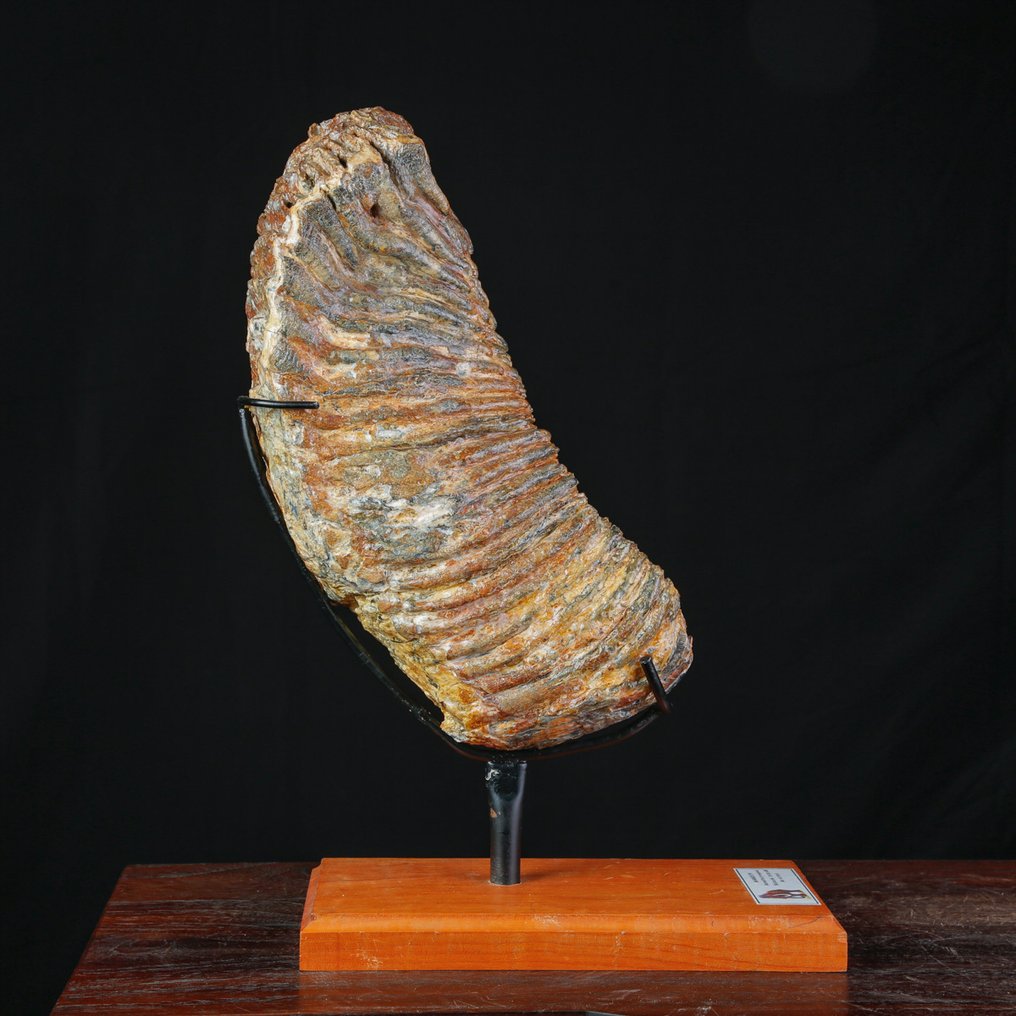
Fossil molar of Mammuthus primigenius - Pleistocene epoch. - Fossil tooth - Woolly Mammoth "Mammuthus Primigenius" - 430 mm - 240 mm


Opens 22 December
Starting bid
€ 1
Add to your favourites to get an alert when the auction starts.

Catawiki Buyer Protection
Your payment’s safe with us until you receive your object.View details
Trustpilot 4.4 | 122986 reviews
Rated Excellent on Trustpilot.
Description from the seller
This extraordinary molar belongs to Mammuthus primigenius, commonly known as the woolly mammoth, an iconic species of the Pleistocene (about 400,000 to 10,000 years ago). These giant mammals were perfectly adapted to the cold climates of the Eurasian and North American steppe-tundra, as evidenced by their thick fur coat, layers of subcutaneous fat, and specialized dentition.
The molar reflects the extraordinary adaptive capabilities of the Woolly Mammoth. The multiple, thin, and parallel dental lamellae were designed to grind and crush tough, fibrous plants typical of the cold and arid ecosystems of the Ice Age. This molar features a high number of lamellae, indicating a highly abrasive diet.
In an adult animal, probably in full reproductive age, the fossil shows excellent preservation, a testament to long-term fossilization that occurred under stable geological conditions.
Mounted on a wood and metal support, this artifact is perfectly suited for exhibitions in private collections. The Mammuthus Primigenius is one of the best-known prehistoric animals thanks to numerous frozen discoveries in Siberian permafrost.
Seller's Story
The Mineral Art Gallery offers minerals, fossils, shells and natural elements.
Born in Italy in 2017, today she collaborates with international galleries and collectors, she is a direct importer of large minerals and naturalistic collectible elements; deals with the processing to insert them inside the living space. A section of the gallery was dedicated to the Wunderkammer, "chamber of wonders or cabinet of curiosities" in which Mirabilia elements are presented: naturalia and italiania, a union between "the present is the past".
All lots are shipped via DHL Express and Fercam couriers, with insured parcel and tracking.
Translated by Google TranslateThis extraordinary molar belongs to Mammuthus primigenius, commonly known as the woolly mammoth, an iconic species of the Pleistocene (about 400,000 to 10,000 years ago). These giant mammals were perfectly adapted to the cold climates of the Eurasian and North American steppe-tundra, as evidenced by their thick fur coat, layers of subcutaneous fat, and specialized dentition.
The molar reflects the extraordinary adaptive capabilities of the Woolly Mammoth. The multiple, thin, and parallel dental lamellae were designed to grind and crush tough, fibrous plants typical of the cold and arid ecosystems of the Ice Age. This molar features a high number of lamellae, indicating a highly abrasive diet.
In an adult animal, probably in full reproductive age, the fossil shows excellent preservation, a testament to long-term fossilization that occurred under stable geological conditions.
Mounted on a wood and metal support, this artifact is perfectly suited for exhibitions in private collections. The Mammuthus Primigenius is one of the best-known prehistoric animals thanks to numerous frozen discoveries in Siberian permafrost.
Seller's Story
The Mineral Art Gallery offers minerals, fossils, shells and natural elements.
Born in Italy in 2017, today she collaborates with international galleries and collectors, she is a direct importer of large minerals and naturalistic collectible elements; deals with the processing to insert them inside the living space. A section of the gallery was dedicated to the Wunderkammer, "chamber of wonders or cabinet of curiosities" in which Mirabilia elements are presented: naturalia and italiania, a union between "the present is the past".
All lots are shipped via DHL Express and Fercam couriers, with insured parcel and tracking.
Translated by Google TranslateDetails
Specimen
Fossil molar of Mammuthus primigenius - Pleistocene epoch.
Scientific name
Woolly Mammoth "Mammuthus Primigenius"
Country of Origin
Siberia
Geological Period
Quaternary, Pleistocene (2.58 - 0.0117 million years)
Condition
Natural
Treatment
Conserved
Weight
6686 g
Height
430 mm
Width
240 mm
Depth
100 mm
Sold by