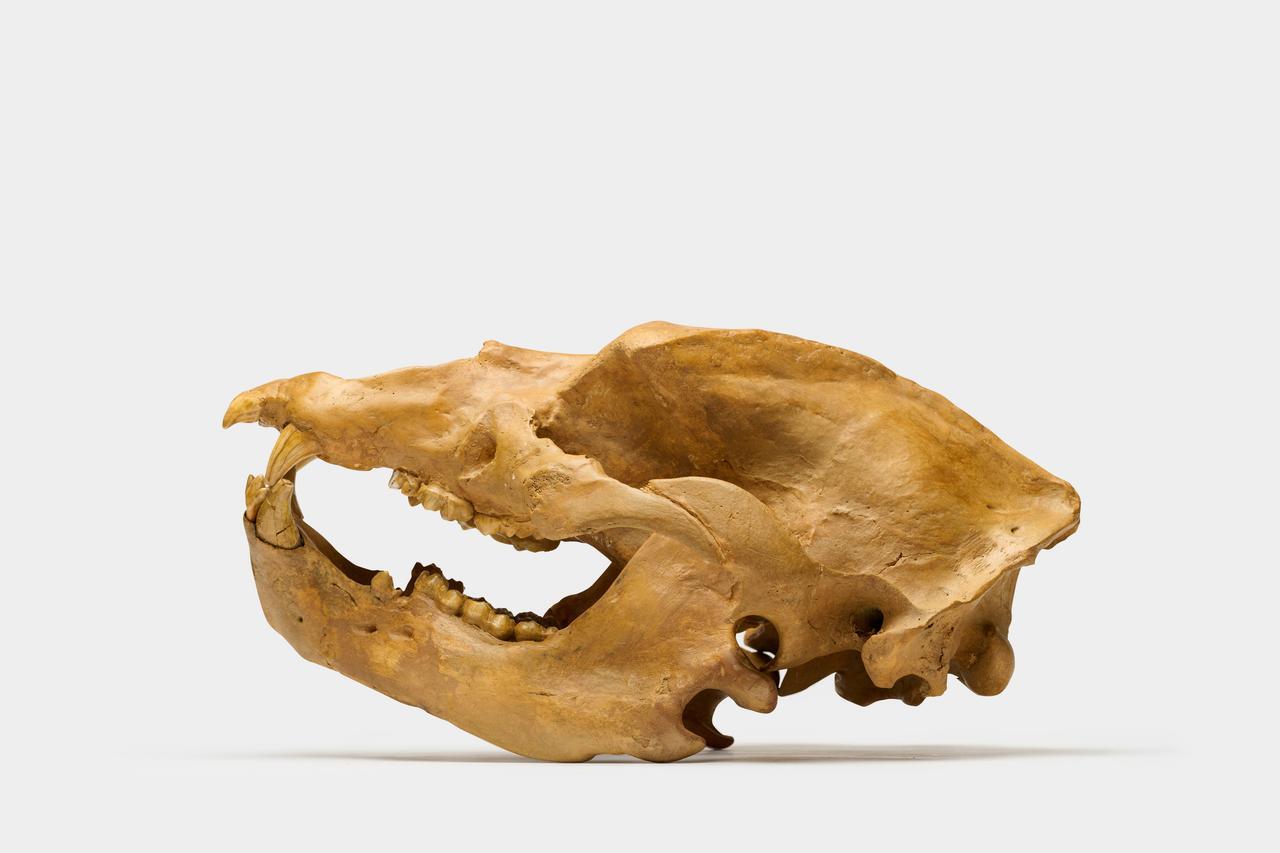
The Woolly Mammoth – A Giant of the Ice Age. Fossil humerus of Mammuthus primigenius – Pleistocene (~50,000 years) - Height: 103 cm - Width: 33.5 cm- 23 g


Opens 11:00
Starting bid
€ 1
Add to your favourites to get an alert when the auction starts.

Catawiki Buyer Protection
Your payment’s safe with us until you receive your object.View details
Trustpilot 4.4 | 123053 reviews
Rated Excellent on Trustpilot.
Description from the seller
The woolly mammoth – a giant of the Ice Age.
A monumental specimen of a fossil humerus belonging to an adult woolly mammoth, splendidly preserved in permafrost for approximately 50,000 years. The bone, with impressive proportions, retains the entire epiphyseal structure and the original cortical surface, with slight mineral concretions and shades ranging from brown to ochre yellow. The presence of natural patinas and iron impregnations testifies to the slow fossilization process in a cold, stable environment. It is mounted on an artisanal wooden base with a discreet metal support and a descriptive panel, ready for museum or collection display. The Mammuthus primigenius lived during the late Pleistocene (between 400,000 and 4,000 years ago) and is one of the most iconic species of the Ice Age megafauna. Covered with a thick coat of fur, with spiral tusks up to 4 meters long and a thick layer of subcutaneous fat, the woolly mammoth was perfectly adapted to the harsh climates of the Arctic steppe, from northern Europe to Siberia and North America. This humerus testifies to the power and structural support of its forelimb, essential for supporting the skull and the enormous tusks. Remains of mammoths like this humerus have been exceptionally preserved in Siberian permafrost, a permanently frozen ground that has acted as a natural 'time capsule.' Thanks to these conditions, many fossils are not only mineralized but still retain organic traces, bone collagen, and even residual DNA, which have allowed scientists to study the genetics and biology of this extinct species. Mammuthus primigenius gradually went extinct between 10,000 and 4,000 years ago, likely due to climate change and human pressure. The last populations survived in isolation on Wrangel Island in the Arctic Sea until the Bronze Age. Today, fossil remains like this humerus are direct testimonies of the last great glaciation and are valuable not only for museums but also for collectors seeking authentic pieces of prehistoric megafauna. Complete mammoth bones of this size, intact and with original patina, are rare. This humerus, due to its grandeur, authenticity, and perfect presentation, is ideal for: paleontology museum collections; high-level curiosity cabinets; educational or artistic exhibitions related to the Pleistocene.
Seller's Story
The Mineral Art Gallery offers minerals, fossils, shells and natural elements.
Born in Italy in 2017, today she collaborates with international galleries and collectors, she is a direct importer of large minerals and naturalistic collectible elements; deals with the processing to insert them inside the living space. A section of the gallery was dedicated to the Wunderkammer, "chamber of wonders or cabinet of curiosities" in which Mirabilia elements are presented: naturalia and italiania, a union between "the present is the past".
All lots are shipped via DHL Express and Fercam couriers, with insured parcel and tracking.
Translated by Google TranslateThe woolly mammoth – a giant of the Ice Age.
A monumental specimen of a fossil humerus belonging to an adult woolly mammoth, splendidly preserved in permafrost for approximately 50,000 years. The bone, with impressive proportions, retains the entire epiphyseal structure and the original cortical surface, with slight mineral concretions and shades ranging from brown to ochre yellow. The presence of natural patinas and iron impregnations testifies to the slow fossilization process in a cold, stable environment. It is mounted on an artisanal wooden base with a discreet metal support and a descriptive panel, ready for museum or collection display. The Mammuthus primigenius lived during the late Pleistocene (between 400,000 and 4,000 years ago) and is one of the most iconic species of the Ice Age megafauna. Covered with a thick coat of fur, with spiral tusks up to 4 meters long and a thick layer of subcutaneous fat, the woolly mammoth was perfectly adapted to the harsh climates of the Arctic steppe, from northern Europe to Siberia and North America. This humerus testifies to the power and structural support of its forelimb, essential for supporting the skull and the enormous tusks. Remains of mammoths like this humerus have been exceptionally preserved in Siberian permafrost, a permanently frozen ground that has acted as a natural 'time capsule.' Thanks to these conditions, many fossils are not only mineralized but still retain organic traces, bone collagen, and even residual DNA, which have allowed scientists to study the genetics and biology of this extinct species. Mammuthus primigenius gradually went extinct between 10,000 and 4,000 years ago, likely due to climate change and human pressure. The last populations survived in isolation on Wrangel Island in the Arctic Sea until the Bronze Age. Today, fossil remains like this humerus are direct testimonies of the last great glaciation and are valuable not only for museums but also for collectors seeking authentic pieces of prehistoric megafauna. Complete mammoth bones of this size, intact and with original patina, are rare. This humerus, due to its grandeur, authenticity, and perfect presentation, is ideal for: paleontology museum collections; high-level curiosity cabinets; educational or artistic exhibitions related to the Pleistocene.
Seller's Story
The Mineral Art Gallery offers minerals, fossils, shells and natural elements.
Born in Italy in 2017, today she collaborates with international galleries and collectors, she is a direct importer of large minerals and naturalistic collectible elements; deals with the processing to insert them inside the living space. A section of the gallery was dedicated to the Wunderkammer, "chamber of wonders or cabinet of curiosities" in which Mirabilia elements are presented: naturalia and italiania, a union between "the present is the past".
All lots are shipped via DHL Express and Fercam couriers, with insured parcel and tracking.
Translated by Google TranslateDetails
Main Mineral
The Woolly Mammoth – A Giant of the Ice Age.
Mineral Form
Fossil humerus of Mammuthus primigenius – Pleistocene (~50,000 years)
Weight
23 g
Country of Origin
Origin: Eurasian permafrost
Height
103 cm
Width
33.5 cm
Depth
28.5 cm
Sold by