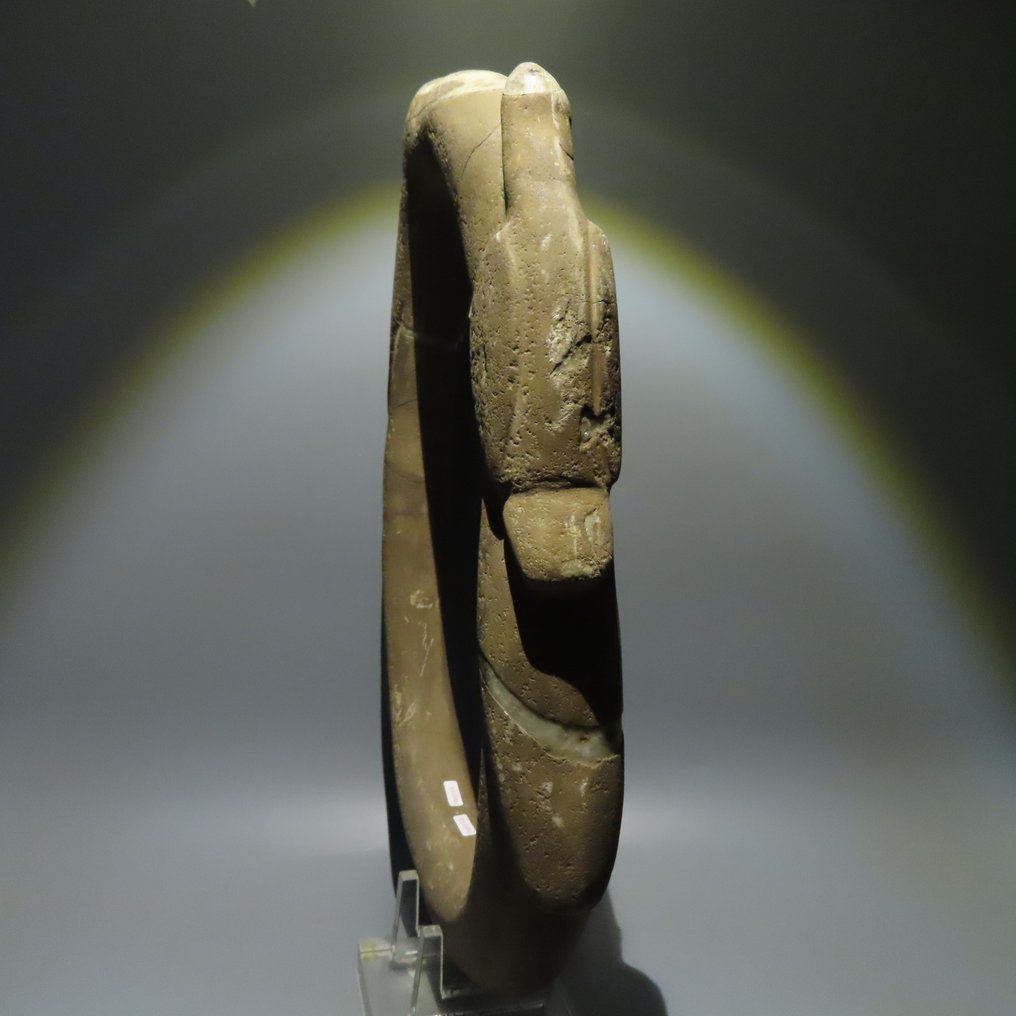
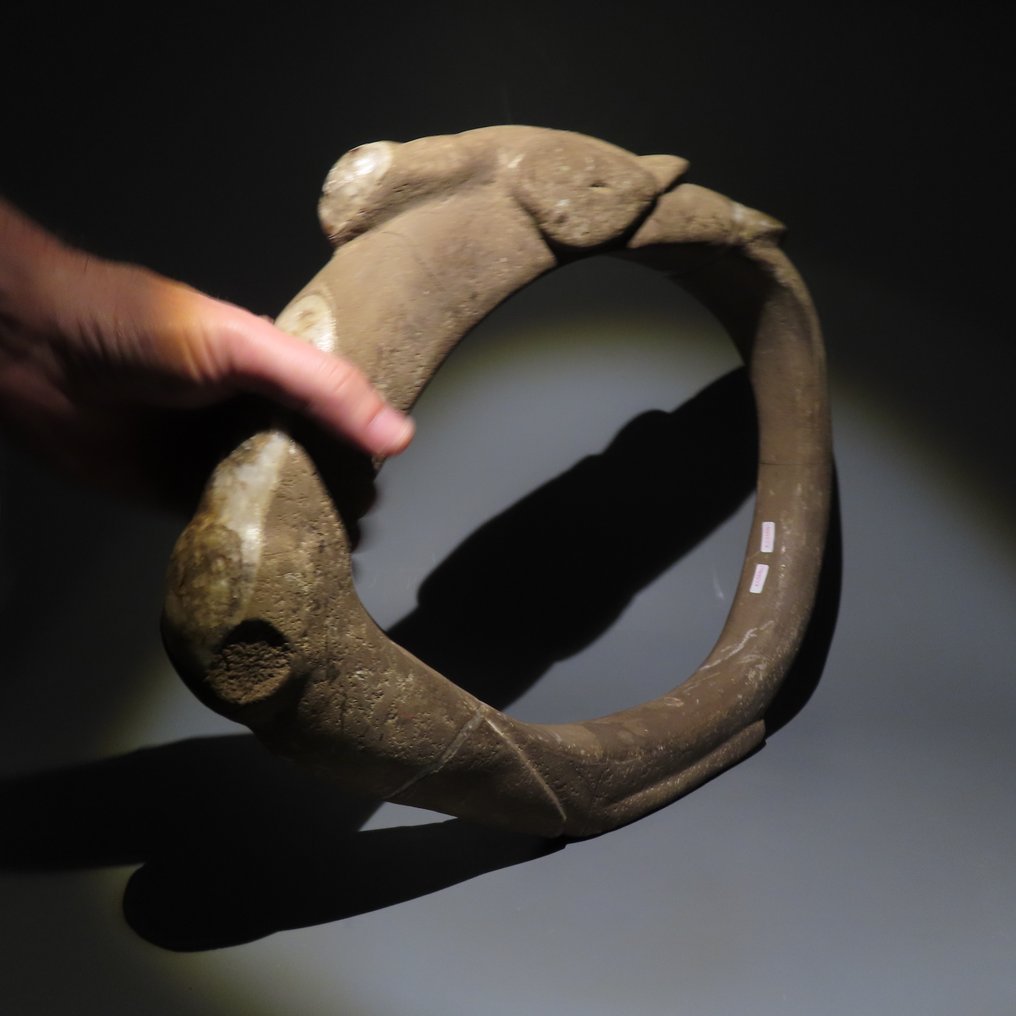
Taino Stone Important and big Figurative Yoke. 47.5 cm H. c. 500 - 1500 A.D. Spanish Import License.


02
days
21
hours
31
minutes
42
seconds
Current bid
€ 100
Reserve price not met

Expert
Selected by Ruth Garrido Vila
Directed the Ifergan Collection Museum, specialising in Phoenician and Mediterranean archaeology.
Estimate € 6,600 - € 7,300
20 other people are watching this object
 Bidder 9943 Bidder 9943 | €100 | |
|---|---|---|
 Bidder 2749 Bidder 2749 | €5 | |
| Bidder 2749 | €4 | |
Catawiki Buyer Protection
Your payment’s safe with us until you receive your object.View details
Trustpilot 4.4 | 123779 reviews
Rated Excellent on Trustpilot.
Description from the seller
Figurative Yoke
CULTURE: Taino
PERIOD: c. 500 - 1500 A.D.
MATERIAL: Stone
DIMENSIONS: 47.5 cm height and 34 cm length.
PROVENANCE:
- Private collection, Jacques-André Cronier (1956–2019), Mezièrs-le-Cléry, France.
- Inherited from previous owners.
- Art Market, France, 2023.
CONDITION: Good condition.
DESCRIPTION:
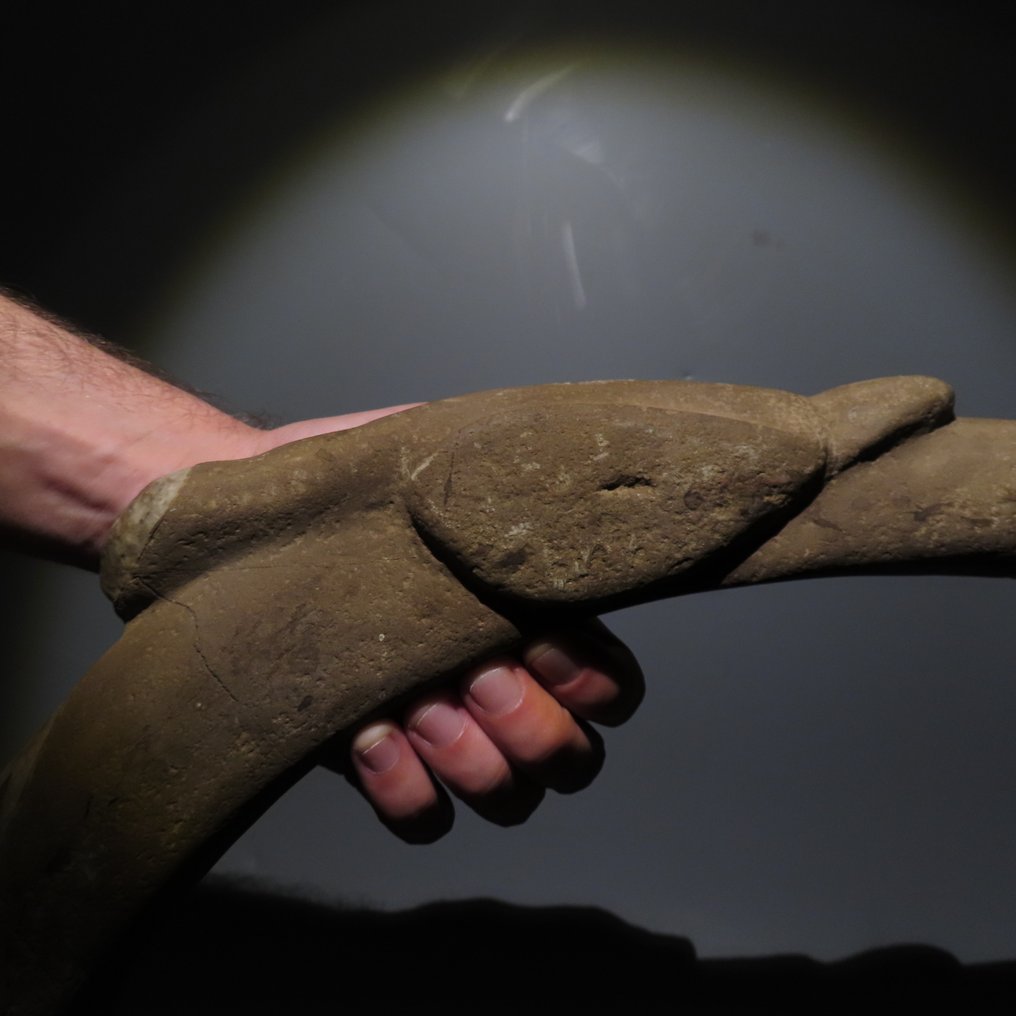
Taino yoke carved in stone with figurative decoration worked in relief. It takes the form of a flattened hoop with a half-round section, and widens towards the front to house a human figure of supernatural aspect. The figure is seated on crossed legs, with his arms bent over his belly and his hands pointing downwards. The head, disproportionately large for its symbolic importance, shows a flattened profile, horizontal oblong, and a face with large circular eyes and open almond-shaped mouth, characteristic features of Taino figuration. The nose is triangular and short, and the lips are indicated by two incised lines. The remains of a pectoral necklace can be seen on the chest, but no other ornaments can be seen on the figure.
By the type of figuration it could be a zemí¸ sculptural representation of a deity or spirit that, in this case, adorns a stone yoke of the type that was given as a trophy to the winner of the ball game (fig. 1). The shape of this prize reproduces that of the wooden yoke that protected the hips of the players.
The main artistic manifestation of the Tainos are the zemis, sculptures that represented the gods and ancestors and housed their spiritual strength. The zemis could be free-standing sculptures, form part of all kinds of objects or be used as part of personal adornment. The Tainos also made carved ritual seats (duhos), triangular-shaped stones housing human or animal representations, of probable religious or magical function, and sumptuary axe heads made of polished stone.
Notes:
- The piece includes authenticity certificate.
- The piece includes Spanish Export License.
- The seller guarantees that he acquired this piece according to all national and international laws related to the ownership of cultural property. Provenance statement seen by Catawiki.
#ExclusiveCabinetofCuriosities
Seller's Story
Gallery of Ancient Art - Archeology based in Barcelona with more than fifteen years of experience. Specialized in classical art, Egyptian art, Asian art and pre-Columbian art. It guarantees the authenticity of all its pieces. It participates in the most important art fairs in Spain, such as Feriarte, as well as in fairs abroad, BRAFA, Parcours des Mondes, Cultures Brussels.
All the pieces are sent with an Export Permit issued by the Spanish Ministry of Culture.
We are quick to ship via DHL Express or Direct Art Transport.
Translated by Google TranslateFigurative Yoke
CULTURE: Taino
PERIOD: c. 500 - 1500 A.D.
MATERIAL: Stone
DIMENSIONS: 47.5 cm height and 34 cm length.
PROVENANCE:
- Private collection, Jacques-André Cronier (1956–2019), Mezièrs-le-Cléry, France.
- Inherited from previous owners.
- Art Market, France, 2023.
CONDITION: Good condition.
DESCRIPTION:
Taino yoke carved in stone with figurative decoration worked in relief. It takes the form of a flattened hoop with a half-round section, and widens towards the front to house a human figure of supernatural aspect. The figure is seated on crossed legs, with his arms bent over his belly and his hands pointing downwards. The head, disproportionately large for its symbolic importance, shows a flattened profile, horizontal oblong, and a face with large circular eyes and open almond-shaped mouth, characteristic features of Taino figuration. The nose is triangular and short, and the lips are indicated by two incised lines. The remains of a pectoral necklace can be seen on the chest, but no other ornaments can be seen on the figure.
By the type of figuration it could be a zemí¸ sculptural representation of a deity or spirit that, in this case, adorns a stone yoke of the type that was given as a trophy to the winner of the ball game (fig. 1). The shape of this prize reproduces that of the wooden yoke that protected the hips of the players.
The main artistic manifestation of the Tainos are the zemis, sculptures that represented the gods and ancestors and housed their spiritual strength. The zemis could be free-standing sculptures, form part of all kinds of objects or be used as part of personal adornment. The Tainos also made carved ritual seats (duhos), triangular-shaped stones housing human or animal representations, of probable religious or magical function, and sumptuary axe heads made of polished stone.
Notes:
- The piece includes authenticity certificate.
- The piece includes Spanish Export License.
- The seller guarantees that he acquired this piece according to all national and international laws related to the ownership of cultural property. Provenance statement seen by Catawiki.
#ExclusiveCabinetofCuriosities
Seller's Story
Gallery of Ancient Art - Archeology based in Barcelona with more than fifteen years of experience. Specialized in classical art, Egyptian art, Asian art and pre-Columbian art. It guarantees the authenticity of all its pieces. It participates in the most important art fairs in Spain, such as Feriarte, as well as in fairs abroad, BRAFA, Parcours des Mondes, Cultures Brussels.
All the pieces are sent with an Export Permit issued by the Spanish Ministry of Culture.
We are quick to ship via DHL Express or Direct Art Transport.
Translated by Google TranslateDetails
Culture
Taino
Century/ Timeframe
c. 500 - 1500 A.D.
Name of object
Important and big Figurative Yoke. 47.5 cm H. c. 500 - 1500 A.D. Spanish Import License.
Acquired from
Private collection
Material
Stone
Condition
Very good
Disclaimer
The seller was informed by Catawiki about documentation requirements and guarantees the following: - the object was legally obtained, - the seller has the right to sell and/or export the object, as relevant, - the seller will provide the necessary provenance information and arrange required documentation and permits/licenses, as applicable and as per local laws, - the seller will notify the buyer of any delays in obtaining permits/licenses. By bidding, you acknowledge that import documentation may be required depending on your country of residence and that obtaining permits/licenses may cause delays in the delivery of your object.
The seller was informed by Catawiki about documentation requirements and guarantees the following: - the object was legally obtained, - the seller has the right to sell and/or export the object, as relevant, - the seller will provide the necessary provenance information and arrange required documentation and permits/licenses, as applicable and as per local laws, - the seller will notify the buyer of any delays in obtaining permits/licenses. By bidding, you acknowledge that import documentation may be required depending on your country of residence and that obtaining permits/licenses may cause delays in the delivery of your object.
