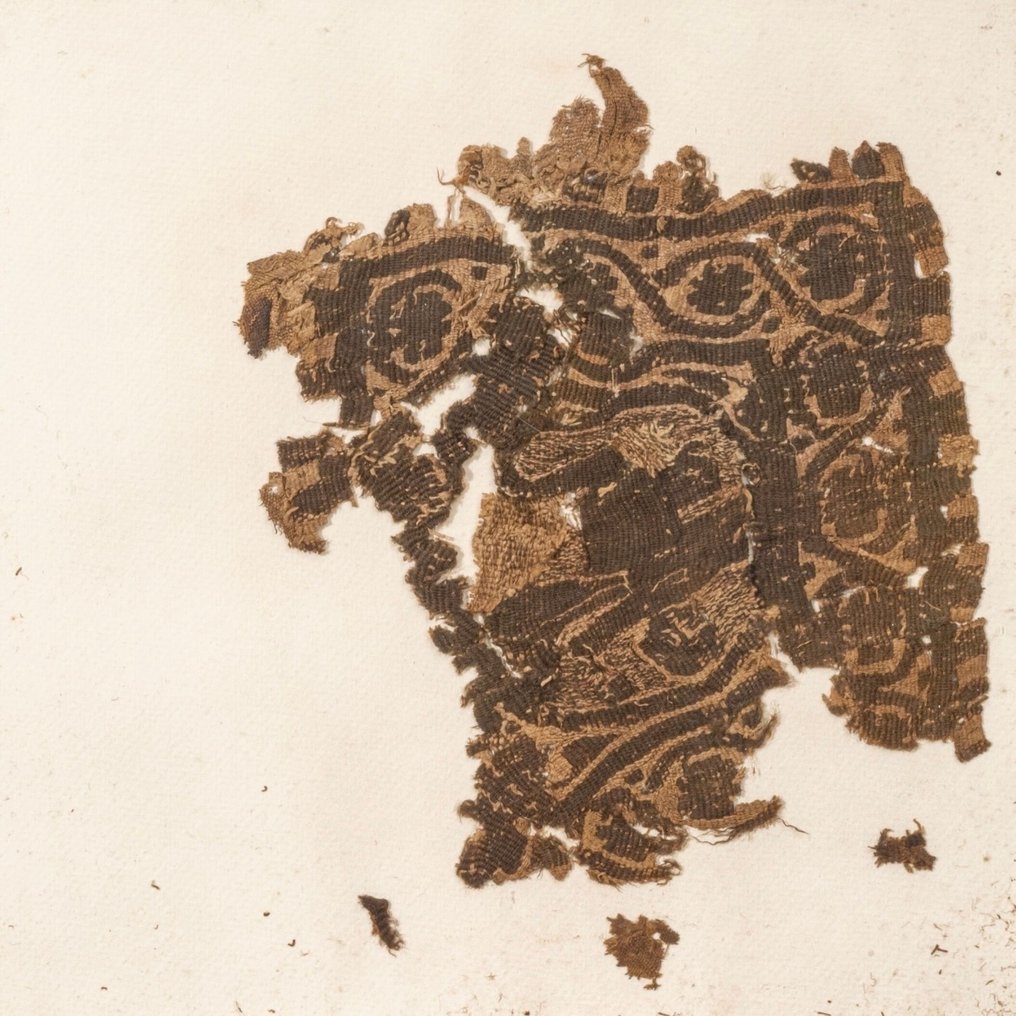
Textile - 30 cm - 30 cm - Coptic Egypt - 3rd–7th AD


03
days
02
hours
46
minutes
55
seconds
Starting bid
€ 1
Reserve price not met

Expert
Selected by Peter Reynaers
Has nearly 30 years’ experience and moderated multiple online art research groups.
Estimate € 300 - € 380
No bids placed
Catawiki Buyer Protection
Your payment’s safe with us until you receive your object.View details
Trustpilot 4.4 | 123294 reviews
Rated Excellent on Trustpilot.
Description from the seller
Coptic textile fragment with zoomorphic decoration.
Egypt, 3rd–7th century AD
Lin and Wool
PROVENANCE: European private collection. Acquired from a French auction house in 2025. Former collection assembled in the second half of the 20th century.
DESCRIPTION :
Beautiful fragment of Coptic linen and wool fabric, featuring a finely woven zoomorphic design within a medallion bordered by interlacing. The motif, typical of textile productions from late antique Egypt, still shows many details despite the losses caused by time. The fibers retain a deep brown coloration along with small mineral inlays, characteristic of textiles from funerary contexts or prolonged burial.
This type of fragment, called a tabula, was originally sewn onto Coptic tunics or incorporated into large decorative panels. Between the 3rd and 7th centuries, these textiles, featuring geometric, vegetal, or animal motifs, were an essential element of Christian Egyptian textile art. Their iconography, often symbolic, was associated with protection, spirituality, and social status.
Very beautiful example of an ancient Coptic textile, framed and generally well preserved despite its fragmentary condition, as is customary for this type of piece.
Coptic textile fragment with zoomorphic decoration.
Egypt, 3rd–7th century AD
Lin and Wool
PROVENANCE: European private collection. Acquired from a French auction house in 2025. Former collection assembled in the second half of the 20th century.
DESCRIPTION :
Beautiful fragment of Coptic linen and wool fabric, featuring a finely woven zoomorphic design within a medallion bordered by interlacing. The motif, typical of textile productions from late antique Egypt, still shows many details despite the losses caused by time. The fibers retain a deep brown coloration along with small mineral inlays, characteristic of textiles from funerary contexts or prolonged burial.
This type of fragment, called a tabula, was originally sewn onto Coptic tunics or incorporated into large decorative panels. Between the 3rd and 7th centuries, these textiles, featuring geometric, vegetal, or animal motifs, were an essential element of Christian Egyptian textile art. Their iconography, often symbolic, was associated with protection, spirituality, and social status.
Very beautiful example of an ancient Coptic textile, framed and generally well preserved despite its fragmentary condition, as is customary for this type of piece.
Details
Era
Before 1400
Title additional information
Coptic Egypt - 3rd–7th AD
Material
Linen, Wool
Country of Origin
Egypt
Style
Antique
Length
30 cm
Width
30 cm
Condition
Good condition - used with small signs of aging & blemishes
Sold by
Disclaimer
The seller was informed by Catawiki about documentation requirements and guarantees the following: - the object was legally obtained, - the seller has the right to sell and/or export the object, as relevant, - the seller will provide the necessary provenance information and arrange required documentation and permits/licenses, as applicable and as per local laws, - the seller will notify the buyer of any delays in obtaining permits/licenses. By bidding, you acknowledge that import documentation may be required depending on your country of residence and that obtaining permits/licenses may cause delays in the delivery of your object.
The seller was informed by Catawiki about documentation requirements and guarantees the following: - the object was legally obtained, - the seller has the right to sell and/or export the object, as relevant, - the seller will provide the necessary provenance information and arrange required documentation and permits/licenses, as applicable and as per local laws, - the seller will notify the buyer of any delays in obtaining permits/licenses. By bidding, you acknowledge that import documentation may be required depending on your country of residence and that obtaining permits/licenses may cause delays in the delivery of your object.
