Post-medieval Stoneware Bellarmine Jug (Baardmankruikje - Bartmann), Frechen


12
days
02
hours
48
minutes
09
seconds
Current bid
€ 342
Reserve price not met

Expert
Selected by Peter Reynaers
Has nearly 30 years’ experience and moderated multiple online art research groups.
Estimate € 700 - € 850
34 other people are watching this object
 Bidder 0259 Bidder 0259 | €342 | |
|---|---|---|
| Bidder 0259 | €322 | |
| Bidder 5731 | €302 | |
Catawiki Buyer Protection
Your payment’s safe with us until you receive your object.View details
Trustpilot 4.4 | 123327 reviews
Rated Excellent on Trustpilot.
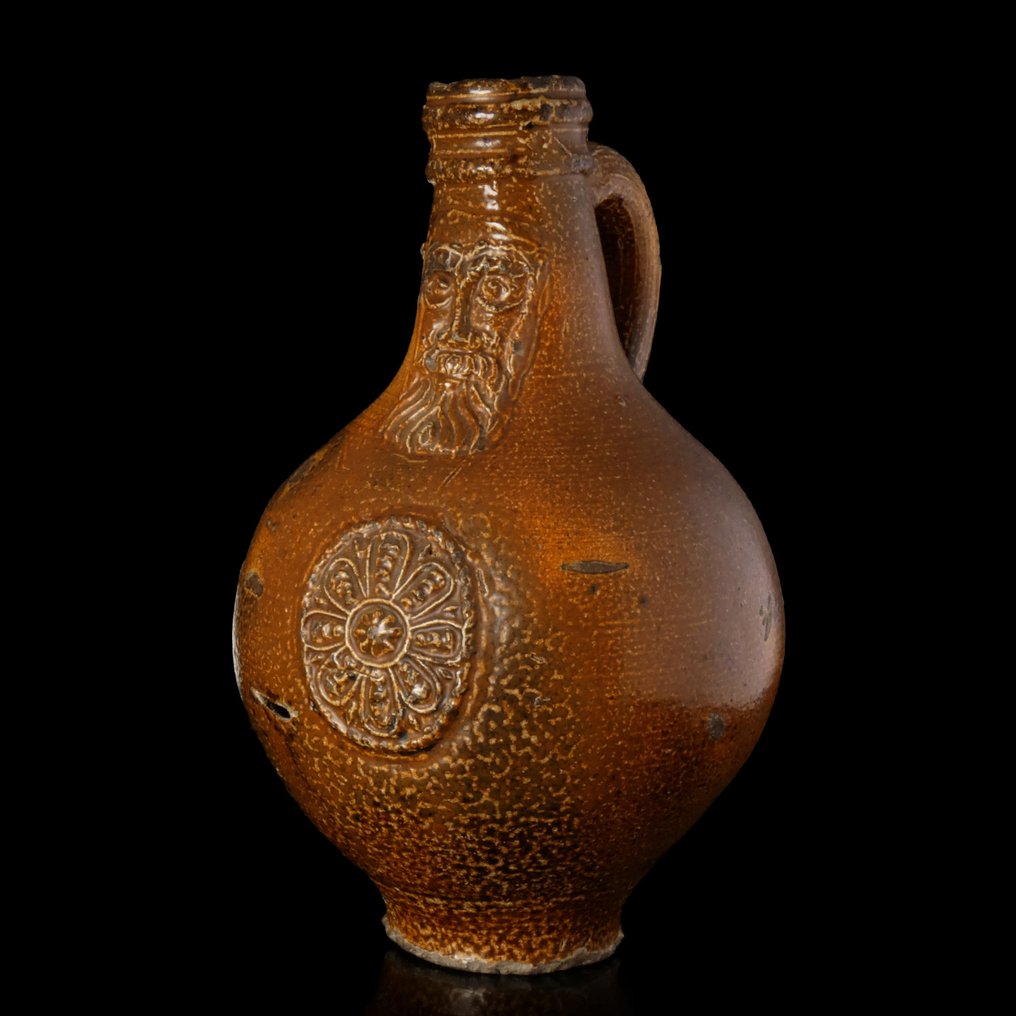
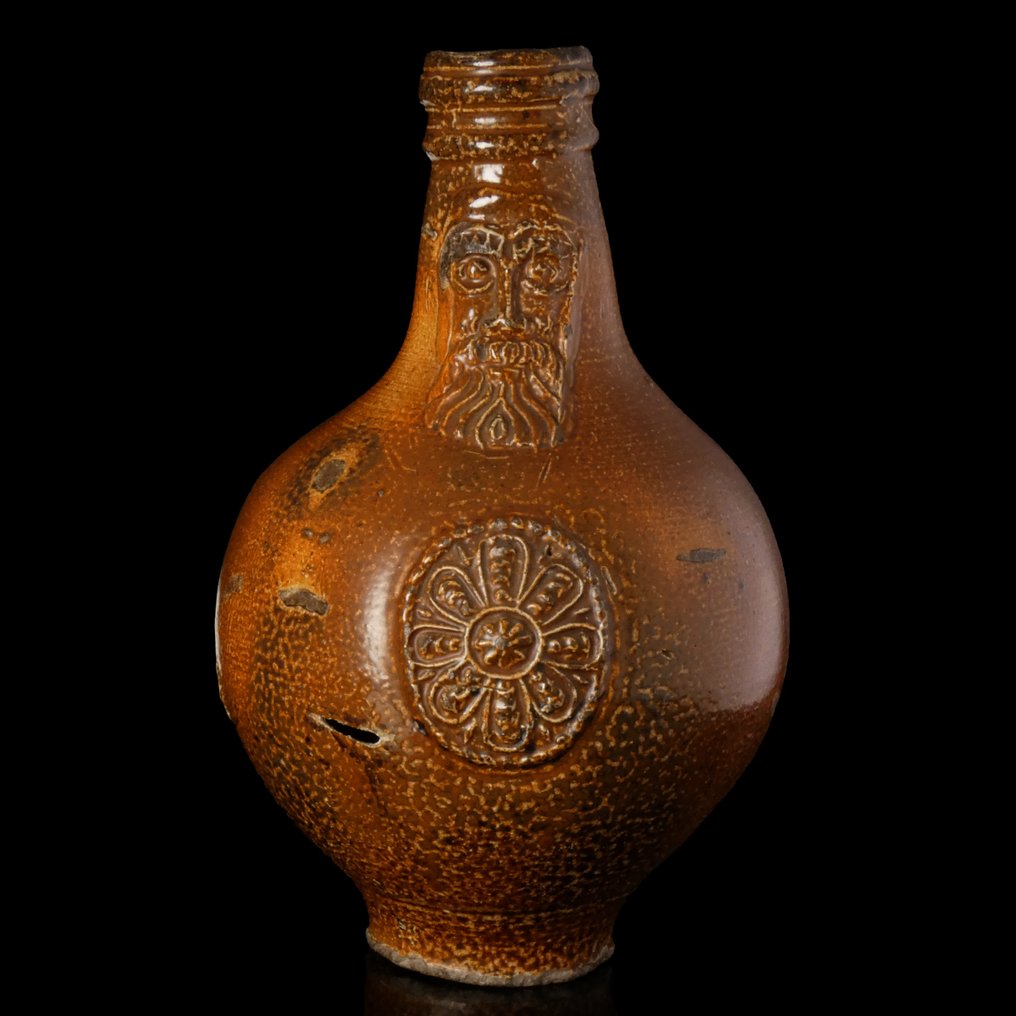
Post-medieval Frechen stoneware bellarmine jug (Baardmankruikje - Bartmann), circa 1675, with a bearded face mask, about 23 cm high, in very fine condition with minor restorations, originating from the Netherlands.
AI-assisted summary
Description from the seller
Attention: due to customs regulations we can only ship inside the European Union. Please ensure you have a valid EU shipping address before placing a bid.
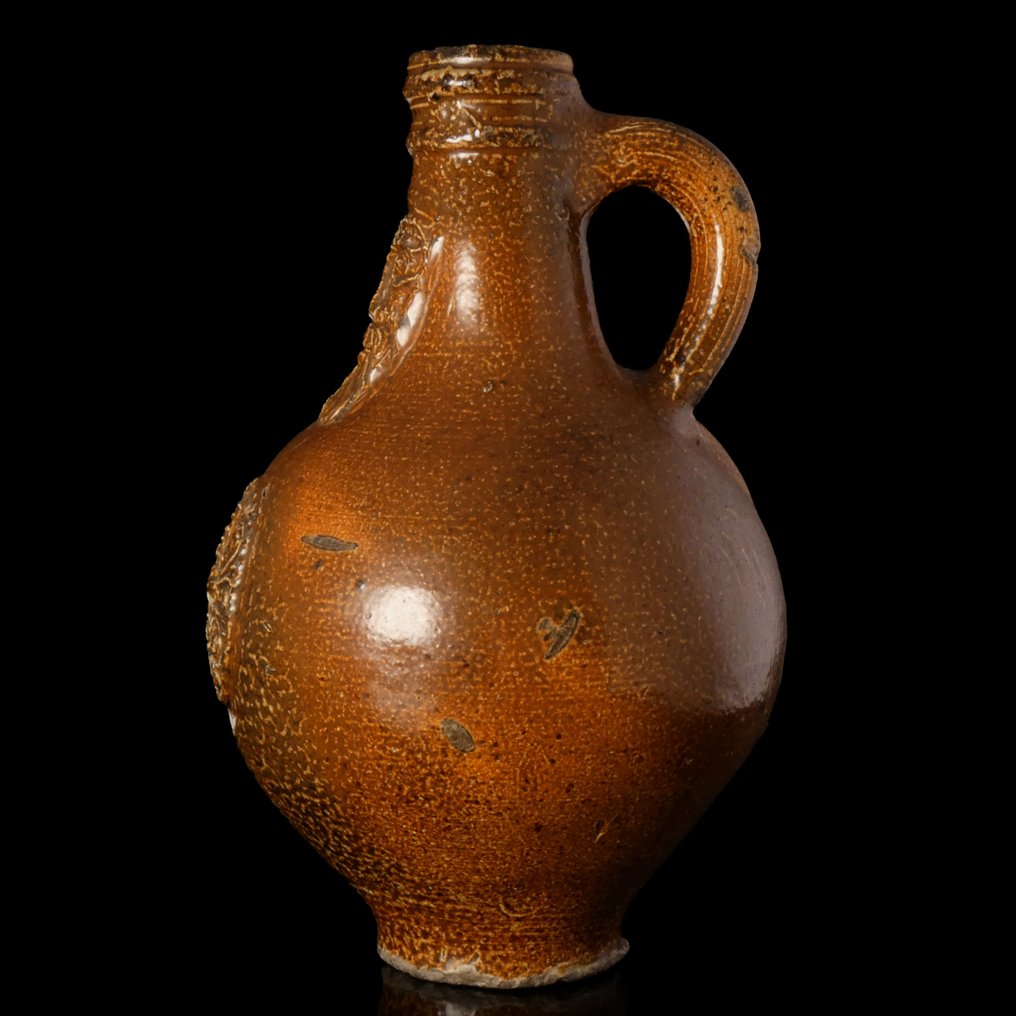
Frechen stoneware bellarmine jug (baardman - Bartmann). Globular body, narrow neck and applied moulded bearded face mask with good expression below a rosette / medallion. The medallion is crisply stamped and framed within a raised border. The bearded face with deep-set eyes, prominent nose and flowing beard is positioned below the rim on the neck. The handle rises from the shoulder to the rim in a sturdy arc.
Height: ± 23 cm
Condition: Very fine condition, small professional restauration to the top of the neck and a small firing imperfection (left of the rosette) and minor abrasions, consistent with age.
The bellarmine has a very nice smooth 'tiger pattern' glazing. The classic orange-brown sheen created by salt vapour glazing is typical of Rhineland stoneware from centres such as Frechen.
Overall, it is a fine example of a traditional Bellarmine jug: expressive face mask, strong form, and a well-preserved decorative medallion, all characteristic features of this iconic stoneware.
Certificate of Authenticity: available upon request (pdf-format).
The name 'Bartmann' is German for 'bearded man'.
This type of stoneware was produced in Frechen (southwest of Cologne) from the early 1500s. In the 16th and 17th century, Frechen stoneware bottles and jugs were produced and shipped mainly to Amsterdam and Dordrecht, and from there on further to England. They were used for a variety of purposes, but the main function was to hold and decant beer or wine.
The vessels were dipped into a thin iron oxide slip before they were fired in the kiln, drips below the slip line are common. As a result of the salt glaze, the exterior surface appears mottled and shiny.
Seller's Story
Please read our information carefully.
*SHIPPING INFO Due to insurance procedures, combined shipping is only possible with a single payment. (1 payment reference = 1 insured parcel.) If you accept an offer after the auction and pay separately, shipments cannot be manually combined afterward. Please ensure your shipping address is complete and correct before paying. Changes made after payment are not automatically forwarded to us.
* CERTIFICATE OF AUTHENTICITY (COA) For insurance purposes we can provide a digital Certificate of Authenticity (PDF) for every item with a hammer price of Euro 100 or more. The COA is available upon request within 20 days of the auction date. Instructions will be provided when your order is shipped. Certificates are not included in the package.
* INSURANCE & CLAIMS All our parcels are shipped with external insurance. This insurance requires the following:
-> Monitor the online tracking and notify delays to the seller within 14 days after the shipping date.
-> In case of damage: write a reservation on the delivery note and report the damage to the seller via the Catawiki online chat within 24 hours. Keep all packaging and send us photos of the damage.
* IMPORTANT BUYERS OUTSIDE THE EU: We cannot ship to countries outside the European Union. Please ensure you have an EU shipping address before bidding. No exceptions can be made. Switzerland, Norway and the United Kingdom are not part of the EU.
* DOCUMENTATION NOTICE: Previous invoices and import/export documents will not be shared with customers.
----------------------
Thank you for your interest, and best of luck with your bids!
Attention: due to customs regulations we can only ship inside the European Union. Please ensure you have a valid EU shipping address before placing a bid.
Frechen stoneware bellarmine jug (baardman - Bartmann). Globular body, narrow neck and applied moulded bearded face mask with good expression below a rosette / medallion. The medallion is crisply stamped and framed within a raised border. The bearded face with deep-set eyes, prominent nose and flowing beard is positioned below the rim on the neck. The handle rises from the shoulder to the rim in a sturdy arc.
Height: ± 23 cm
Condition: Very fine condition, small professional restauration to the top of the neck and a small firing imperfection (left of the rosette) and minor abrasions, consistent with age.
The bellarmine has a very nice smooth 'tiger pattern' glazing. The classic orange-brown sheen created by salt vapour glazing is typical of Rhineland stoneware from centres such as Frechen.
Overall, it is a fine example of a traditional Bellarmine jug: expressive face mask, strong form, and a well-preserved decorative medallion, all characteristic features of this iconic stoneware.
Certificate of Authenticity: available upon request (pdf-format).
The name 'Bartmann' is German for 'bearded man'.
This type of stoneware was produced in Frechen (southwest of Cologne) from the early 1500s. In the 16th and 17th century, Frechen stoneware bottles and jugs were produced and shipped mainly to Amsterdam and Dordrecht, and from there on further to England. They were used for a variety of purposes, but the main function was to hold and decant beer or wine.
The vessels were dipped into a thin iron oxide slip before they were fired in the kiln, drips below the slip line are common. As a result of the salt glaze, the exterior surface appears mottled and shiny.
Seller's Story
Please read our information carefully.
*SHIPPING INFO Due to insurance procedures, combined shipping is only possible with a single payment. (1 payment reference = 1 insured parcel.) If you accept an offer after the auction and pay separately, shipments cannot be manually combined afterward. Please ensure your shipping address is complete and correct before paying. Changes made after payment are not automatically forwarded to us.
* CERTIFICATE OF AUTHENTICITY (COA) For insurance purposes we can provide a digital Certificate of Authenticity (PDF) for every item with a hammer price of Euro 100 or more. The COA is available upon request within 20 days of the auction date. Instructions will be provided when your order is shipped. Certificates are not included in the package.
* INSURANCE & CLAIMS All our parcels are shipped with external insurance. This insurance requires the following:
-> Monitor the online tracking and notify delays to the seller within 14 days after the shipping date.
-> In case of damage: write a reservation on the delivery note and report the damage to the seller via the Catawiki online chat within 24 hours. Keep all packaging and send us photos of the damage.
* IMPORTANT BUYERS OUTSIDE THE EU: We cannot ship to countries outside the European Union. Please ensure you have an EU shipping address before bidding. No exceptions can be made. Switzerland, Norway and the United Kingdom are not part of the EU.
* DOCUMENTATION NOTICE: Previous invoices and import/export documents will not be shared with customers.
----------------------
Thank you for your interest, and best of luck with your bids!
Details
Culture
Post-medieval
Century/ Timeframe
17th century, around 1675
Name of object
Bellarmine Jug (Baardmankruikje - Bartmann), Frechen
Acquired from
Antique market
Year acquired
2025
Material
Stoneware
Country acquired from
Netherlands
Condition
Good
Previous owner acquired from
Antique market
Previous owner - year acquired
2025
Previous owner - country acquired from
Netherlands
I verify that I have obtained this object legally and that I am allowed to sell it
Yes
Sold by
Disclaimer
The seller was informed by Catawiki about documentation requirements and guarantees the following: - the object was legally obtained, - the seller has the right to sell and/or export the object, as relevant, - the seller will provide the necessary provenance information and arrange required documentation and permits/licenses, as applicable and as per local laws, - the seller will notify the buyer of any delays in obtaining permits/licenses. By bidding, you acknowledge that import documentation may be required depending on your country of residence and that obtaining permits/licenses may cause delays in the delivery of your object.
The seller was informed by Catawiki about documentation requirements and guarantees the following: - the object was legally obtained, - the seller has the right to sell and/or export the object, as relevant, - the seller will provide the necessary provenance information and arrange required documentation and permits/licenses, as applicable and as per local laws, - the seller will notify the buyer of any delays in obtaining permits/licenses. By bidding, you acknowledge that import documentation may be required depending on your country of residence and that obtaining permits/licenses may cause delays in the delivery of your object.
