Jonone / Sam Francis - Past - Present - 2013



14
days
00
hours
52
minutes
47
seconds

5 other people are watching this object
 Bidder 8746 Bidder 8746 | €1 |
|---|
Catawiki Buyer Protection
Your payment’s safe with us until you receive your object.View details
Trustpilot 4.4 | 123234 reviews
Rated Excellent on Trustpilot.
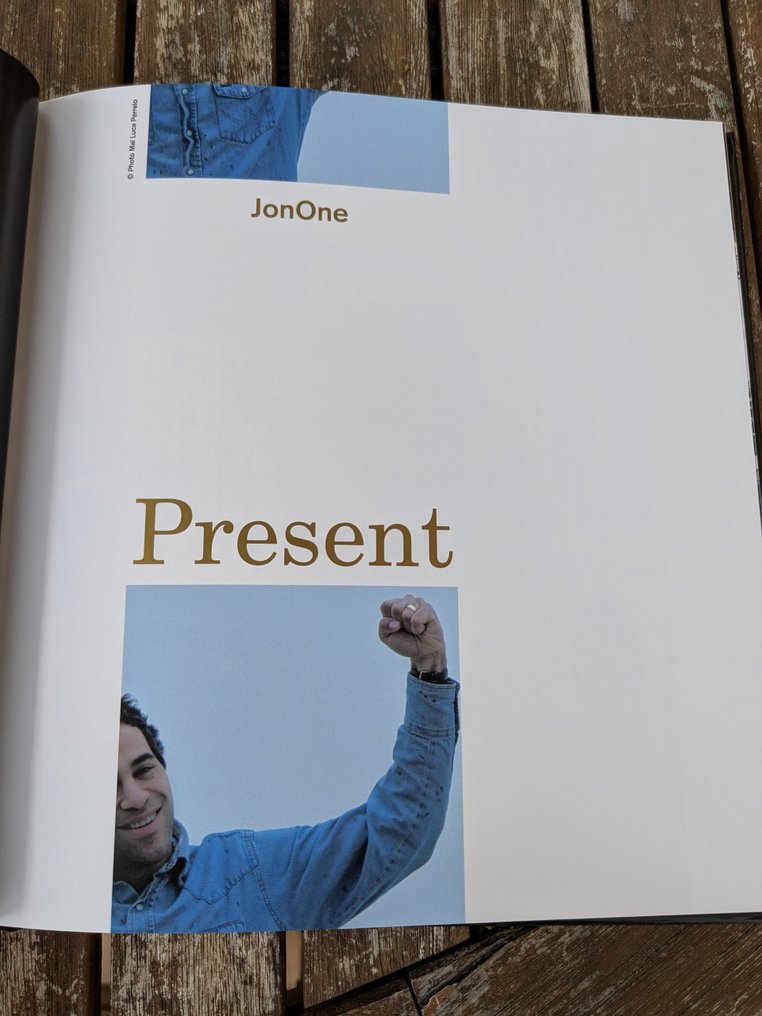
Past - Present is a first edition art book by Jonone and Sam Francis, 82 pages, with original language in English, published in 2013.
AI-assisted summary
Description from the seller
Sam Francis / JonOne Past - Present Exhibition
from May 16 to June 16, 2013
Sam Francis (1923 - 1994) and JonOne (1963) share their American origins and their presence in Paris for many years. Color and energy are at the heart of their work. They are brought together for the first time in a joint exhibition at Galerie LE FEUVRE. 'Where PAST meets PRESENT.'
A vibrant exhibition where, through about fifty works, abstract expressionism and graffiti meet and respond to each other.
Sam Francis was born in 1923 in San Mateo, California. After studying medicine and psychology at the University of California, Berkeley, he was mobilized in aviation from 1943 to 1945. Injured and hospitalized, he began to take an interest in painting. In 1950, he settled in Paris, where he lived between frequent trips to New York and California. From 1957 to 1959, his travels around the world took him to Mexico, India, Thailand, Hong Kong, and Japan, where he made several stays. He returned to the United States in 1961 and settled in Santa Monica, California, in 1962, where he died in 1994. It was Paris that first offered Sam Francis recognition and notoriety. As early as 1952, the Nina Dausset gallery organized his first exhibition, followed by two others at the Rive Droite gallery, the first in 1955 prefaced by Georges Duthuit and the second in 1956 under the auspices of Michel Tapié. Michel Tapié, who a few months earlier had already placed Sam Francis among the 'signifiers of the informal' in his book Un Art Autre, to which he added, after Pollock, a new spatial dimension on the American scale (Deep Orange and Black, 1954-55, Basel, Kunstmuseum). It is indeed the sense of space, a place for light to unfold, that conditions the 'tachist' expression of Sam Francis, who clarified for himself that 'space is color' and recognized, in this sense, the importance of the examples of Monet, Bonnard, and Matisse. Through broad and vigorous splashes of color, light or dark, he modulates the surface of large formats, which he often works on, to create moving spaces imbued with intense life. He increasingly stretched the intervals separating the color patches, pushing them toward the edges of the canvas to make the 'open form' of white explode. Sam Francis mainly dedicated himself to various ways of extending or restricting this original white through different framing or networks of gestural traces. From 1975 onwards, one of his most common methods was to divide the surface of the painting regularly using a grid, with the paint applied with a roller and later touched up by hand.
His works are housed in numerous museums, notably in New York (M. O. M. A. and Guggenheim Museum), Los Angeles (Museum of Contemporary Art), London (Tate Gallery), Paris (M. N. A. M.), and Zurich (Kunsthaus). The Idemitsu Museum in Tokyo holds the largest collection of paintings. A major retrospective of Sam Francis's works was held in Bonn, Germany, in 1993, and an exhibition on the Paris Years (1950-1961) took place at the G N of the Jeu de Paume in Paris in 1995, shortly after his death.
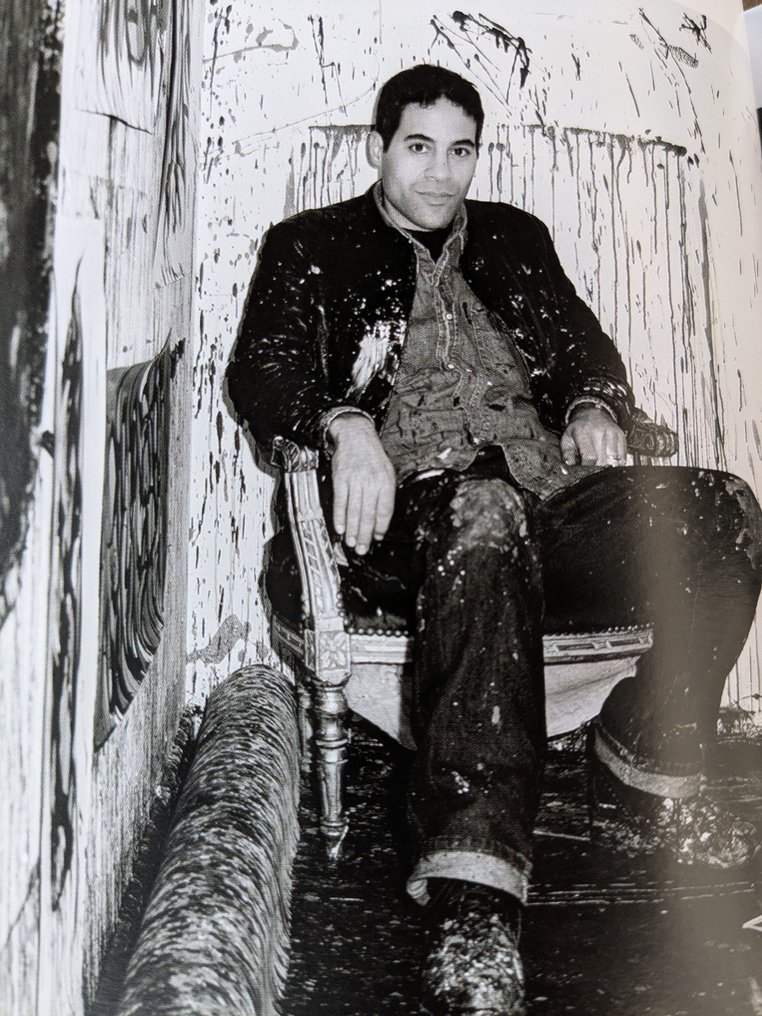
John Andrew Perello, alias 'JonOne', was born in 1963 in New York and lives in Paris. JonOne started graffiti by writing his name in the city and on New York subway cars in the 1970s and 1980s before expressing himself on canvas at the end of the 1980s. He cites as a foundational element of his style the vision of a graffitied subway car producing streaks of color with speed. What sets JonOne apart from other graffiti artists is precisely his focus on the energy and movement of color rather than figuration. He developed his 'freestyle' alongside other 'old school' graffiti artists such as A-One and Phase II. Kandinsky, Matisse, and American abstract expressionists Pollock, de Kooning, Joan Mitchell, Robert Motherwell, and of course Sam Francis are also sources of inspiration. JonOne describes himself as an 'abstract expressionist graffiti painter.' JonOne's style is one of the most personal of his generation, blending abstract painting with street spirit. He bridges modern and contemporary art spaces.
The package will be well packed, sent with tracking, and delivered against signature.
JonOne belongs to the same artistic movement as: Kaws, Invader, Jef Aerosol, Speedy Graphito, Vhils, Blek le Rat, Fanakapan, Orlinski, Ardif, Hijack, Mr Brainwash, Swoon, Faith47, Obey, Durix, Rnst, JR, PichiAvo, Martin Whatson, Cope 2, Rime, Seen, Dondi White, Onemizer, Basquiat, Keith Haring, Miss Tic, Dondi, Jay One, A One, Mode 2...
Sam Francis / JonOne Past - Present Exhibition
from May 16 to June 16, 2013
Sam Francis (1923 - 1994) and JonOne (1963) share their American origins and their presence in Paris for many years. Color and energy are at the heart of their work. They are brought together for the first time in a joint exhibition at Galerie LE FEUVRE. 'Where PAST meets PRESENT.'
A vibrant exhibition where, through about fifty works, abstract expressionism and graffiti meet and respond to each other.
Sam Francis was born in 1923 in San Mateo, California. After studying medicine and psychology at the University of California, Berkeley, he was mobilized in aviation from 1943 to 1945. Injured and hospitalized, he began to take an interest in painting. In 1950, he settled in Paris, where he lived between frequent trips to New York and California. From 1957 to 1959, his travels around the world took him to Mexico, India, Thailand, Hong Kong, and Japan, where he made several stays. He returned to the United States in 1961 and settled in Santa Monica, California, in 1962, where he died in 1994. It was Paris that first offered Sam Francis recognition and notoriety. As early as 1952, the Nina Dausset gallery organized his first exhibition, followed by two others at the Rive Droite gallery, the first in 1955 prefaced by Georges Duthuit and the second in 1956 under the auspices of Michel Tapié. Michel Tapié, who a few months earlier had already placed Sam Francis among the 'signifiers of the informal' in his book Un Art Autre, to which he added, after Pollock, a new spatial dimension on the American scale (Deep Orange and Black, 1954-55, Basel, Kunstmuseum). It is indeed the sense of space, a place for light to unfold, that conditions the 'tachist' expression of Sam Francis, who clarified for himself that 'space is color' and recognized, in this sense, the importance of the examples of Monet, Bonnard, and Matisse. Through broad and vigorous splashes of color, light or dark, he modulates the surface of large formats, which he often works on, to create moving spaces imbued with intense life. He increasingly stretched the intervals separating the color patches, pushing them toward the edges of the canvas to make the 'open form' of white explode. Sam Francis mainly dedicated himself to various ways of extending or restricting this original white through different framing or networks of gestural traces. From 1975 onwards, one of his most common methods was to divide the surface of the painting regularly using a grid, with the paint applied with a roller and later touched up by hand.
His works are housed in numerous museums, notably in New York (M. O. M. A. and Guggenheim Museum), Los Angeles (Museum of Contemporary Art), London (Tate Gallery), Paris (M. N. A. M.), and Zurich (Kunsthaus). The Idemitsu Museum in Tokyo holds the largest collection of paintings. A major retrospective of Sam Francis's works was held in Bonn, Germany, in 1993, and an exhibition on the Paris Years (1950-1961) took place at the G N of the Jeu de Paume in Paris in 1995, shortly after his death.
John Andrew Perello, alias 'JonOne', was born in 1963 in New York and lives in Paris. JonOne started graffiti by writing his name in the city and on New York subway cars in the 1970s and 1980s before expressing himself on canvas at the end of the 1980s. He cites as a foundational element of his style the vision of a graffitied subway car producing streaks of color with speed. What sets JonOne apart from other graffiti artists is precisely his focus on the energy and movement of color rather than figuration. He developed his 'freestyle' alongside other 'old school' graffiti artists such as A-One and Phase II. Kandinsky, Matisse, and American abstract expressionists Pollock, de Kooning, Joan Mitchell, Robert Motherwell, and of course Sam Francis are also sources of inspiration. JonOne describes himself as an 'abstract expressionist graffiti painter.' JonOne's style is one of the most personal of his generation, blending abstract painting with street spirit. He bridges modern and contemporary art spaces.
The package will be well packed, sent with tracking, and delivered against signature.
JonOne belongs to the same artistic movement as: Kaws, Invader, Jef Aerosol, Speedy Graphito, Vhils, Blek le Rat, Fanakapan, Orlinski, Ardif, Hijack, Mr Brainwash, Swoon, Faith47, Obey, Durix, Rnst, JR, PichiAvo, Martin Whatson, Cope 2, Rime, Seen, Dondi White, Onemizer, Basquiat, Keith Haring, Miss Tic, Dondi, Jay One, A One, Mode 2...
Details
Number of Books
1
Subject
Art
Book Title
Past - Present
Author/ Illustrator
Jonone / Sam Francis
Condition
Very good
Publication year oldest item
2013
Edition
1st Edition
Language
English, French
Original language
Yes
Number of pages
82
Sold by