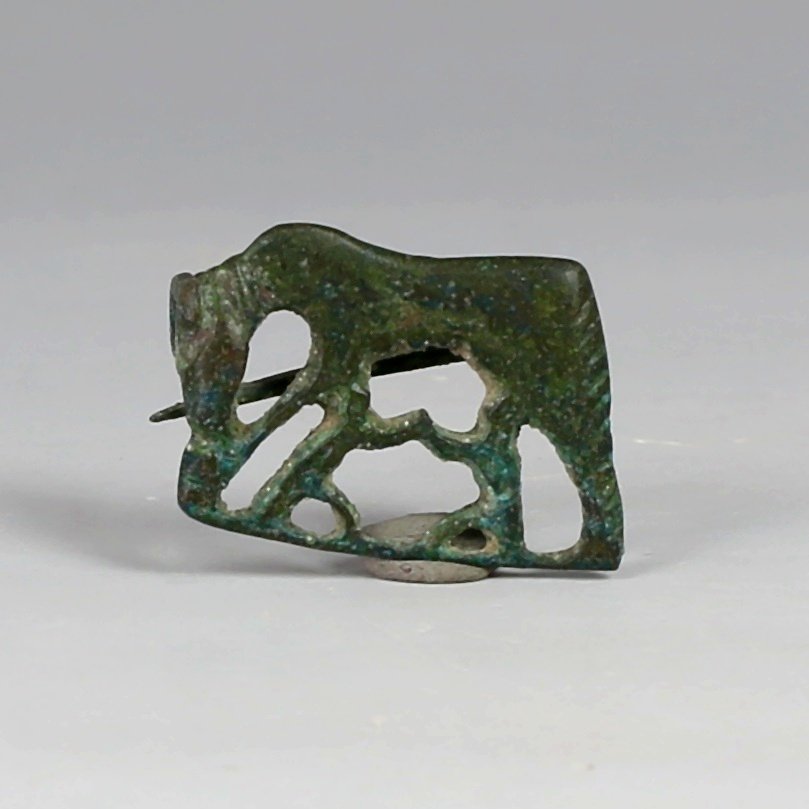
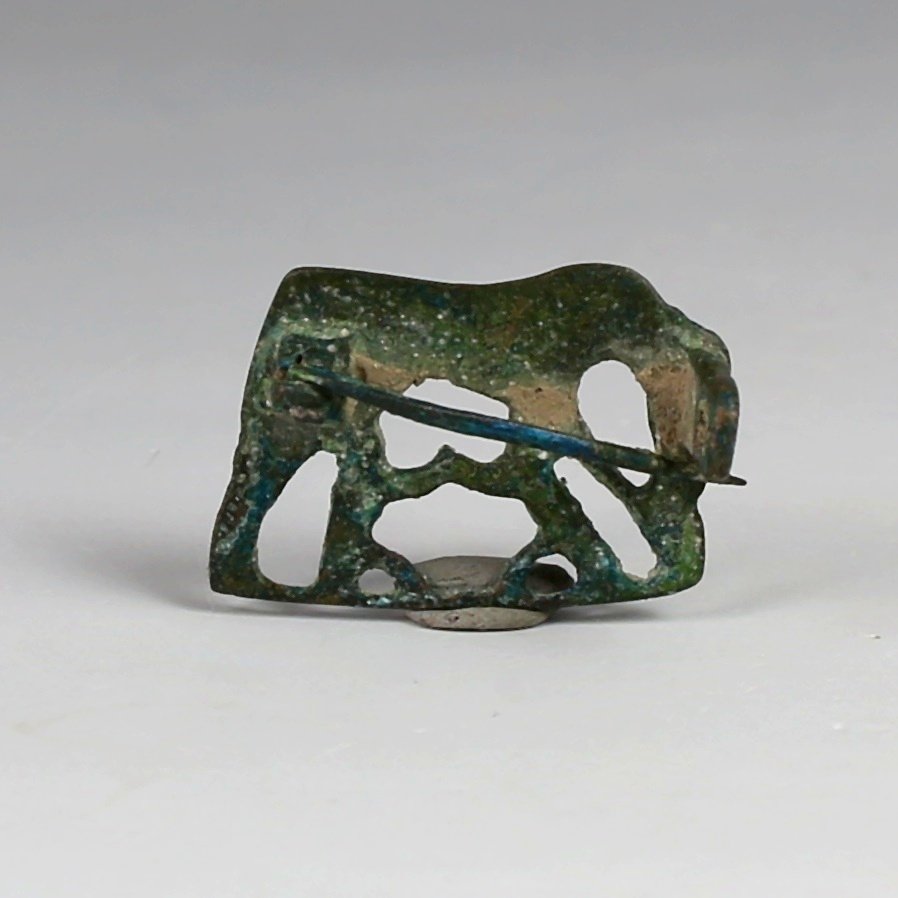
Ancient Roman Bronze Fibula, depicting she-wolf with Romulus and Remus

01
day
04
hours
15
minutes
26
seconds
Current bid
€ 150
Reserve price met

Expert
Selected by Ruth Garrido Vila
Directed the Ifergan Collection Museum, specialising in Phoenician and Mediterranean archaeology.
Estimate € 200 - € 250
16 other people are watching this object
 Bidder 7974 Bidder 7974 | €150 | |
|---|---|---|
| Bidder 7974 | €121 | |
 Bidder 8778 Bidder 8778 | €26 | |
Catawiki Buyer Protection
Your payment’s safe with us until you receive your object.View details
Trustpilot 4.4 | 123718 reviews
Rated Excellent on Trustpilot.
Ancient Roman bronze fibula depicting the she-wolf with Romulus and Remus, dating to the 2nd–3rd century A.D., measuring 19 by 29 mm, in good condition, acquired in 2025 from a German private collection.
AI-assisted summary
Description from the seller
ITEM: Fibula depicting she-wolf with Romulus and Remus
MATERIAL: Bronze
CULTURE: Roman
PERIOD: 2nd - 3rd Century A.D
DIMENSIONS: 19 mm x 29 mm
CONDITION: Good condition.
PROVENANCE: Ex German private collection, acquired before 1990s
Comes with Certificate of Authenticity and Export license
If you bid outside the european union and win the item, we will have to apply for an export licence for your country and shipping will take 3 to 5 weeks.
Roman fibulas, also known as brooches, were essential items in Roman dress and served both functional and decorative purposes. These fasteners were used to secure garments, such as cloaks and tunics, and evolved into various styles over the centuries, reflecting changes in fashion and technology. Typically made from materials like bronze, silver, and gold, fibulas ranged from simple, utilitarian pieces to highly ornate objects that showcased the wearer's wealth and status. The basic design of a fibula included a pin, a bow, and a catch plate, but the variations in shape and decoration were numerous, indicating different regional styles and periods.
The evolution of Roman fibulas can be traced through several distinct types, each with unique features and geographical distributions. Early Roman fibulas, like the "Aucissa" type, were characterized by their arched bow and decorative elements, often bearing inscriptions of the maker's name or workshop. During the Imperial period, the "Crossbow" fibula became prominent, especially among military and administrative officials, noted for its robust construction and crossbar-shaped head. Other popular types included the "P-shaped" and "Omega" fibulas, which varied in complexity and ornamentation. These differences in design not only highlight the technological advancements in metalworking but also the cultural influences across the Roman Empire.
Roman fibulas are valuable archaeological artifacts that provide insights into Roman fashion, social hierarchy, and cultural interactions. They are frequently found in graves, offering clues about burial practices and the personal adornment of the deceased. The study of fibulas helps historians and archaeologists understand the diffusion of styles and techniques across different regions, illustrating the interconnectedness of the Roman world.
Seller's Story
Your Antiquarian offers ancient art and ancient coins. Our main objective is to offer the highest quality at the best price respecting and strictly complying with the laws of heritage protection and UNESCO heritage norms. Therefore, all the pieces that are published come from private collections in which the provenance can be checked or international auctions. All our antiquities and coins are accompanied by their Certificate of Authenticity. We have a no quibble 90 day return policy. At Your Antiquarian we are committed to helping disadvantaged groups and for this reason a portion of each purchase is donated to charities to help people in need.
Translated by Google TranslateITEM: Fibula depicting she-wolf with Romulus and Remus
MATERIAL: Bronze
CULTURE: Roman
PERIOD: 2nd - 3rd Century A.D
DIMENSIONS: 19 mm x 29 mm
CONDITION: Good condition.
PROVENANCE: Ex German private collection, acquired before 1990s
Comes with Certificate of Authenticity and Export license
If you bid outside the european union and win the item, we will have to apply for an export licence for your country and shipping will take 3 to 5 weeks.
Roman fibulas, also known as brooches, were essential items in Roman dress and served both functional and decorative purposes. These fasteners were used to secure garments, such as cloaks and tunics, and evolved into various styles over the centuries, reflecting changes in fashion and technology. Typically made from materials like bronze, silver, and gold, fibulas ranged from simple, utilitarian pieces to highly ornate objects that showcased the wearer's wealth and status. The basic design of a fibula included a pin, a bow, and a catch plate, but the variations in shape and decoration were numerous, indicating different regional styles and periods.
The evolution of Roman fibulas can be traced through several distinct types, each with unique features and geographical distributions. Early Roman fibulas, like the "Aucissa" type, were characterized by their arched bow and decorative elements, often bearing inscriptions of the maker's name or workshop. During the Imperial period, the "Crossbow" fibula became prominent, especially among military and administrative officials, noted for its robust construction and crossbar-shaped head. Other popular types included the "P-shaped" and "Omega" fibulas, which varied in complexity and ornamentation. These differences in design not only highlight the technological advancements in metalworking but also the cultural influences across the Roman Empire.
Roman fibulas are valuable archaeological artifacts that provide insights into Roman fashion, social hierarchy, and cultural interactions. They are frequently found in graves, offering clues about burial practices and the personal adornment of the deceased. The study of fibulas helps historians and archaeologists understand the diffusion of styles and techniques across different regions, illustrating the interconnectedness of the Roman world.
Seller's Story
Your Antiquarian offers ancient art and ancient coins. Our main objective is to offer the highest quality at the best price respecting and strictly complying with the laws of heritage protection and UNESCO heritage norms. Therefore, all the pieces that are published come from private collections in which the provenance can be checked or international auctions. All our antiquities and coins are accompanied by their Certificate of Authenticity. We have a no quibble 90 day return policy. At Your Antiquarian we are committed to helping disadvantaged groups and for this reason a portion of each purchase is donated to charities to help people in need.
Translated by Google TranslateDetails
Culture
Ancient Roman
Century/ Timeframe
2nd - 3rd Century A.D
Name of object
depicting she-wolf with Romulus and Remus, Fibula
Acquired from
Private collection
Year acquired
2025
Material
Bronze
Country acquired from
Germany
Condition
Good
Previous owner acquired from
Antique market
Previous owner - year acquired
1970
Previous owner - country acquired from
Germany
I verify that I have obtained this object legally and that I am allowed to sell it
Yes
Sold by
Disclaimer
The seller was informed by Catawiki about documentation requirements and guarantees the following: - the object was legally obtained, - the seller has the right to sell and/or export the object, as relevant, - the seller will provide the necessary provenance information and arrange required documentation and permits/licenses, as applicable and as per local laws, - the seller will notify the buyer of any delays in obtaining permits/licenses. By bidding, you acknowledge that import documentation may be required depending on your country of residence and that obtaining permits/licenses may cause delays in the delivery of your object.
The seller was informed by Catawiki about documentation requirements and guarantees the following: - the object was legally obtained, - the seller has the right to sell and/or export the object, as relevant, - the seller will provide the necessary provenance information and arrange required documentation and permits/licenses, as applicable and as per local laws, - the seller will notify the buyer of any delays in obtaining permits/licenses. By bidding, you acknowledge that import documentation may be required depending on your country of residence and that obtaining permits/licenses may cause delays in the delivery of your object.
