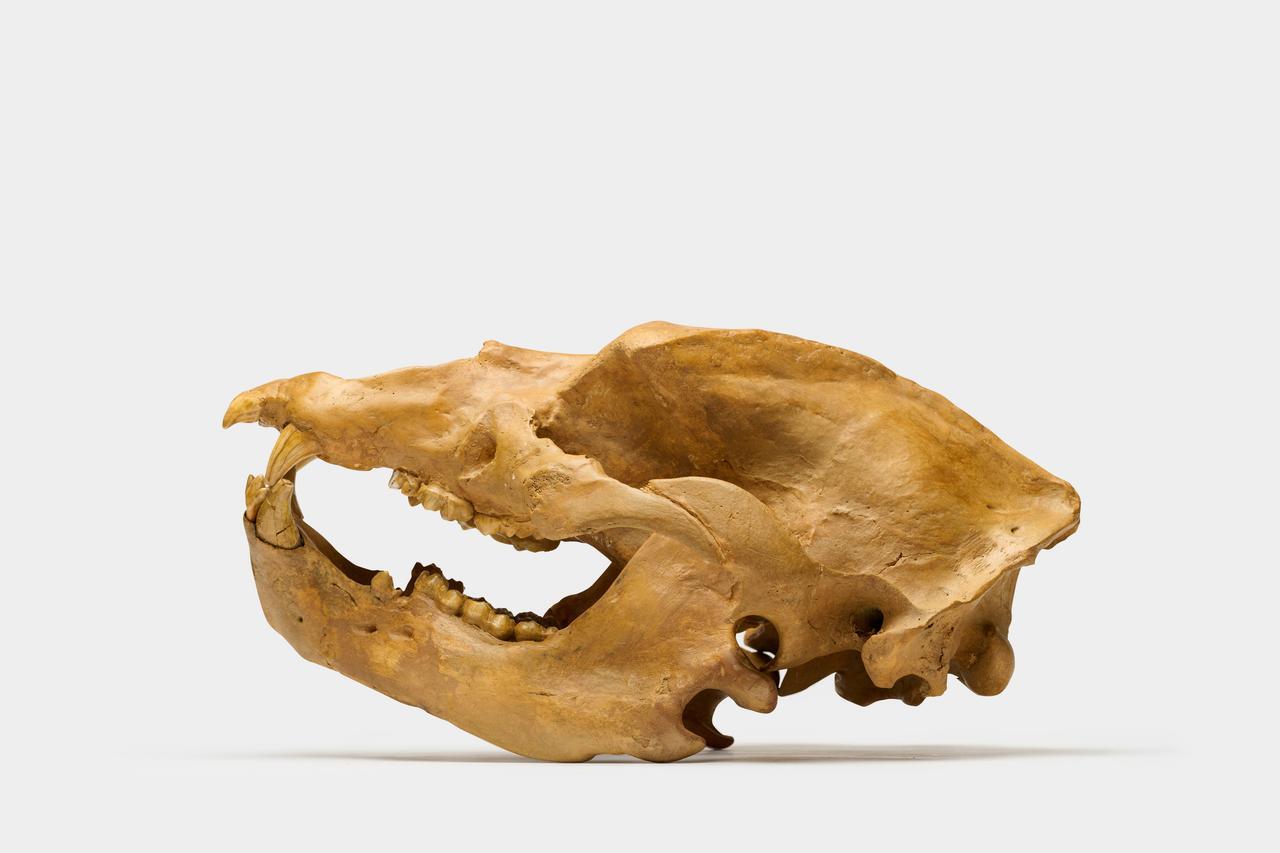
Hippopotamus - Fossil bone - Hippopotamus lemerlei



05
days
05
hours
10
minutes
45
seconds

No bids placed
Catawiki Buyer Protection
Your payment’s safe with us until you receive your object.View details
Trustpilot 4.4 | 123609 reviews
Rated Excellent on Trustpilot.
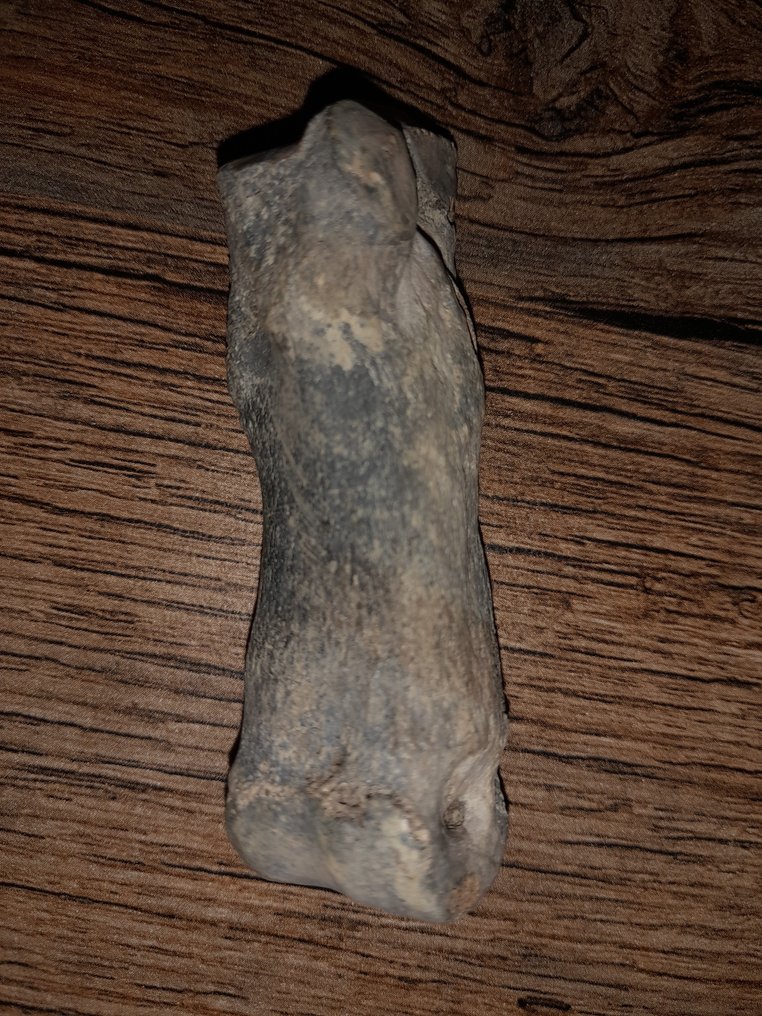
An associated set of nine subfossil bones from the extinct Malagasy hippopotamus Hippopotamus lemerlei, comprising four ribs and five pedal phalanges from a single individual, dating to the Quaternary and originating from Madagascar, in natural condition.
AI-assisted summary
Description from the seller
An associated set of nine subfossil bones from the extinct Malagasy hippopotamus Hippopotamus lemerlei.
The lot includes four ribs and five pedal phalanges, found together at the same locality and naturally preserved.
A scientifically interesting and well-documented group, ideal for collectors of extinct mammals and Madagascar fauna.
Provenance: From a former private European collection; originally from Madagascar.
The bones belong to a single individual of an extinct Malagasy hippopotamus.
Condition: Natural subfossil state. No restoration or reconstruction; only standard cleaning and stabilization. No glued or repaired parts.
Ribs:
Largest: approx. 41.5 × 3.3 × 1.1 cm
Smallest: approx. 28 × 2.6 × 0.8 cm
Phalanges:
Largest: approx. 8.5 × 2.8 × 2.5 cm
Smallest: approx. 6.4 × 2 × 2 cm
Total weight: approx. 435 g
This lot consists of a remarkable associated set of nine subfossil bones attributed to the extinct Malagasy dwarf hippopotamus, Hippopotamus lemerlei. All elements were found together at the same locality, which is typical for Malagasy subfossil discoveries, and they very likely belong to the same species and individual.
The set includes four ribs and five pedal phalanges, all preserved in fully natural condition. The bones display the characteristic dense structure and natural surface texture typical of Hippopotamus material from Madagascar. No restoration, glue, or artificial enhancement has been applied.
The ribs show natural curvature and variation in size, providing a clear impression of the thoracic anatomy of this extinct hippopotamus. The phalanges are robust yet relatively slender, consistent with pedal elements of Hippopotamus lemerlei.
Some elements exhibit ancient cracks and old fractures, formed long before excavation. These breaks show smooth, naturally patinated edges and are consistent with long-term subfossil preservation rather than recent damage.
Photography & documentation
Each bone has been photographed from multiple angles, including front, back, lateral views and detailed close-ups. Particular attention was given to documenting all cracks and fractures in detail, ensuring full transparency regarding the condition of the specimens.
Photographs were taken under neutral and functional lighting conditions to accurately represent the natural colour, texture, and patina of the bones. In some cases, highly compact or polished subfossil surfaces were not over-illuminated, as strong light reflection can cause such areas to appear artificially white or misleading. The images therefore aim to represent the bones as closely as possible to their appearance to the naked eye.
Additional photographs of all sides and details are available upon request.
Scientific and historical context
Hippopotamus lemerlei closely resembled modern hippos and pygmy hippos. Palaeontological evidence suggests that at least one species of Malagasy hippopotamus survived on Madagascar until approximately 1,000 years ago, making these remains particularly interesting from both a scientific and historical perspective.
This is an attractive and educational associated set, suitable for private collectors, museums, teaching collections, or display purposes.
An associated set of nine subfossil bones from the extinct Malagasy hippopotamus Hippopotamus lemerlei.
The lot includes four ribs and five pedal phalanges, found together at the same locality and naturally preserved.
A scientifically interesting and well-documented group, ideal for collectors of extinct mammals and Madagascar fauna.
Provenance: From a former private European collection; originally from Madagascar.
The bones belong to a single individual of an extinct Malagasy hippopotamus.
Condition: Natural subfossil state. No restoration or reconstruction; only standard cleaning and stabilization. No glued or repaired parts.
Ribs:
Largest: approx. 41.5 × 3.3 × 1.1 cm
Smallest: approx. 28 × 2.6 × 0.8 cm
Phalanges:
Largest: approx. 8.5 × 2.8 × 2.5 cm
Smallest: approx. 6.4 × 2 × 2 cm
Total weight: approx. 435 g
This lot consists of a remarkable associated set of nine subfossil bones attributed to the extinct Malagasy dwarf hippopotamus, Hippopotamus lemerlei. All elements were found together at the same locality, which is typical for Malagasy subfossil discoveries, and they very likely belong to the same species and individual.
The set includes four ribs and five pedal phalanges, all preserved in fully natural condition. The bones display the characteristic dense structure and natural surface texture typical of Hippopotamus material from Madagascar. No restoration, glue, or artificial enhancement has been applied.
The ribs show natural curvature and variation in size, providing a clear impression of the thoracic anatomy of this extinct hippopotamus. The phalanges are robust yet relatively slender, consistent with pedal elements of Hippopotamus lemerlei.
Some elements exhibit ancient cracks and old fractures, formed long before excavation. These breaks show smooth, naturally patinated edges and are consistent with long-term subfossil preservation rather than recent damage.
Photography & documentation
Each bone has been photographed from multiple angles, including front, back, lateral views and detailed close-ups. Particular attention was given to documenting all cracks and fractures in detail, ensuring full transparency regarding the condition of the specimens.
Photographs were taken under neutral and functional lighting conditions to accurately represent the natural colour, texture, and patina of the bones. In some cases, highly compact or polished subfossil surfaces were not over-illuminated, as strong light reflection can cause such areas to appear artificially white or misleading. The images therefore aim to represent the bones as closely as possible to their appearance to the naked eye.
Additional photographs of all sides and details are available upon request.
Scientific and historical context
Hippopotamus lemerlei closely resembled modern hippos and pygmy hippos. Palaeontological evidence suggests that at least one species of Malagasy hippopotamus survived on Madagascar until approximately 1,000 years ago, making these remains particularly interesting from both a scientific and historical perspective.
This is an attractive and educational associated set, suitable for private collectors, museums, teaching collections, or display purposes.
Details
Number of items
9
Specimen
Hippopotamus
Scientific name
Hippopotamus lemerlei
Country of Origin
Madagascar
Geological Period
Quaternary (2.58 - 0 million years)
Condition
Natural
Sold by