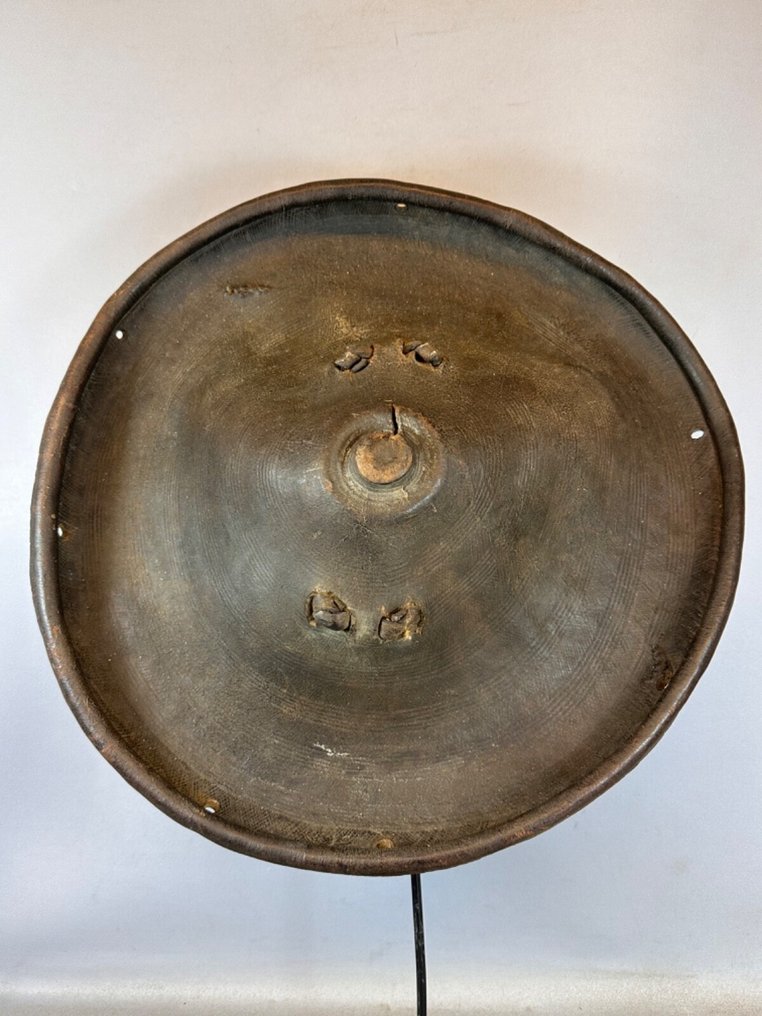
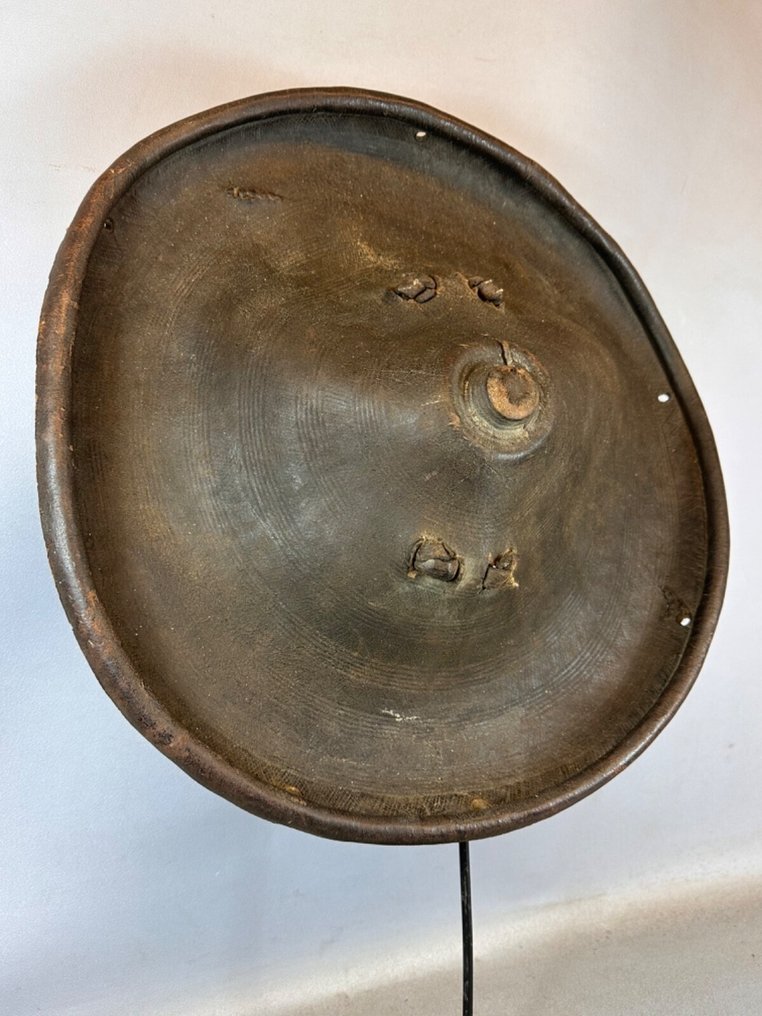
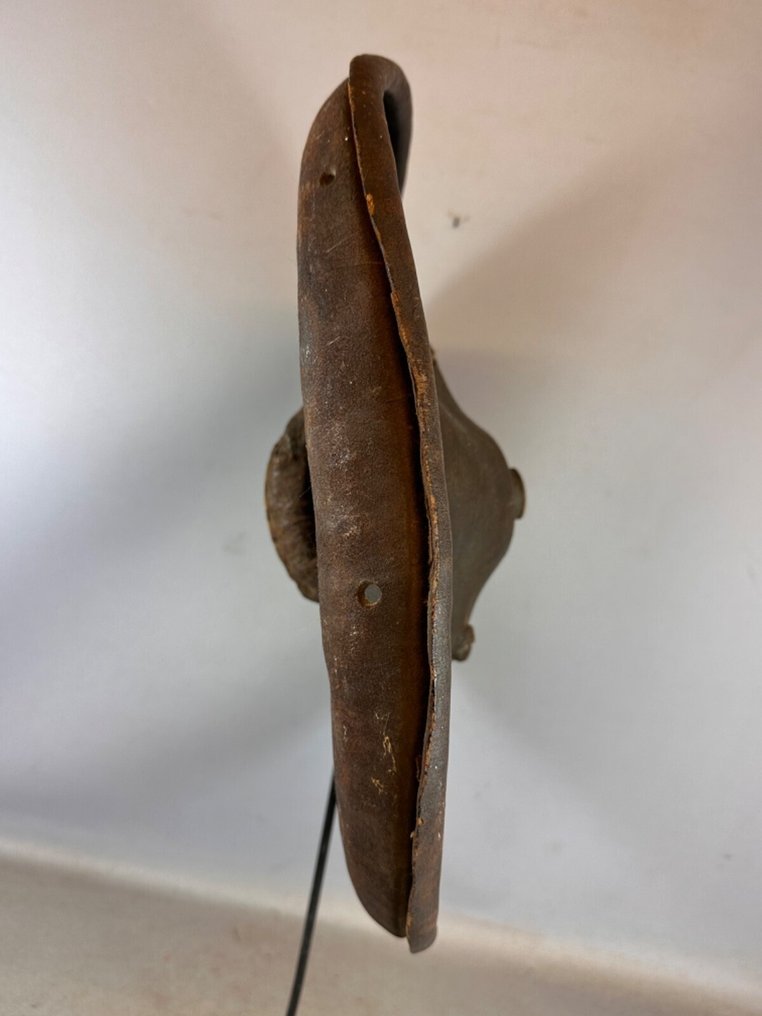
Old Ethiopian Amhara tribal shield from Ethiopia.


00
days
08
hours
26
minutes
23
seconds
Current bid
€ 160
Reserve price not met

Expert
Selected by Julien Gauthier
With almost a decade of experience bridging science, museum curation, and traditional blacksmithing, Julien has developed a unique expertise in historical arms, armour, and African art.
Estimate € 330 - € 380
19 other people are watching this object
 Bidder 4351 Bidder 4351 | €160 | |
|---|---|---|
| Bidder 4351 | €140 | |
| Bidder 4351 | €120 |
Catawiki Buyer Protection
Your payment’s safe with us until you receive your object.View details
Trustpilot 4.4 | 123327 reviews
Rated Excellent on Trustpilot.
Tribal Used African Old Ethiopian Amhara shield from Ethiopia, provenance Privécollectie, 47 cm in diameter, in good condition, with certificate of authenticity.
AI-assisted summary
Description from the seller
Antique Ethiopian warrior shield with decorations.
Diameter: 47 cm.
This shield is dated in the first half of the 20th century and comes with a certificate of authenticity.
A large rounded Ethiopian shield made of leather that could be attributed to various Ethiopian warrior groups. Ethiopian shields come in a variety of designs and decorations (beads, silver strips, etc.). They are made from various materials including wood, metal, and vegetable fibers (rattan or raffia).
Leather is preferable because the hide is strong and resistant. The visual effect, functionality, and practical purposes of the piece dictated the form a shield should take. A good shield should offer maximum protection. The material used should be strong and durable. Almost all peoples of Africa made use of shields. In many cultures, shields like these were known as defensive weapons, used by warriors during combat. Shields were also displayed as emblems of status or rank, and also as accessories in dance during festivals, commemorative ceremonies, or after a victory.
See a similar example in the Musee Dapper's CHASSEURS ET GUERRIERS; AFRICA: The Art of a Continent, edited by Tom Phillips, (see p. 126 in the above-referenced volume and also, p. 69 in African Shields by Dieter Plaschke and Manfred A. Zirngibl), see also Marc Ginzberg. AFRICAN FORMS, pp. 168, 171
Seller's Story
A SUMMARY OF OUR AFRICA-GALLERY SELLING POLICIES.
Our Africa-gallery specialized in Ethiopian tribal art, collected and sell tribal used art from all over Africa and special from Ethiopia.
Our Gallery have a collection of authentic, original and traditional art from Africa. This collection including masks, statues, pottery, musical instruments, manuscripts, headrests and other antique, primitive art and various unusual items.
I hardly ever buy directly from Africa. All my items that I sell are old and (tribal) used. My objects come from European and American private collections, auction houses, fellow dealers and other collectors from around the world.
This site gives you an impression of our stock and activities. Authentic, museum quality African tribal art at wholesale prices
We strive to provide deeper public appreciation for high quality African art and to make it accessible to all collectors.
High quality masks, carvings, statues, fetishes, animal figures, ritual objects and bronzes displayed here will add beauty to any home and value to any collection.
In addition, an ever-growing demand for rapidly disappearing original African tribal art makes it a sound investment.
As long-time experienced collectors, we carefully select and authenticate every artifact. Shown here are original, high quality, hand-crafted pieces made of wood or bronze which can be yours at a fraction of gallery prices! Years of traditional use added distinction to many of them.
We guarantee the authenticity of every item and your complete satisfaction. We make every effort to research and document the history of each artifact.
In our gallery you will find a nice selection of our stock. If you find something that is not on the site, let us know. We always have a large stock of items that are not on our site.
Please let us know if you do not see items you want. We may be able to find them for you.
Stand - The stand is not included in the price,
Shipping - We ship worldwide. We try and get shipments out as quickly as possible after payment, usually shipping four times weekly.
Combined shipping - For buyers of multiple items please email us when done shopping for your combined invoice with reduced shipping fees. For urgent deliveries we can arrange courier shipments via DHL (additional charges incurred to be covered by the buyer).
Delivery – Delivery to most destinations is anywhere between 2 to 8 business days inside Europe and 16 to 21 business days to the rest of the world, after receiving our email confirmation that the item has been shipped. Parcels shipped from the Netherlands are sent using the Post NL and the parcel status is traceable online.
Refunds & Returns – We are aiming for your complete satisfaction. If for any reason you are not 100% satisfied with your purchase please return the item to us for a complete refund or exchange. No hassles, no questions asked. Refunds will be issued via PayPal or by Bank only. The shipping costs are not refundable.
Please Contact Us – For any questions, concerns, or clarifications before bidding on or purchasing an item. We are usually able to respond within 24 hours. To avoid spam filters please establish initial contact through the Africa-gallery messaging system.
Thank you for visiting our site!
Kind regards,
Gijs van Kuijk
Translated by Google TranslateAntique Ethiopian warrior shield with decorations.
Diameter: 47 cm.
This shield is dated in the first half of the 20th century and comes with a certificate of authenticity.
A large rounded Ethiopian shield made of leather that could be attributed to various Ethiopian warrior groups. Ethiopian shields come in a variety of designs and decorations (beads, silver strips, etc.). They are made from various materials including wood, metal, and vegetable fibers (rattan or raffia).
Leather is preferable because the hide is strong and resistant. The visual effect, functionality, and practical purposes of the piece dictated the form a shield should take. A good shield should offer maximum protection. The material used should be strong and durable. Almost all peoples of Africa made use of shields. In many cultures, shields like these were known as defensive weapons, used by warriors during combat. Shields were also displayed as emblems of status or rank, and also as accessories in dance during festivals, commemorative ceremonies, or after a victory.
See a similar example in the Musee Dapper's CHASSEURS ET GUERRIERS; AFRICA: The Art of a Continent, edited by Tom Phillips, (see p. 126 in the above-referenced volume and also, p. 69 in African Shields by Dieter Plaschke and Manfred A. Zirngibl), see also Marc Ginzberg. AFRICAN FORMS, pp. 168, 171
Seller's Story
A SUMMARY OF OUR AFRICA-GALLERY SELLING POLICIES.
Our Africa-gallery specialized in Ethiopian tribal art, collected and sell tribal used art from all over Africa and special from Ethiopia.
Our Gallery have a collection of authentic, original and traditional art from Africa. This collection including masks, statues, pottery, musical instruments, manuscripts, headrests and other antique, primitive art and various unusual items.
I hardly ever buy directly from Africa. All my items that I sell are old and (tribal) used. My objects come from European and American private collections, auction houses, fellow dealers and other collectors from around the world.
This site gives you an impression of our stock and activities. Authentic, museum quality African tribal art at wholesale prices
We strive to provide deeper public appreciation for high quality African art and to make it accessible to all collectors.
High quality masks, carvings, statues, fetishes, animal figures, ritual objects and bronzes displayed here will add beauty to any home and value to any collection.
In addition, an ever-growing demand for rapidly disappearing original African tribal art makes it a sound investment.
As long-time experienced collectors, we carefully select and authenticate every artifact. Shown here are original, high quality, hand-crafted pieces made of wood or bronze which can be yours at a fraction of gallery prices! Years of traditional use added distinction to many of them.
We guarantee the authenticity of every item and your complete satisfaction. We make every effort to research and document the history of each artifact.
In our gallery you will find a nice selection of our stock. If you find something that is not on the site, let us know. We always have a large stock of items that are not on our site.
Please let us know if you do not see items you want. We may be able to find them for you.
Stand - The stand is not included in the price,
Shipping - We ship worldwide. We try and get shipments out as quickly as possible after payment, usually shipping four times weekly.
Combined shipping - For buyers of multiple items please email us when done shopping for your combined invoice with reduced shipping fees. For urgent deliveries we can arrange courier shipments via DHL (additional charges incurred to be covered by the buyer).
Delivery – Delivery to most destinations is anywhere between 2 to 8 business days inside Europe and 16 to 21 business days to the rest of the world, after receiving our email confirmation that the item has been shipped. Parcels shipped from the Netherlands are sent using the Post NL and the parcel status is traceable online.
Refunds & Returns – We are aiming for your complete satisfaction. If for any reason you are not 100% satisfied with your purchase please return the item to us for a complete refund or exchange. No hassles, no questions asked. Refunds will be issued via PayPal or by Bank only. The shipping costs are not refundable.
Please Contact Us – For any questions, concerns, or clarifications before bidding on or purchasing an item. We are usually able to respond within 24 hours. To avoid spam filters please establish initial contact through the Africa-gallery messaging system.
Thank you for visiting our site!
Kind regards,
Gijs van Kuijk
Translated by Google TranslateDetails
Sold with stand
No
Condition
Good condition
Title of artwork
Old Ethiopian Amhara tribal shield from Ethiopia.
Height
47 cm
Width
47 cm
Provenance
Private collection
Sold by
