Beautiful alien-looking fossil - 7 specimens - Fossil mortality plate - Ascocystites - Eocrinoids



01
day
09
hours
39
minutes
52
seconds

19 other people are watching this object
 Bidder 5678 Bidder 5678 | €195 | |
|---|---|---|
 Bidder 3226 Bidder 3226 | €175 | |
 Bidder 0091 Bidder 0091 | €150 | |
Catawiki Buyer Protection
Your payment’s safe with us until you receive your object.View details
Trustpilot 4.4 | 123609 reviews
Rated Excellent on Trustpilot.
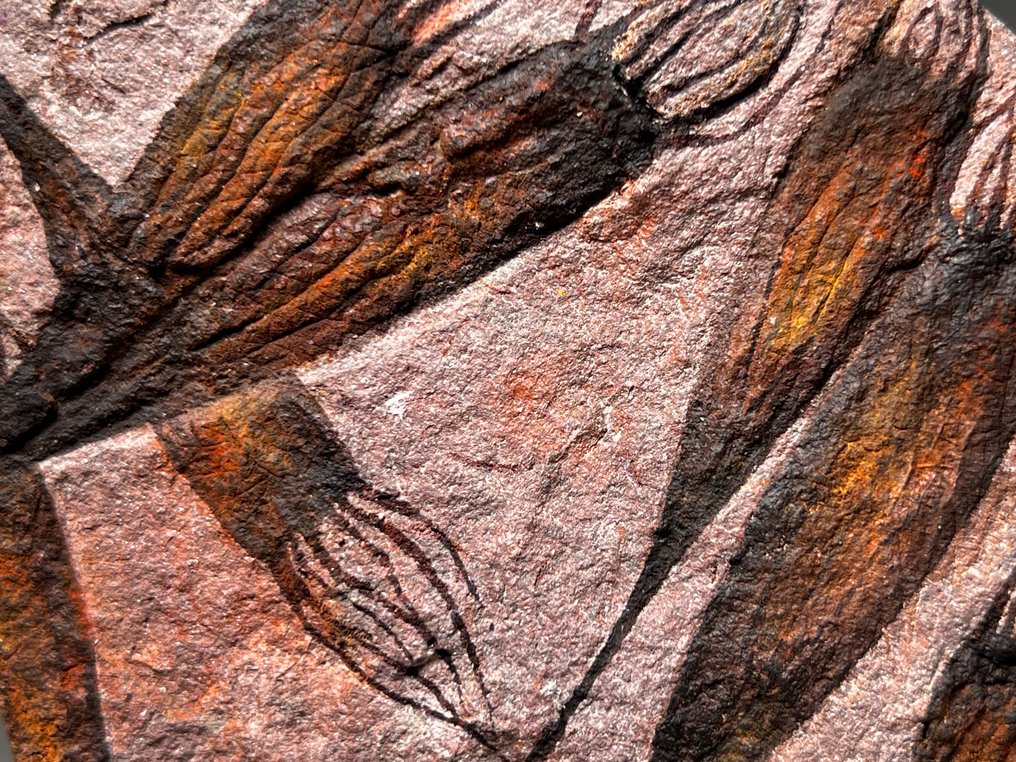
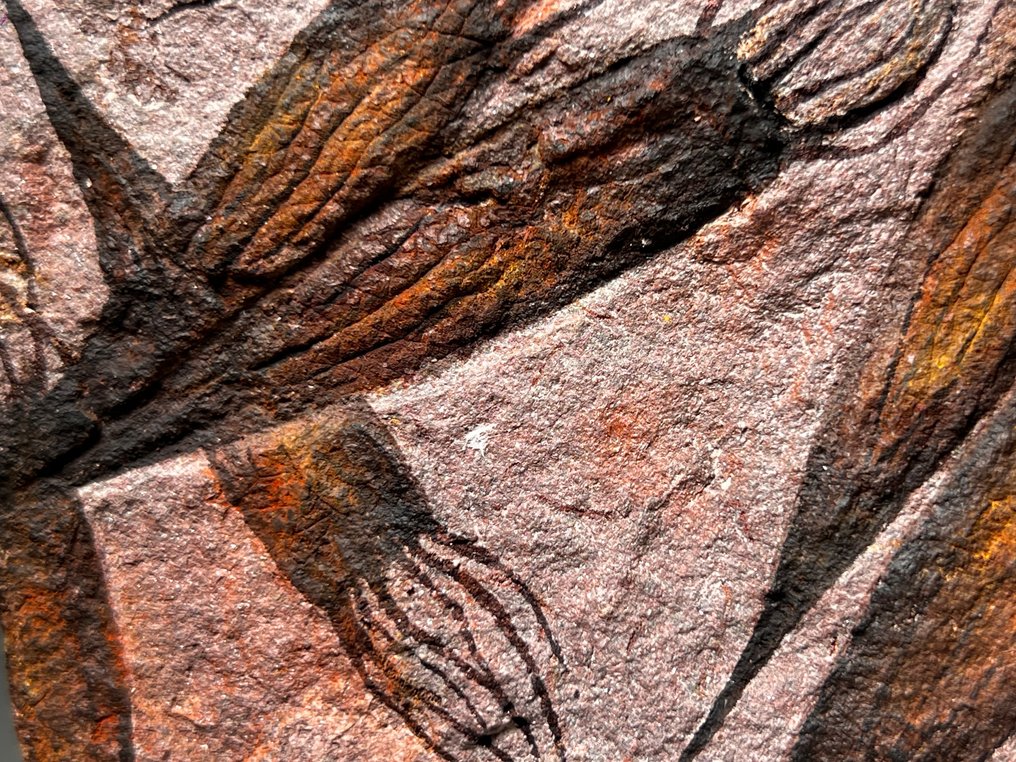
Plate of Ascocystites - Eocrinoids from the Ordovician period (about 485 to 443 million years ago), with 7 specimens, enhanced condition, dimensions 11 × 9.5 cm, and two display options.
AI-assisted summary
Description from the seller
This alien-looking fossil is a nice plate of very detailed Eocrinoids of the genus Ascocystites collected near Kaid Errami, Morocco.
Eocrinoids are one of the earliest-known groups of echinoderms.
This plate contains 7 specimens.
Larger specimen is 10 cm.
An interesting aspect: all the specimens are oriented in the same direction, indicating a sea stream at the time of death.
Enhancements note
This specimen comes from very rich iron hydroxide Fe(OH)2 layers, which are brown-yellow in color.
As tentacles and the stalk fossilized almost three-dimensionally, the hydroxide Fe(OH)2 hydrate transformed into ferric oxyhydroxide, which is mostly black in color.
What we do is visually highlight the difference between hydroxide Fe(OH)2 and ferric oxyhydroxide (body, tentacle, and stalk) using Reviver for stones and some oxide.
So, the enhancements job is about 15-20% on the real aspect when the fossil is found.
Plate is 11 x 9.5 cm.
It can be displayed in two different ways.
Stunning piece of ancient 'life', 450 million years old.
Plastic stand included.
Seller's Story
Don & Donna Fossils finally moved to Spain.
We are a Don & Donna Fossils, a couple united by the love of exploration, field research, professional preparation and museum display of fossils from all over the world.
This formula, combined with a desire to improve, makes us a winning team dedicated to our Fossil World.
Larisa is been passionate about fossils since was a child. Her strengths are perfectionism, perseverance and creativity, hence her ability to work and prepare these fossils as authentic, unique and aesthetic as possible. The pieces with which she is famous and which she boast the most are spiny ammonites.
I, Don, started fossil hunting in 1987, going from a passionate collector to a professional preparator and researcher. In all these years I have traveled searching for fossils in many parts of the world.
Our fossils are present in private collections in the United States, Singapore, Taiwan, as well as in prestigious museums in the Uk, China and Japan.
Quality in the preparation of the material and seriousness in managing the shipment in the best possible way distinguish us.
Don & Donna
This alien-looking fossil is a nice plate of very detailed Eocrinoids of the genus Ascocystites collected near Kaid Errami, Morocco.
Eocrinoids are one of the earliest-known groups of echinoderms.
This plate contains 7 specimens.
Larger specimen is 10 cm.
An interesting aspect: all the specimens are oriented in the same direction, indicating a sea stream at the time of death.
Enhancements note
This specimen comes from very rich iron hydroxide Fe(OH)2 layers, which are brown-yellow in color.
As tentacles and the stalk fossilized almost three-dimensionally, the hydroxide Fe(OH)2 hydrate transformed into ferric oxyhydroxide, which is mostly black in color.
What we do is visually highlight the difference between hydroxide Fe(OH)2 and ferric oxyhydroxide (body, tentacle, and stalk) using Reviver for stones and some oxide.
So, the enhancements job is about 15-20% on the real aspect when the fossil is found.
Plate is 11 x 9.5 cm.
It can be displayed in two different ways.
Stunning piece of ancient 'life', 450 million years old.
Plastic stand included.
Seller's Story
Don & Donna Fossils finally moved to Spain.
We are a Don & Donna Fossils, a couple united by the love of exploration, field research, professional preparation and museum display of fossils from all over the world.
This formula, combined with a desire to improve, makes us a winning team dedicated to our Fossil World.
Larisa is been passionate about fossils since was a child. Her strengths are perfectionism, perseverance and creativity, hence her ability to work and prepare these fossils as authentic, unique and aesthetic as possible. The pieces with which she is famous and which she boast the most are spiny ammonites.
I, Don, started fossil hunting in 1987, going from a passionate collector to a professional preparator and researcher. In all these years I have traveled searching for fossils in many parts of the world.
Our fossils are present in private collections in the United States, Singapore, Taiwan, as well as in prestigious museums in the Uk, China and Japan.
Quality in the preparation of the material and seriousness in managing the shipment in the best possible way distinguish us.
Don & Donna
Details
Specimen
Beautiful alien-looking fossil - 7 specimens
Scientific name
Ascocystites - Eocrinoids
Geological Period
Ordovician (485.4 - 443.8 million years)
Condition
Enhanced
Treatment
Enhancements
Sold by