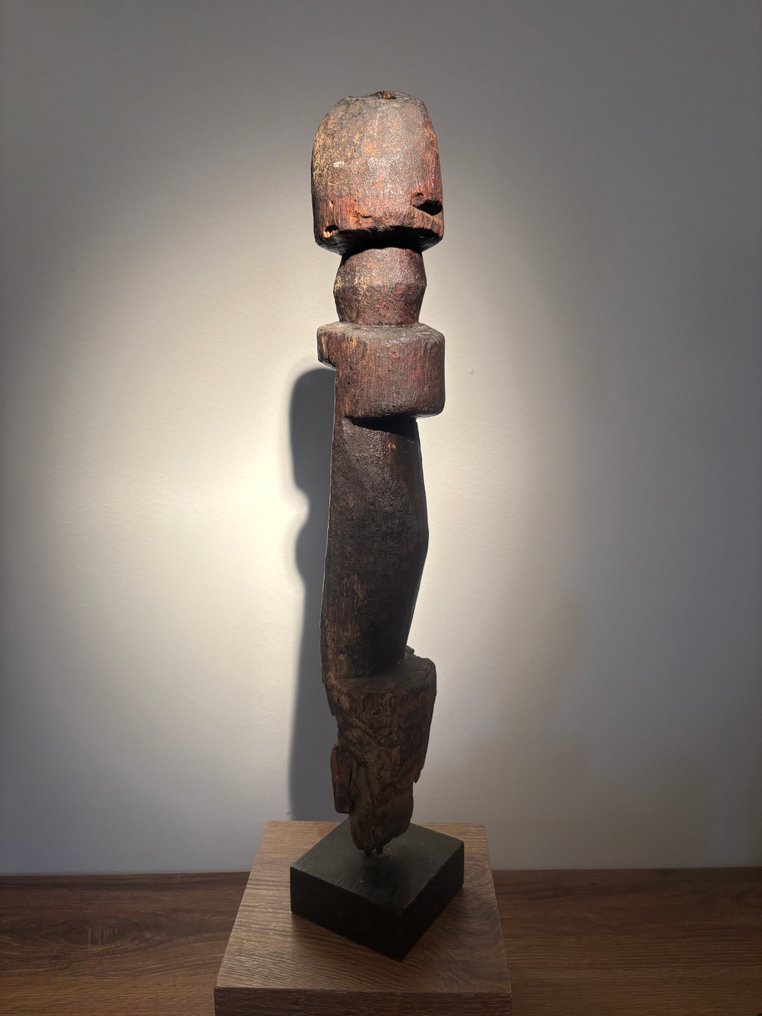
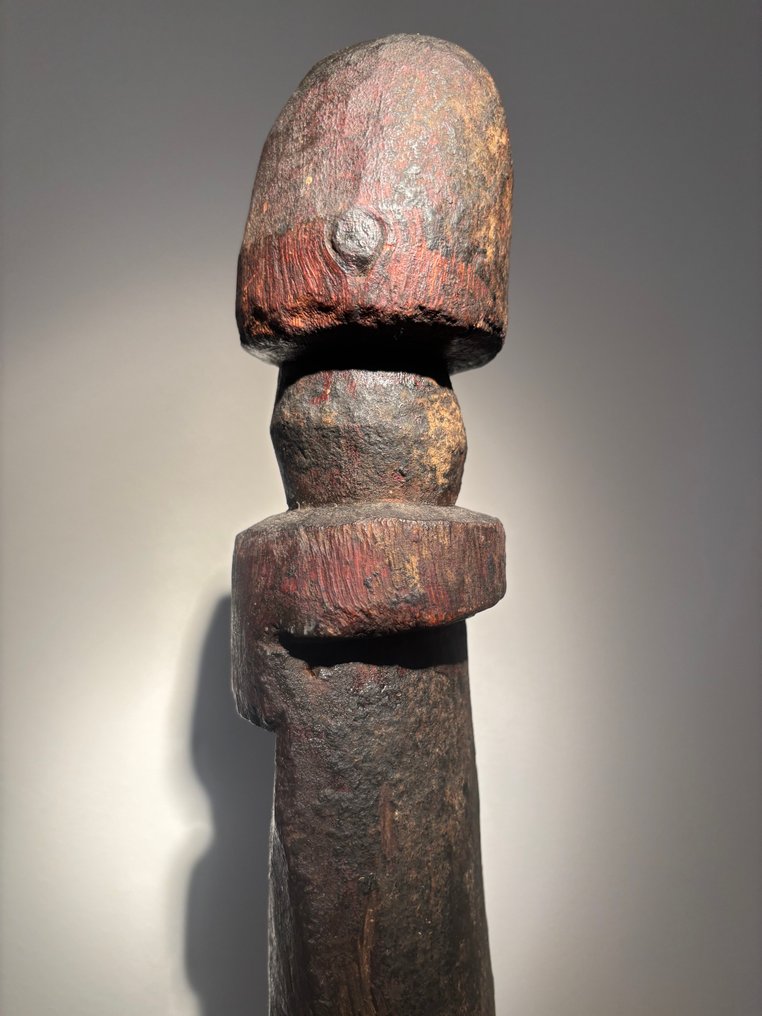
Dogon figure - Figure - Dogon - Mali



Opens Wednesday
Starting bid
€ 1
Add to your favourites to get an alert when the auction starts.

Expert
Selected by Dimitri André
Holds a postgraduate degree in African studies and 15 years experience in African art.
Estimate € 2,800 - € 3,100
Catawiki Buyer Protection
Your payment’s safe with us until you receive your object.View details
Trustpilot 4.4 | 123327 reviews
Rated Excellent on Trustpilot.
Description from the seller
The Dogon live in the elevated rocky heights of Mali's Bandiagara Escarpment. They rely on agriculture and manage to wrest subsistence crops from poor soil in an area that receives little rain. This monumental figure is one of the largest Dogon sculptures known. The region's dry climate has preserved Dogon works far longer than is usual for African wood sculpture, and radiocarbon testing of this work suggests that it may date as far back as the fifteenth century.
Dogon sculpture is primarily concerned with the spirits responsible for the fertility of both land and people. These include a family's real and mythical ancestors, the souls of women who died in childbirth, and water spirits. While the exact functions and meanings of individual works often remain obscure, scholars agree that Dogon sculptures were created for shrines.
The most distinctive subject depicted by Dogon sculptures is a single figure standing with raised arms. This posture has usually been interpreted as a gesture of prayer—an effort to connect earth and sky—and it has been suggested that it may symbolize a plea for rain. This masterpiece of Dogon figurative art shows a man with a well-defined body in a naturalistic stance. The artist has carefully depicted the figure's musculature, anatomical details, and body ornaments. His stylized beard identifies him as an elder and an individual whose age and experience grant him the right to participate in the most important religious, political, and social affairs of Dogon society. The figure wears wristlets, armlets, and anklets that denote his status, along with a belt and neck pendants resembling leather talismans that also imply his spiritual significance.
Provenance: private collection, USA
Seller's Story
Experts in Ancient African Art
Translated by Google TranslateThe Dogon live in the elevated rocky heights of Mali's Bandiagara Escarpment. They rely on agriculture and manage to wrest subsistence crops from poor soil in an area that receives little rain. This monumental figure is one of the largest Dogon sculptures known. The region's dry climate has preserved Dogon works far longer than is usual for African wood sculpture, and radiocarbon testing of this work suggests that it may date as far back as the fifteenth century.
Dogon sculpture is primarily concerned with the spirits responsible for the fertility of both land and people. These include a family's real and mythical ancestors, the souls of women who died in childbirth, and water spirits. While the exact functions and meanings of individual works often remain obscure, scholars agree that Dogon sculptures were created for shrines.
The most distinctive subject depicted by Dogon sculptures is a single figure standing with raised arms. This posture has usually been interpreted as a gesture of prayer—an effort to connect earth and sky—and it has been suggested that it may symbolize a plea for rain. This masterpiece of Dogon figurative art shows a man with a well-defined body in a naturalistic stance. The artist has carefully depicted the figure's musculature, anatomical details, and body ornaments. His stylized beard identifies him as an elder and an individual whose age and experience grant him the right to participate in the most important religious, political, and social affairs of Dogon society. The figure wears wristlets, armlets, and anklets that denote his status, along with a belt and neck pendants resembling leather talismans that also imply his spiritual significance.
Provenance: private collection, USA
Seller's Story
Experts in Ancient African Art
Translated by Google TranslateDetails
Era
1400-1900
No. of items
1
Title
Dogon figure
Country of Origin
Mali
Material
Wood
Ethnic group/ culture
Dogon
Sold with stand
Yes
Condition
Good condition - used with small signs of aging & blemishes
Height
43 cm
Width
9 cm
Depth
8 cm
Estimated period
1750-1800
Sold by
