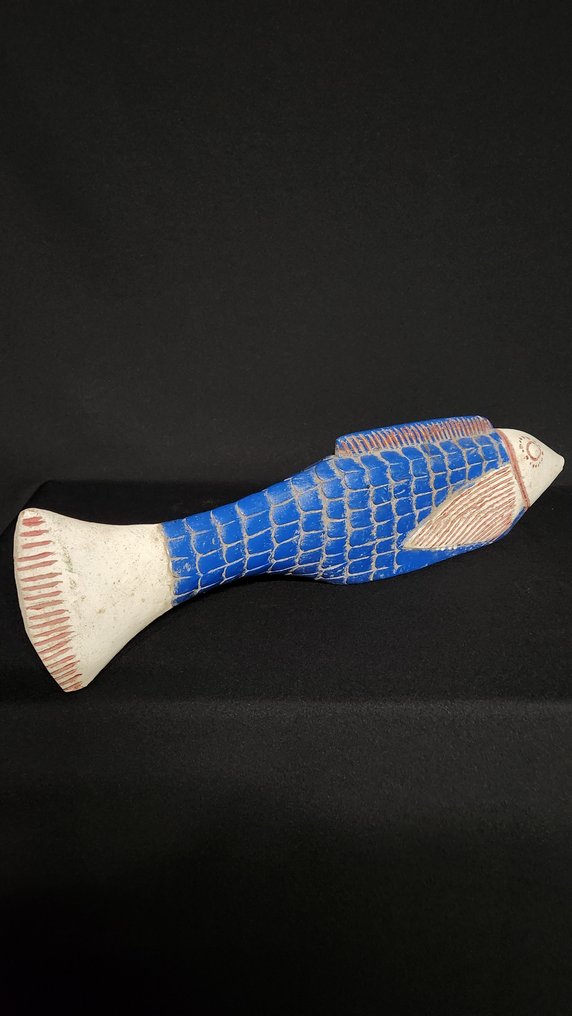
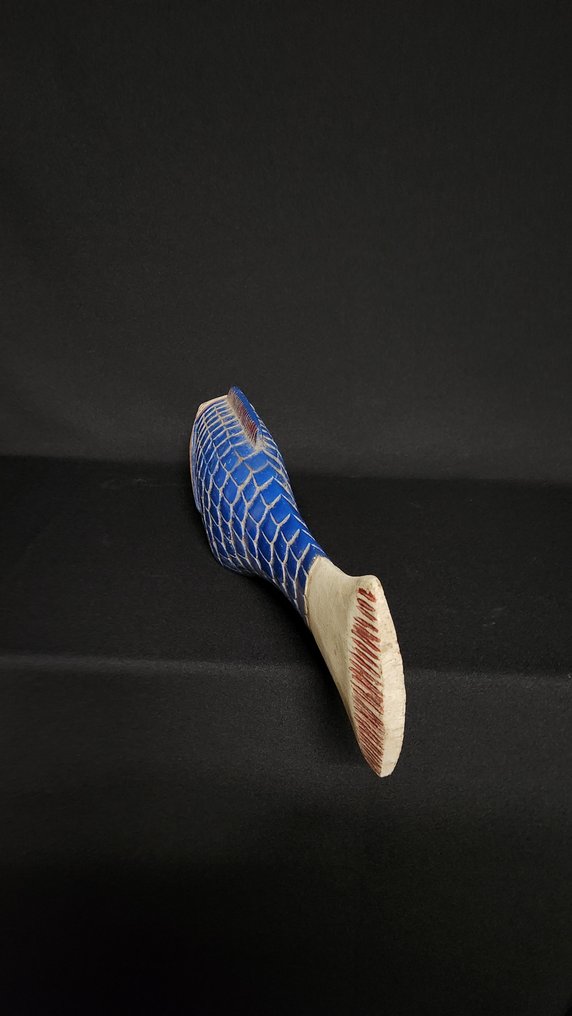
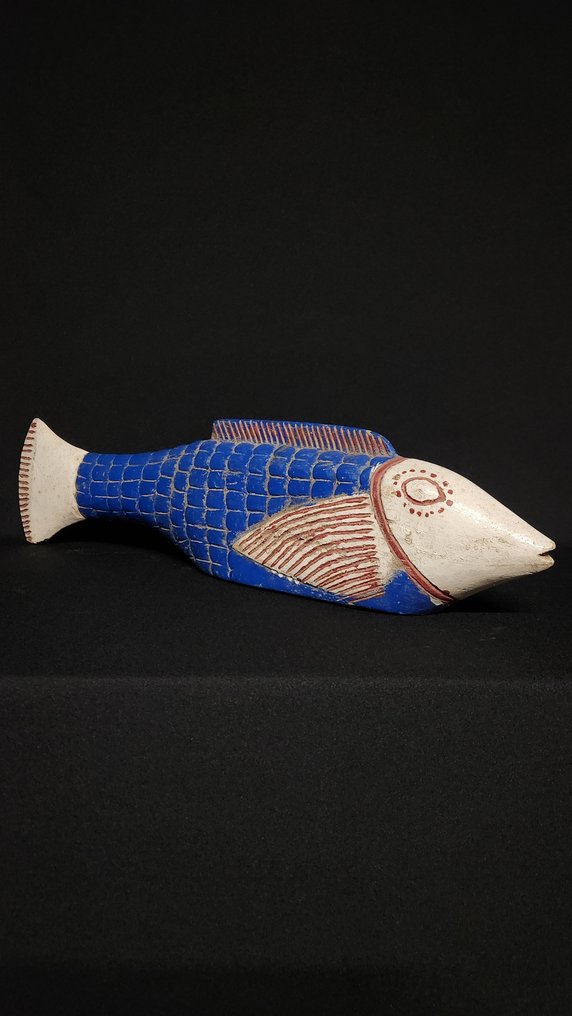
Superb fish - Bozo - Mali (No reserve price)


06
days
03
hours
27
minutes
31
seconds

No bids placed
Catawiki Buyer Protection
Your payment’s safe with us until you receive your object.View details
Trustpilot 4.4 | 123609 reviews
Rated Excellent on Trustpilot.
Bozo wooden Marionette from Mali, titled 'superbe poisson', 68 cm high with 16 × 9 cm dimensions, in good condition, dating from 2010–2020.
AI-assisted summary
Description from the seller
African puppet - Bozo - Mali
Animal figures in traditional African art
The Bozo constitute a specific group with only a few affinities with the surrounding populations, which are insufficient to fully assimilate them. It is incorrect to classify the Bozo as a caste people in the full sense of the term, because, of noble origin and having become emigrants following the decline of the Ghana Empire, of which they were part, they chose to become fishermen. Having found themselves at the end of their wandering along the banks of the Niger, they then decided to exploit the resources of this river to sustain themselves.
Then, gradually improving their techniques, they ultimately made fishing their main activity, to which they added a near-monopoly of boat trade. Thus, they became the 'masters of the water.' Then, borrowing from the local aborigines where they settled some of their customs, they combined these with those they had brought from their homeland, creating distinct traditions that largely differed from those of the major ethnic groups. In the Mopti region, just west of the Dogon country and above the Bambara, the Bozo constitute a very specific group. They have so little affinity with the surrounding populations that it would not be reasonable to fully assimilate them to these groups.
African puppet - Bozo - Mali
Animal figures in traditional African art
The Bozo constitute a specific group with only a few affinities with the surrounding populations, which are insufficient to fully assimilate them. It is incorrect to classify the Bozo as a caste people in the full sense of the term, because, of noble origin and having become emigrants following the decline of the Ghana Empire, of which they were part, they chose to become fishermen. Having found themselves at the end of their wandering along the banks of the Niger, they then decided to exploit the resources of this river to sustain themselves.
Then, gradually improving their techniques, they ultimately made fishing their main activity, to which they added a near-monopoly of boat trade. Thus, they became the 'masters of the water.' Then, borrowing from the local aborigines where they settled some of their customs, they combined these with those they had brought from their homeland, creating distinct traditions that largely differed from those of the major ethnic groups. In the Mopti region, just west of the Dogon country and above the Bambara, the Bozo constitute a very specific group. They have so little affinity with the surrounding populations that it would not be reasonable to fully assimilate them to these groups.
Details
Indigenous object name
Superb fish
No. of items
1
Ethnic group/ culture
Bozo
Country of Origin
Mali
Period
2010-2020
Material
Wood
Sold with stand
No
Condition
Good condition
Height
68 cm
Width
16 cm
Depth
9 cm
