Mask - Africa (No reserve price)

06
days
03
hours
25
minutes
44
seconds

No bids placed
Catawiki Buyer Protection
Your payment’s safe with us until you receive your object.View details
Trustpilot 4.4 | 123332 reviews
Rated Excellent on Trustpilot.
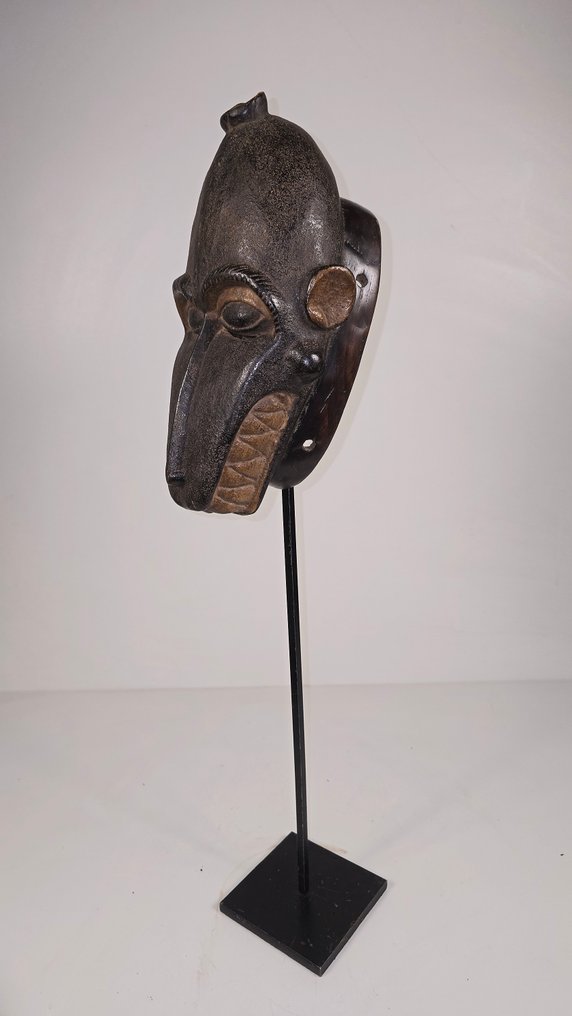
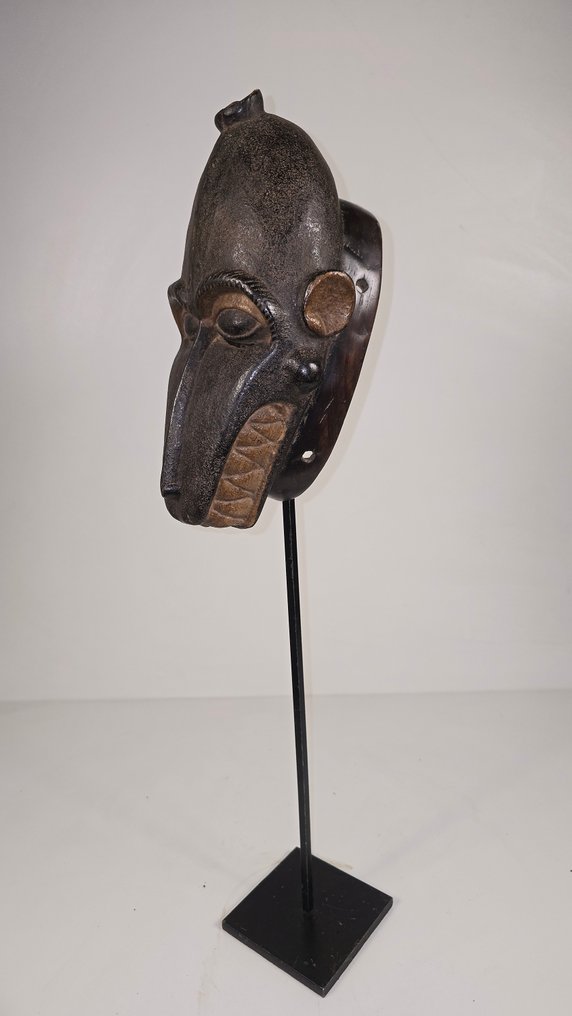
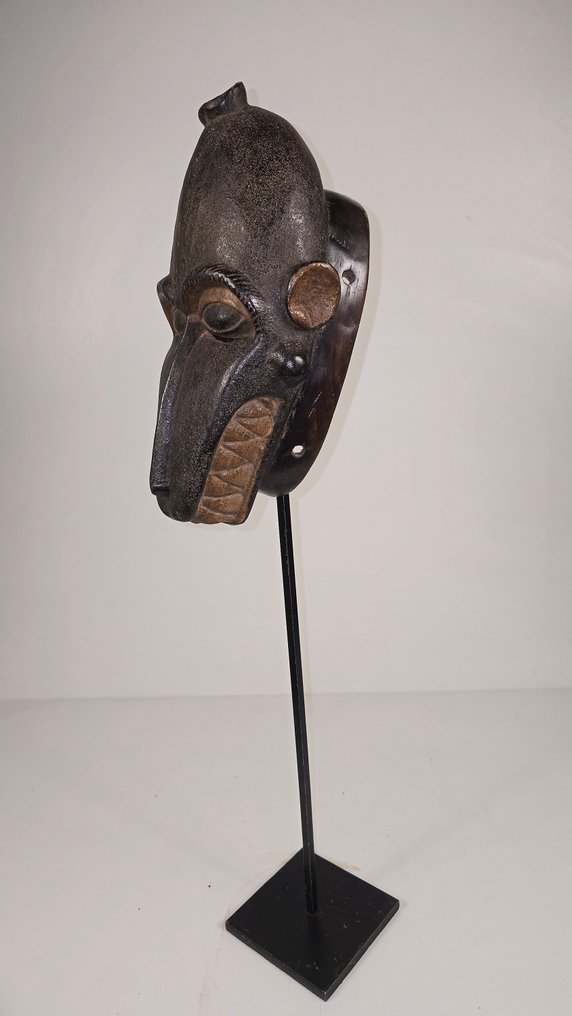
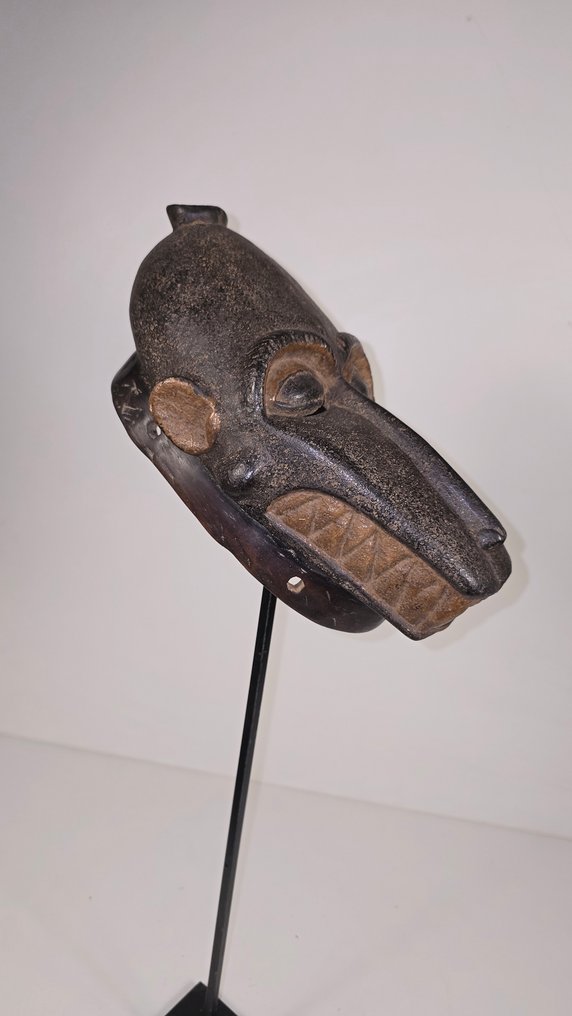
Baoulé wooden mask from Africa (Ivory Coast), 30 cm high and 15 cm wide, in good condition with some wear and age-related stains.
AI-assisted summary
Description from the seller
African art > African mask >
Baoule Mask
Monkey mask Ivory Coast
This sacred African mask of conjuration originates from one of the many Baoulé cults, which are believed to include seven masks. It is the powerful embodiment of a force being called 'amwin.' This mask could be linked to harvest-related ceremonies. Animal masks always accompanied portrait masks, in fact.
This model features a chest plate garnished with raphia fibers that concealed the dancer's costume attachments.
According to Baoulé mythology, a royal ancestor had to sacrifice his son to cross a river. This
The event is the origin of the name Baoulé, Bauli, meaning 'the child is dead.' They represent the majority of the population of Côte d'Ivoire. Baoulé African art artists have produced very elegant and diverse works, including many masks. There are also so-called 'entertainment' masks that are danced during specific festivities. These objects, whose characteristics are influenced by the Senufo, have several names, including aboya or mbotumbo, and belong to the group of 'force beings' or amwin, intermediaries between God and humans, given to the Baoulé by their Creator, just like the sacred masks they also use.
African art > African mask >
Baoule Mask
Monkey mask Ivory Coast
This sacred African mask of conjuration originates from one of the many Baoulé cults, which are believed to include seven masks. It is the powerful embodiment of a force being called 'amwin.' This mask could be linked to harvest-related ceremonies. Animal masks always accompanied portrait masks, in fact.
This model features a chest plate garnished with raphia fibers that concealed the dancer's costume attachments.
According to Baoulé mythology, a royal ancestor had to sacrifice his son to cross a river. This
The event is the origin of the name Baoulé, Bauli, meaning 'the child is dead.' They represent the majority of the population of Côte d'Ivoire. Baoulé African art artists have produced very elegant and diverse works, including many masks. There are also so-called 'entertainment' masks that are danced during specific festivities. These objects, whose characteristics are influenced by the Senufo, have several names, including aboya or mbotumbo, and belong to the group of 'force beings' or amwin, intermediaries between God and humans, given to the Baoulé by their Creator, just like the sacred masks they also use.
Details
Era
After 2000
No. of items
1
Material
Wood
Country of Origin
Africa
Condition
Good condition - used with small signs of aging & blemishes
Height
30 cm
Width
15 cm
