Divers - Feuillet manuscrit unique sous le règne de Louis XIV. - 1708


03
days
21
hours
23
minutes
23
seconds

9 other people are watching this object
 Bidder 5738 Bidder 5738 | €1 |
|---|
Catawiki Buyer Protection
Your payment’s safe with us until you receive your object.View details
Trustpilot 4.4 | 123718 reviews
Rated Excellent on Trustpilot.
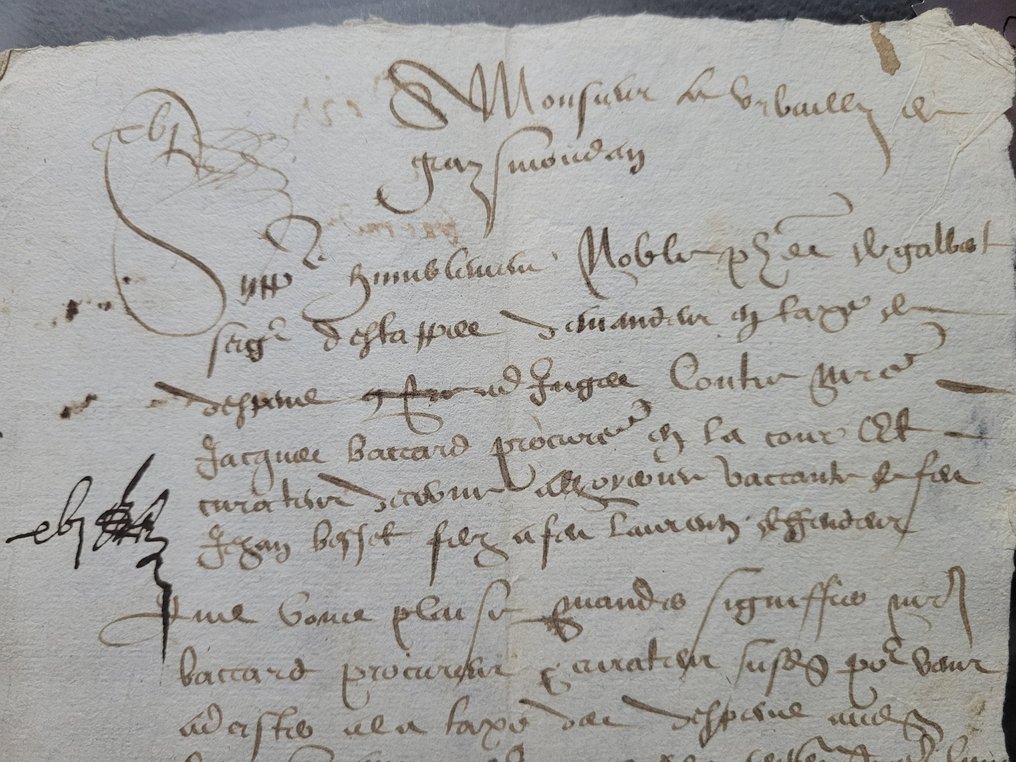
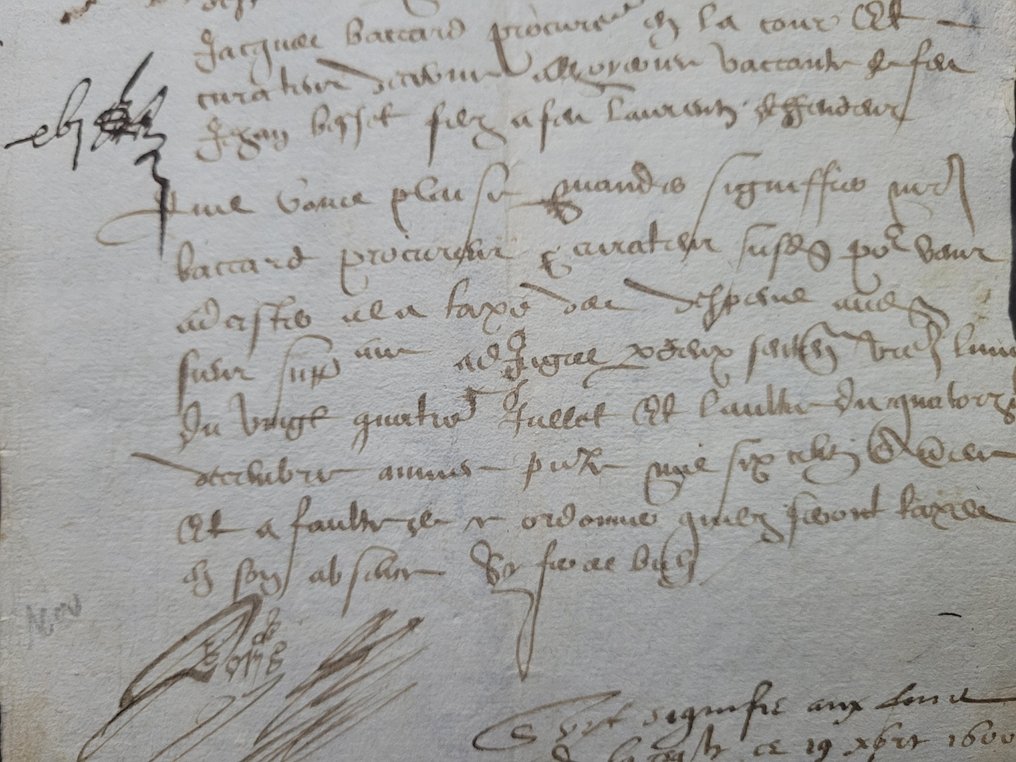
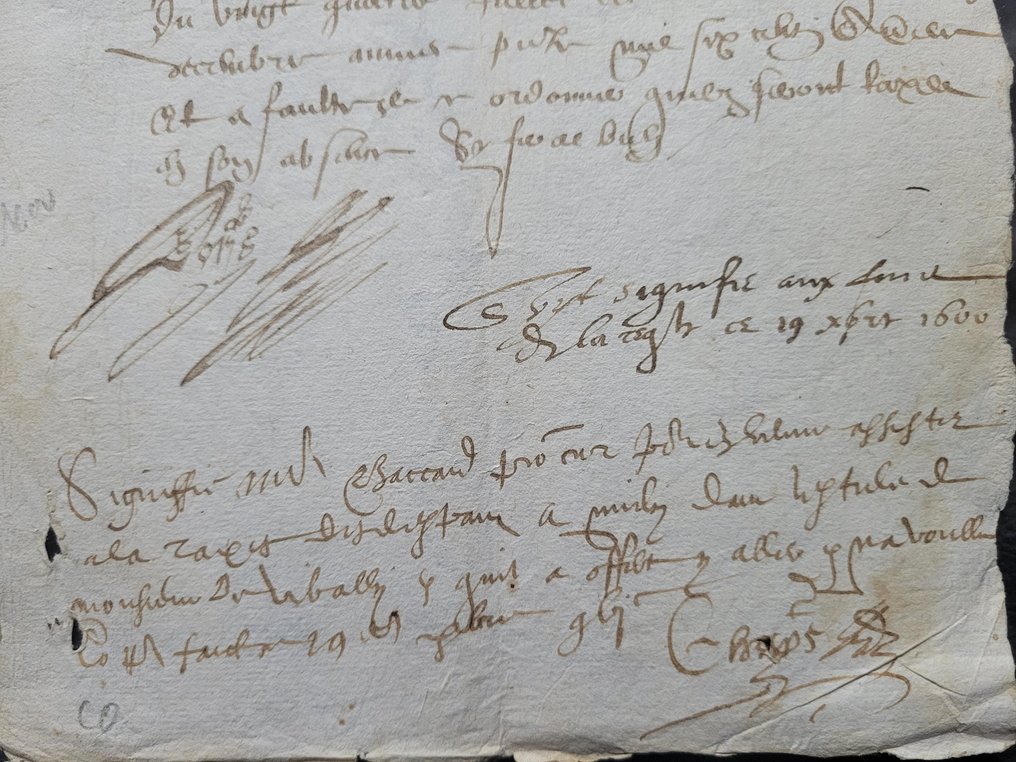
Original single-page manuscript from 1708, an act of civil procedure under Louis XIV, written in brown ink on wove paper and measuring 25 × 17 cm.
AI-assisted summary
Description from the seller
Unique judicial manuscript leaf from 1708.
Procedural act and service – Civil justice under the Ancien Régime. 25cm x 17cm.
1. Original handwritten leaf, written in brown ink on ancient laid paper, datable to the early 18th century (1708), clearly related to a civil judicial procedure.
It is an isolated but complete procedural act in its function, comprising
Statement of facts, designation of the parties, mention of a prosecutor, judicial ordering, and service formula with date and signature.
2. The document falls under the register of service and procedural act records under the Ancien Régime. The visible formulas clearly indicate an official process initiated at the request of a party, involving the summons or notification of an opponent, or the transmission of an act or decision within the framework of a civil trial.
It features the classic structures.
designation of the applicant, intervention of a prosecutor, reminder of the parties' status
and final mention of significance
Parties and actors mentioned.
The sheet clearly identifies several judicial actors:
A character deemed 'noble', main party in the proceeding.
An explicitly appointed prosecutor, acting for and on behalf of this party.
One or more opposing parties, mentioned as recipients of the act.
The presence of the prosecutor confirms that we are in a formal proceeding before a court, and not in a simple private document.
The text provides a reminder of the procedural context, mentions a request or opposition, and most importantly, explains the official meaning of the act, that is, its legal notification to the concerned party. The primary function of this sheet is therefore to ensure the legal validity of the procedure through formal notification, an essential condition for the continuation of the trial.
5. Dating Year 1708. Date formulated according to old usage (day and month mentioned in full or abbreviations).
This dating is consistent with the style of writing, the legal language used, and the physical support.
Signatures and validation
The sheet contains several handwritten signatures, bold and confident, initials and validation marks, and a distinct handwriting for the final formula.
These elements attest to the authenticity of the act, its official validation, and its effective use in a real procedure.
Paleographic and material analysis
Writing, rapid judicial cursive, numerous abbreviations, fluid and confident ductus, typical of a legal practitioner.
Old handmade paper, visible judicial folds, browning, stains, and wear consistent with a handled document, irregular edges, without modern trimming.
Concrete testimony of the procedural mechanisms of civil justice under Louis XIV.
Precise illustration of the role of prosecutors, the meaning of acts, and legal formalism.
Ideal for collectors of judicial manuscripts, enthusiasts of Old Regime archives, legal historians, or those interested in notarial practices.
Photos are an integral part of the description.
Shipping via Chronopost or another method depending on the country, with insurance.
Unique judicial manuscript leaf from 1708.
Procedural act and service – Civil justice under the Ancien Régime. 25cm x 17cm.
1. Original handwritten leaf, written in brown ink on ancient laid paper, datable to the early 18th century (1708), clearly related to a civil judicial procedure.
It is an isolated but complete procedural act in its function, comprising
Statement of facts, designation of the parties, mention of a prosecutor, judicial ordering, and service formula with date and signature.
2. The document falls under the register of service and procedural act records under the Ancien Régime. The visible formulas clearly indicate an official process initiated at the request of a party, involving the summons or notification of an opponent, or the transmission of an act or decision within the framework of a civil trial.
It features the classic structures.
designation of the applicant, intervention of a prosecutor, reminder of the parties' status
and final mention of significance
Parties and actors mentioned.
The sheet clearly identifies several judicial actors:
A character deemed 'noble', main party in the proceeding.
An explicitly appointed prosecutor, acting for and on behalf of this party.
One or more opposing parties, mentioned as recipients of the act.
The presence of the prosecutor confirms that we are in a formal proceeding before a court, and not in a simple private document.
The text provides a reminder of the procedural context, mentions a request or opposition, and most importantly, explains the official meaning of the act, that is, its legal notification to the concerned party. The primary function of this sheet is therefore to ensure the legal validity of the procedure through formal notification, an essential condition for the continuation of the trial.
5. Dating Year 1708. Date formulated according to old usage (day and month mentioned in full or abbreviations).
This dating is consistent with the style of writing, the legal language used, and the physical support.
Signatures and validation
The sheet contains several handwritten signatures, bold and confident, initials and validation marks, and a distinct handwriting for the final formula.
These elements attest to the authenticity of the act, its official validation, and its effective use in a real procedure.
Paleographic and material analysis
Writing, rapid judicial cursive, numerous abbreviations, fluid and confident ductus, typical of a legal practitioner.
Old handmade paper, visible judicial folds, browning, stains, and wear consistent with a handled document, irregular edges, without modern trimming.
Concrete testimony of the procedural mechanisms of civil justice under Louis XIV.
Precise illustration of the role of prosecutors, the meaning of acts, and legal formalism.
Ideal for collectors of judicial manuscripts, enthusiasts of Old Regime archives, legal historians, or those interested in notarial practices.
Photos are an integral part of the description.
Shipping via Chronopost or another method depending on the country, with insurance.
Details
Number of Books
1
Subject
Incunabula & early printing
Book Title
Feuillet manuscrit unique sous le règne de Louis XIV.
Author/ Illustrator
Divers
Condition
Good
Publication year oldest item
1708
Height
25 cm
Edition
1st Edition
Width
17 cm
Language
French
Original language
Yes
Binding/ Material
Single page
Number of pages
1