Reliquaire Kota - Gabon (No reserve price)


03
days
02
hours
41
minutes
02
seconds

3 other people are watching this object
 Bidder 7122 Bidder 7122 | €1 |
|---|
Catawiki Buyer Protection
Your payment’s safe with us until you receive your object.View details
Trustpilot 4.4 | 123641 reviews
Rated Excellent on Trustpilot.
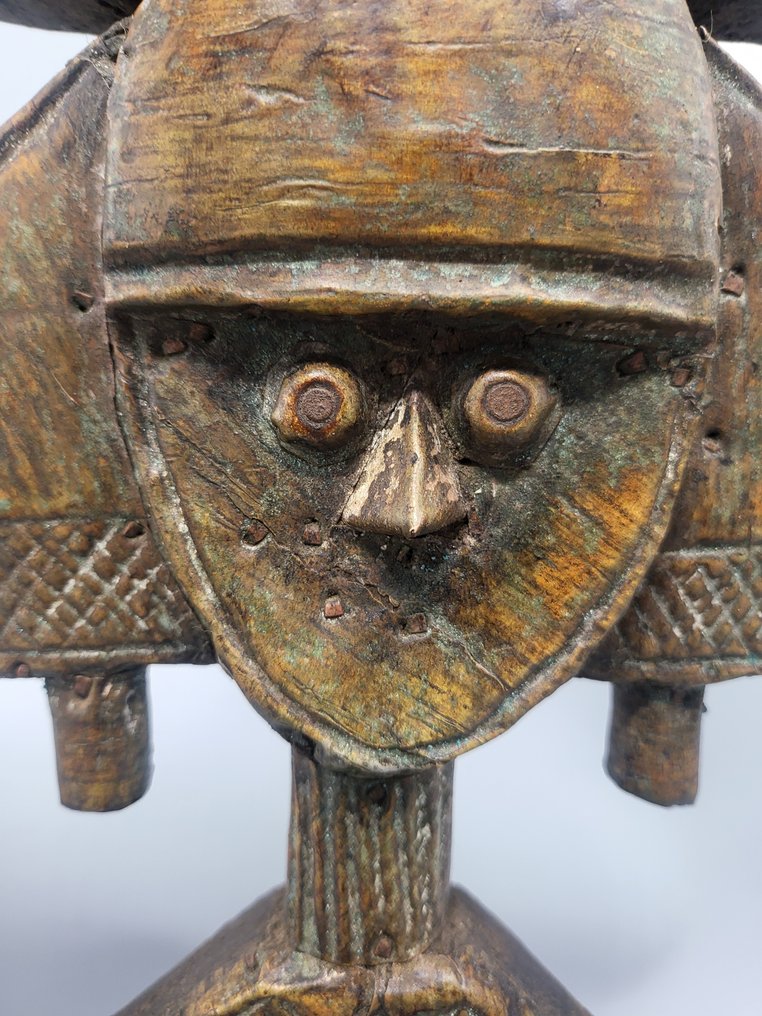
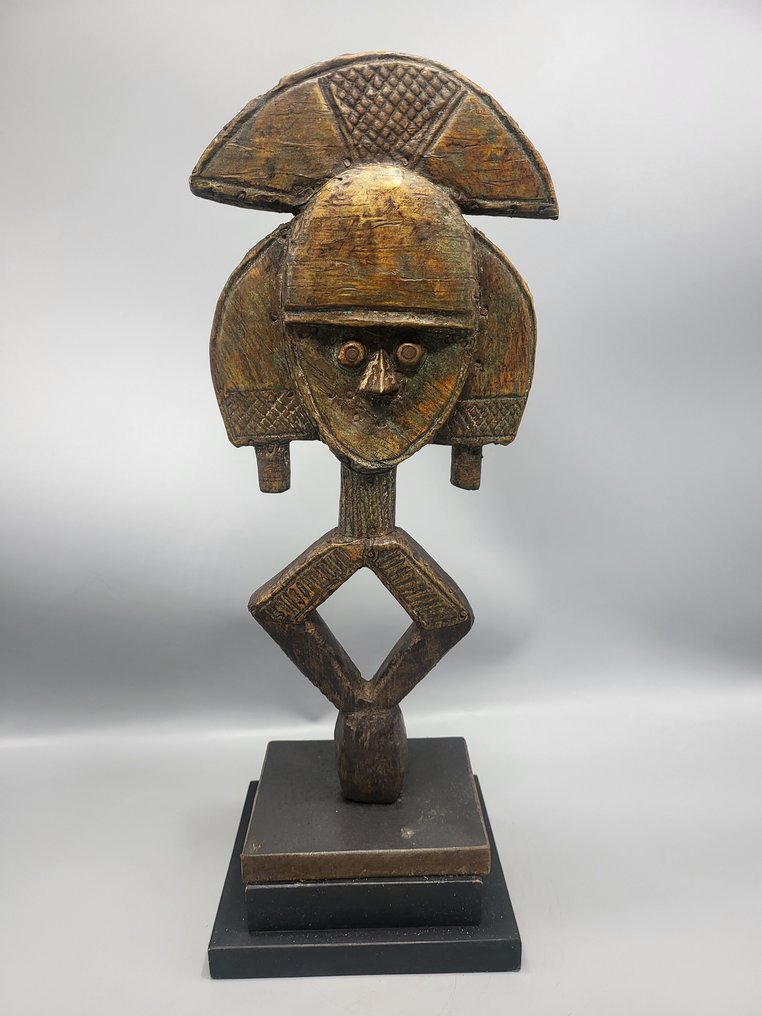
Reliquaire Kota, a Gabonese Bwiti reliquary of the Kota/Bakota people, made of wood, copper and brass, 35 cm high, 14 cm wide and 10 cm deep, dating to 2000–2010 and sold with a stand in good condition.
AI-assisted summary
Description from the seller
Reliquary Bwiti - Kota / Bakota - Gabon - Copper reliquaries
The Kota or Bakota (plural), as well as the Mahongwé, live in eastern Gabon and are renowned for their reliquaries.
Initially, the Kota used to leave their dead exposed to the elements, in the forest.
Under the influence of neighboring tribes, they began burying their chiefs, then exhuming their remains (mainly the skull) to place them in bark boxes or baskets called bwété, on which a statue was placed.
From these boxes or baskets in wicker, rarely complete, we mainly know the sculptures that topped them, intended to warn the invisible forces capable of diminishing the supernatural power of relics.
Such reliquaries were entrusted to clan leaders who kept them hidden, sometimes leveraging the power of the relics for the benefit of the clan.
When serious crises affected the village (a village comprising several clans), the leaders gathered their reliquaries to perform rituals.
This cult was known as bwiti by the Mahongwé and their neighbors, for whom the guardians were the 'faces' of bwété.
Heights 35 cm
Widths 14 cm
Reliquary Bwiti - Kota / Bakota - Gabon - Copper reliquaries
The Kota or Bakota (plural), as well as the Mahongwé, live in eastern Gabon and are renowned for their reliquaries.
Initially, the Kota used to leave their dead exposed to the elements, in the forest.
Under the influence of neighboring tribes, they began burying their chiefs, then exhuming their remains (mainly the skull) to place them in bark boxes or baskets called bwété, on which a statue was placed.
From these boxes or baskets in wicker, rarely complete, we mainly know the sculptures that topped them, intended to warn the invisible forces capable of diminishing the supernatural power of relics.
Such reliquaries were entrusted to clan leaders who kept them hidden, sometimes leveraging the power of the relics for the benefit of the clan.
When serious crises affected the village (a village comprising several clans), the leaders gathered their reliquaries to perform rituals.
This cult was known as bwiti by the Mahongwé and their neighbors, for whom the guardians were the 'faces' of bwété.
Heights 35 cm
Widths 14 cm
Details
No. of items
1
Country of Origin
Gabon
Period
2000-2010
Material
Brass, Copper, Wood
Sold with stand
Yes
Condition
Fair condition
Title of artwork
Reliquaire Kota
Height
35 cm
Width
14 cm
Depth
10 cm
Sold by
