Byzantine Silver Ring - with Red Glass Bezel (No reserve price)



01
day
01
hour
44
minutes
22
seconds
Current bid
€ 57
No reserve price

Expert
Selected by Ruth Garrido Vila
Directed the Ifergan Collection Museum, specialising in Phoenician and Mediterranean archaeology.
Estimate € 150 - € 200
42 other people are watching this object
 Bidder 1355 Bidder 1355 | €57 | |
|---|---|---|
 Bidder 9917 Bidder 9917 | €54 | |
| Bidder 9917 | €51 | |
Catawiki Buyer Protection
Your payment’s safe with us until you receive your object.View details
Trustpilot 4.4 | 123536 reviews
Rated Excellent on Trustpilot.
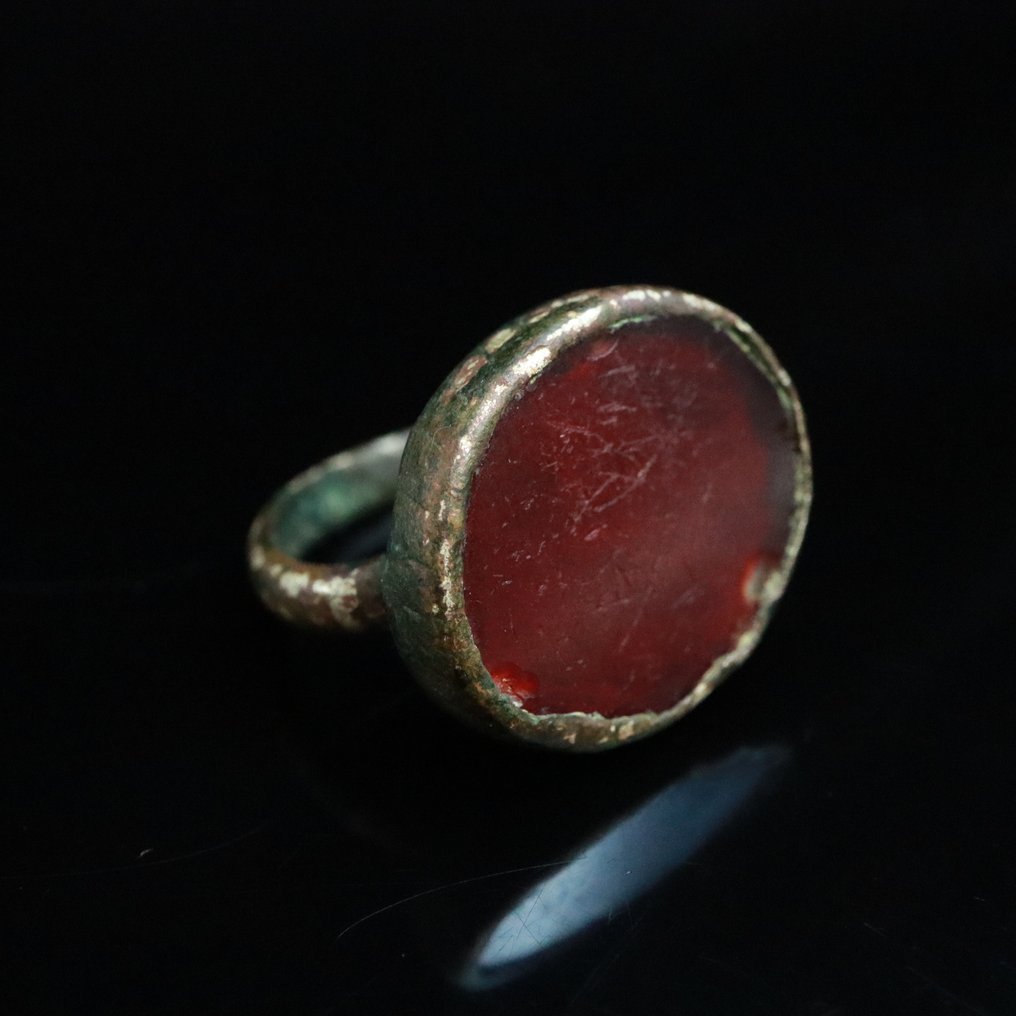
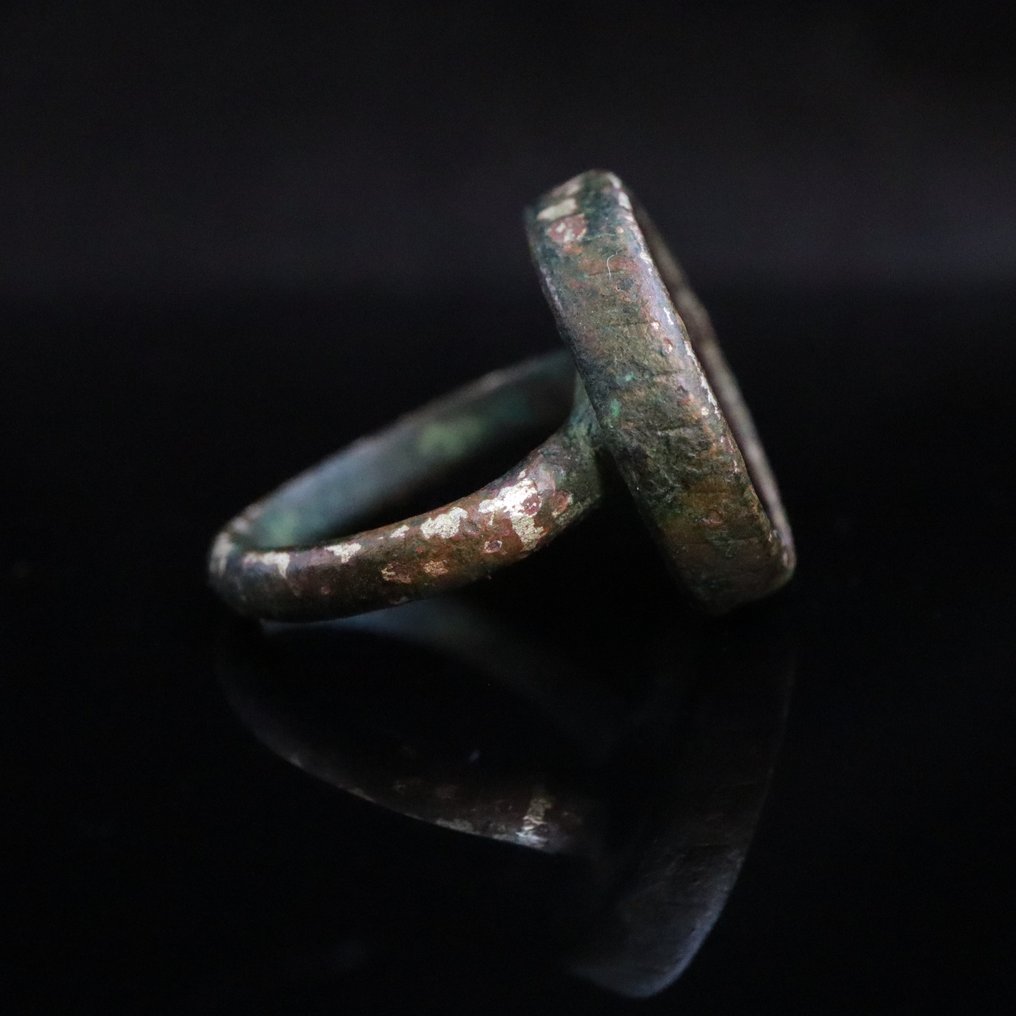
Byzantine silver ring dating to the 13th–15th century AD, with a large oval red glass bezel, total weight 8.16 g, inner diameter 21 mm, and described in very good condition with minor wear.
AI-assisted summary
Description from the seller
Ancient Byzantine Silver Ring with Red Glass Bezel, 13th-15th C AD
This rare ancient Byzantine silver ring, dating to the 6th–12th century AD, features a sturdy band with a large oval bezel set with a vibrant red glass stone, mimicking precious gems like carnelian or garnet. The substantial size and simple yet elegant design suggest it could have been worn by a member of the Byzantine elite or even a Crusader knight during the overlapping period of the Crusades (11th–13th century), blending functional jewelry with symbolic protection.
Symbolism & Historical Significance:
Red Glass Bezel: In Byzantine culture, red stones or glass insets symbolized vitality, divine favor, and protection, often associated with Christian themes like the blood of Christ or apotropaic wards against evil. Glass was a common substitute for rarer gems, reflecting the empire's advanced glassmaking techniques inherited from Roman traditions.
Such rings embodied status, faith, and resilience, worn as talismans during an era of religious fervor, imperial expansion, and conflicts like the Crusades, where Byzantine influences mingled with Western European styles in the Holy Land.
Connection to the Byzantine Empire and Crusades:
Crafted in the Eastern Roman (Byzantine) Empire, rings of this type were prevalent among nobility, clergy, and soldiers, with similar examples found in excavations from Constantinople to the Levant. The potential Crusader attribution arises from the period's cultural exchanges, where Western knights adopted Byzantine jewelry forms during their campaigns (1095–1291 AD), using them as personal adornments or protective amulets amid warfare and pilgrimage.
Condition:
Intact with a natural patina and minor encrustation from age, preserving the red glass bezel securely; the silver or silver billon shows light wear consistent with ancient use, enhancing its historical authenticity.
Dimensions:
Inner Diameter: 21 mm
Weight: 8.16 g
Provenance:
Sourced from the Mediterranean region and previously part of a private European collection, established in the 1980s. A provenance document and declaration of legal origin are available in PDF format upon request.
Note: Please examine the provided images for a detailed impression of the ring. The photos are highly magnified to showcase the details the best way possible; otherwise, the piece is even more beautiful and attractive in person.
Seller's Story
As a second-generation history enthusiast and antique art collector, I have a deep passion for historical artifacts—from prehistoric civilizations to the Medieval era. I love connecting with fellow history lovers and sharing unique, carefully selected pieces. My goal is to find new homes for remarkable items while continuing to expand my own collection. Feel free to explore my selection—I hope you find something special!
Ancient Byzantine Silver Ring with Red Glass Bezel, 13th-15th C AD
This rare ancient Byzantine silver ring, dating to the 6th–12th century AD, features a sturdy band with a large oval bezel set with a vibrant red glass stone, mimicking precious gems like carnelian or garnet. The substantial size and simple yet elegant design suggest it could have been worn by a member of the Byzantine elite or even a Crusader knight during the overlapping period of the Crusades (11th–13th century), blending functional jewelry with symbolic protection.
Symbolism & Historical Significance:
Red Glass Bezel: In Byzantine culture, red stones or glass insets symbolized vitality, divine favor, and protection, often associated with Christian themes like the blood of Christ or apotropaic wards against evil. Glass was a common substitute for rarer gems, reflecting the empire's advanced glassmaking techniques inherited from Roman traditions.
Such rings embodied status, faith, and resilience, worn as talismans during an era of religious fervor, imperial expansion, and conflicts like the Crusades, where Byzantine influences mingled with Western European styles in the Holy Land.
Connection to the Byzantine Empire and Crusades:
Crafted in the Eastern Roman (Byzantine) Empire, rings of this type were prevalent among nobility, clergy, and soldiers, with similar examples found in excavations from Constantinople to the Levant. The potential Crusader attribution arises from the period's cultural exchanges, where Western knights adopted Byzantine jewelry forms during their campaigns (1095–1291 AD), using them as personal adornments or protective amulets amid warfare and pilgrimage.
Condition:
Intact with a natural patina and minor encrustation from age, preserving the red glass bezel securely; the silver or silver billon shows light wear consistent with ancient use, enhancing its historical authenticity.
Dimensions:
Inner Diameter: 21 mm
Weight: 8.16 g
Provenance:
Sourced from the Mediterranean region and previously part of a private European collection, established in the 1980s. A provenance document and declaration of legal origin are available in PDF format upon request.
Note: Please examine the provided images for a detailed impression of the ring. The photos are highly magnified to showcase the details the best way possible; otherwise, the piece is even more beautiful and attractive in person.
Seller's Story
As a second-generation history enthusiast and antique art collector, I have a deep passion for historical artifacts—from prehistoric civilizations to the Medieval era. I love connecting with fellow history lovers and sharing unique, carefully selected pieces. My goal is to find new homes for remarkable items while continuing to expand my own collection. Feel free to explore my selection—I hope you find something special!
Details
Era
Before 1400
Culture
Byzantine
Metal
Silver
Century/ Timeframe
13th-15th C AD
Acquired from
Private collection
Total weight
8.16 g
Year acquired
2024
Condition
Very good condition - slightly used with small signs of wear
Country acquired from
Europe
Previous owner acquired from
Inherited
Title additional information
with Red Glass Bezel
Previous owner - year acquired
1980
Previous owner - country acquired from
Europe
I verify that I have obtained this object legally and that I am allowed to sell it
Yes
Sold by
