Bobo Oulé Mask - Bobo - Burkina Faso


06
days
20
hours
33
minutes
48
seconds
Starting bid
€ 1
Reserve price not met

Expert
Selected by Dimitri André
Holds a postgraduate degree in African studies and 15 years experience in African art.
Estimate € 350 - € 400
No bids placed
Catawiki Buyer Protection
Your payment’s safe with us until you receive your object.View details
Trustpilot 4.4 | 123609 reviews
Rated Excellent on Trustpilot.
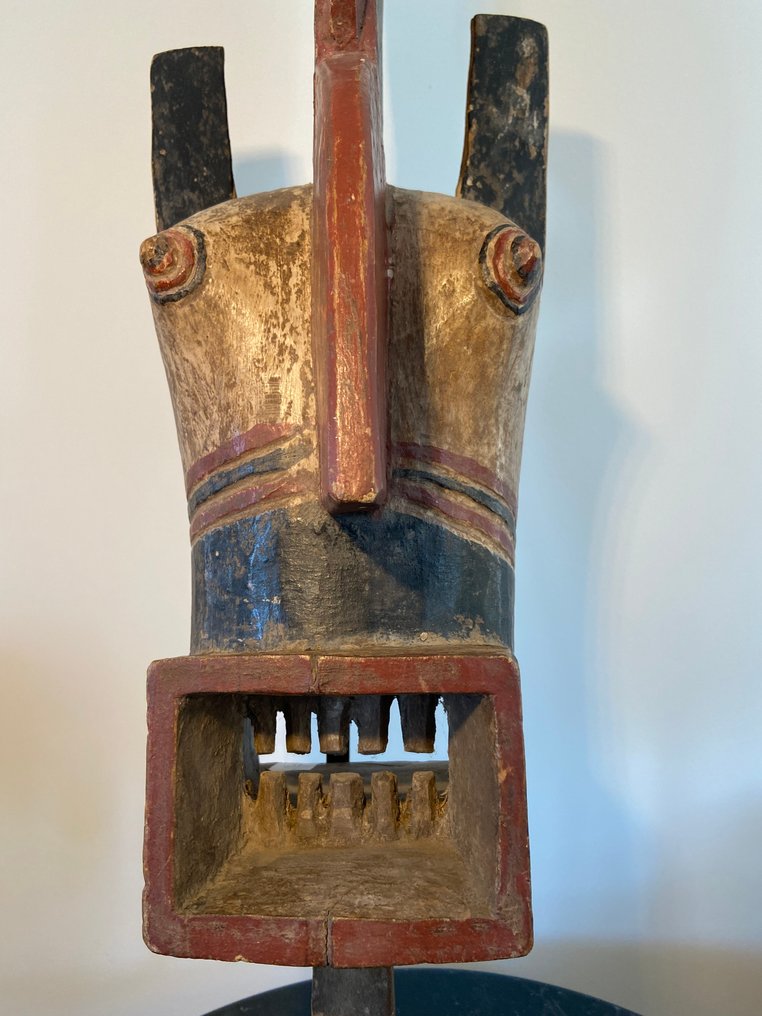
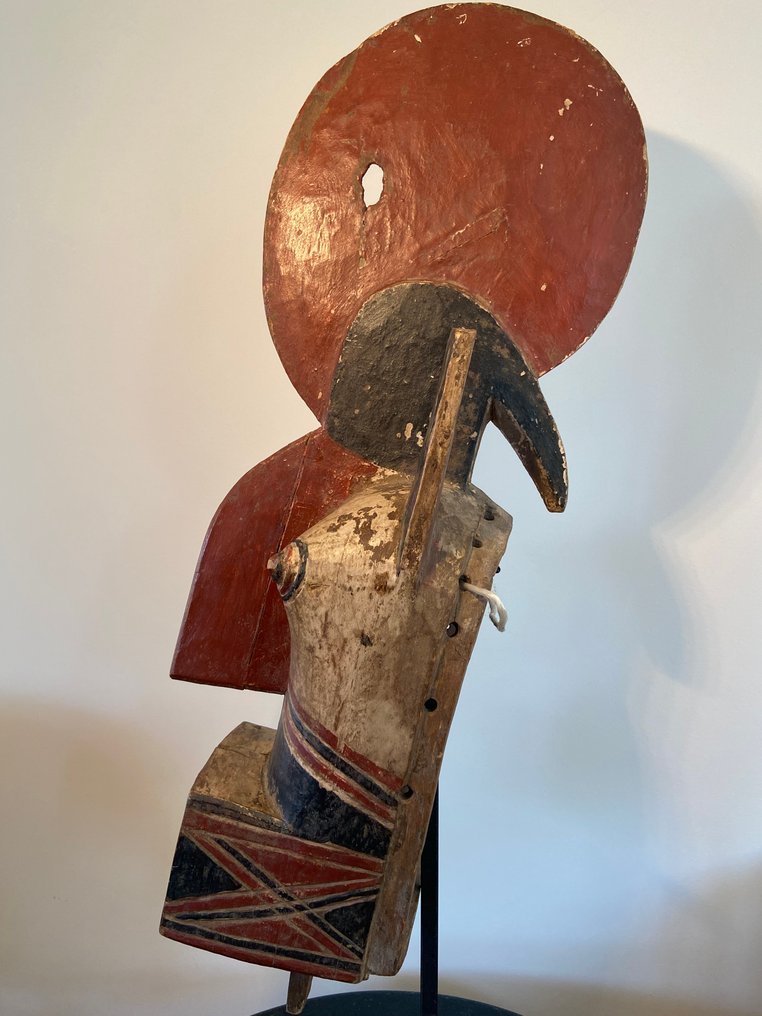
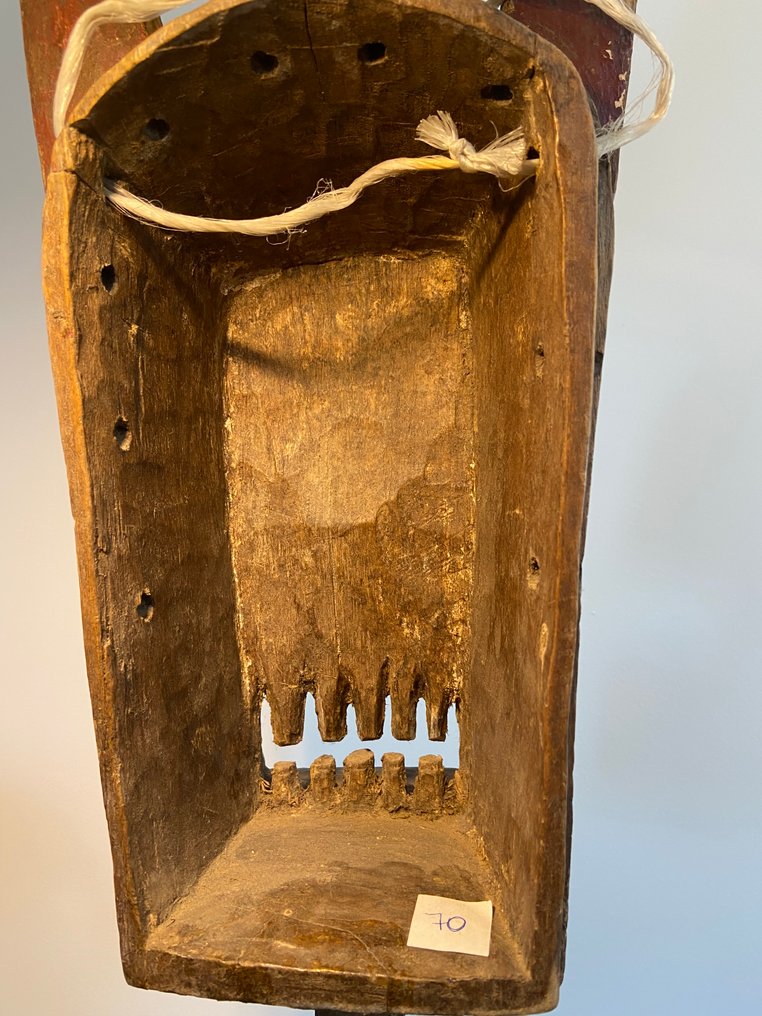
Máscara Bobo Oulé from Burkina Faso, a Bobo culture mask dating to the mid-20th century, 65 cm high, in good condition, provenance Berthe Hartert collection, Argiles Collection, Barcelona.
AI-assisted summary
Description from the seller
The Bobo Oulé (Bwa), also known as Bobo-Niénégé, 'men with scarred faces,' live in the territory called Bwamou, near Dédougou, Tougan, Houndé, and west of Boroma. They make up approximately 75% of the total Bobo population. The masks of the Bobo Oulé are distinguished by their great variety. They are complex creations, anthropomorphic or zoomorphic, or representing specific animals such as buffalo, rooster, antelope, crocodile, and monkey, as well as a wide variety of birds. Each village can have up to fifty masks, all different. In this regard, masks belonging to the same category differ in shape and decoration, which explains why no two masks are ever alike. The polychrome technique used for Bobo Oulé masks is as follows: the carved wood is first painted white; then red and black colors are applied, with black predominating. This decoration must be applied only to the carved surfaces, giving the design a high relief. The colors are based on kaolin and reptile excrement. Black is obtained by mixing boiled resin and a type of root that gives it a shiny appearance. For red, a mixture of water, resin, and eggs is used, into which pulverized aterite is added. Sometimes red is obtained by a method that uses a special variety of millet. During festivals in honor of the dead and fertility ceremonies, masked dancers of the secret society Do come out dressed in their fiber costumes, wielding wood, sticks, and leafy branches as weapons.
Provenance: Berthe Hartert collection.
Argiles Collection, Barcelona
The Bobo Oulé (Bwa), also known as Bobo-Niénégé, 'men with scarred faces,' live in the territory called Bwamou, near Dédougou, Tougan, Houndé, and west of Boroma. They make up approximately 75% of the total Bobo population. The masks of the Bobo Oulé are distinguished by their great variety. They are complex creations, anthropomorphic or zoomorphic, or representing specific animals such as buffalo, rooster, antelope, crocodile, and monkey, as well as a wide variety of birds. Each village can have up to fifty masks, all different. In this regard, masks belonging to the same category differ in shape and decoration, which explains why no two masks are ever alike. The polychrome technique used for Bobo Oulé masks is as follows: the carved wood is first painted white; then red and black colors are applied, with black predominating. This decoration must be applied only to the carved surfaces, giving the design a high relief. The colors are based on kaolin and reptile excrement. Black is obtained by mixing boiled resin and a type of root that gives it a shiny appearance. For red, a mixture of water, resin, and eggs is used, into which pulverized aterite is added. Sometimes red is obtained by a method that uses a special variety of millet. During festivals in honor of the dead and fertility ceremonies, masked dancers of the secret society Do come out dressed in their fiber costumes, wielding wood, sticks, and leafy branches as weapons.
Provenance: Berthe Hartert collection.
Argiles Collection, Barcelona
Details
No. of items
1
Ethnic group/ culture
Bobo
Country of Origin
Burkina Faso
Period
Mid 20th century
Sold with stand
No
Condition
Good condition
Title of artwork
Bobo Oulé Mask
Height
65 cm
Provenance
Private collection
