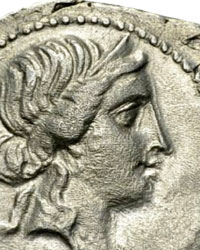
Roman Empire (Provincial). Commodus (AD 177-192). Pisidia, Antioch - (No reserve price)


04
days
01
hour
15
minutes
52
seconds

4 other people are watching this object
 Bidder 2494 Bidder 2494 | €1 |
|---|
Catawiki Buyer Protection
Your payment’s safe with us until you receive your object.View details
Trustpilot 4.4 | 123759 reviews
Rated Excellent on Trustpilot.
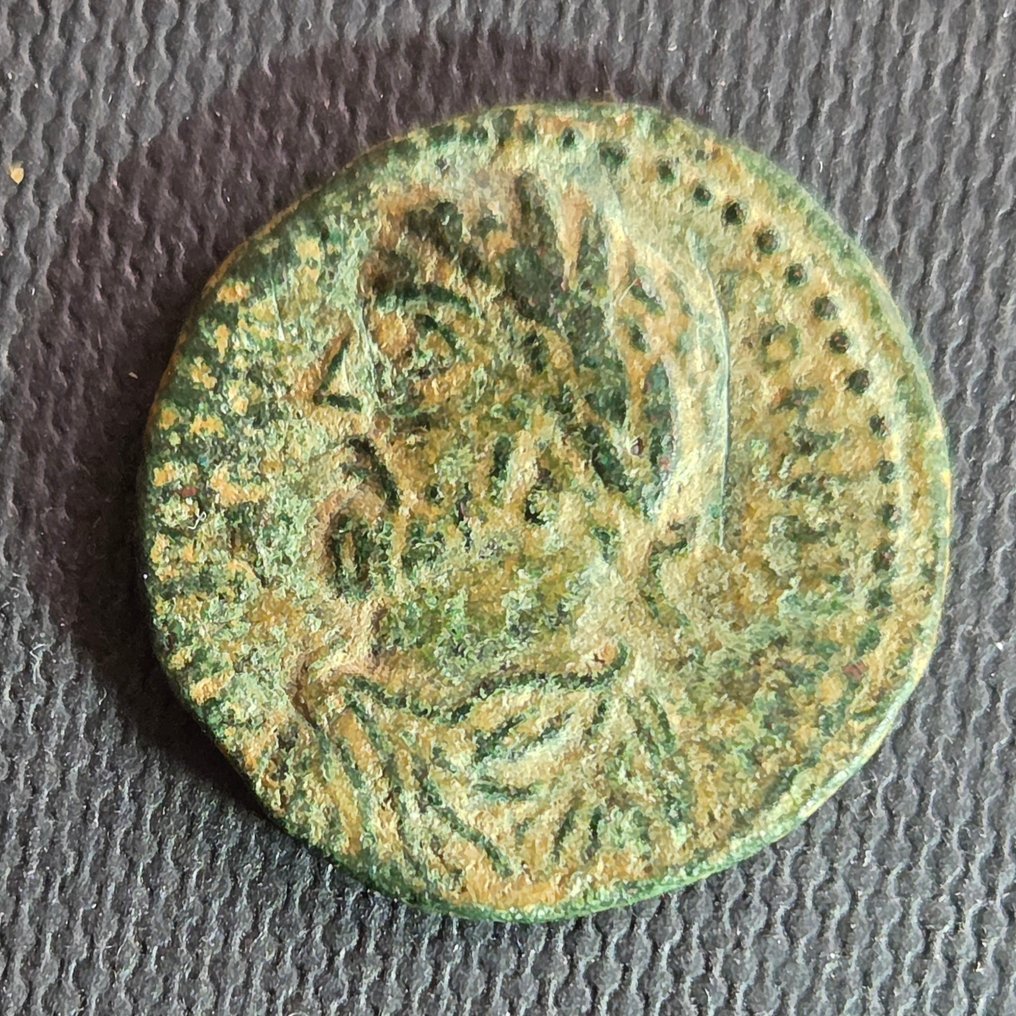
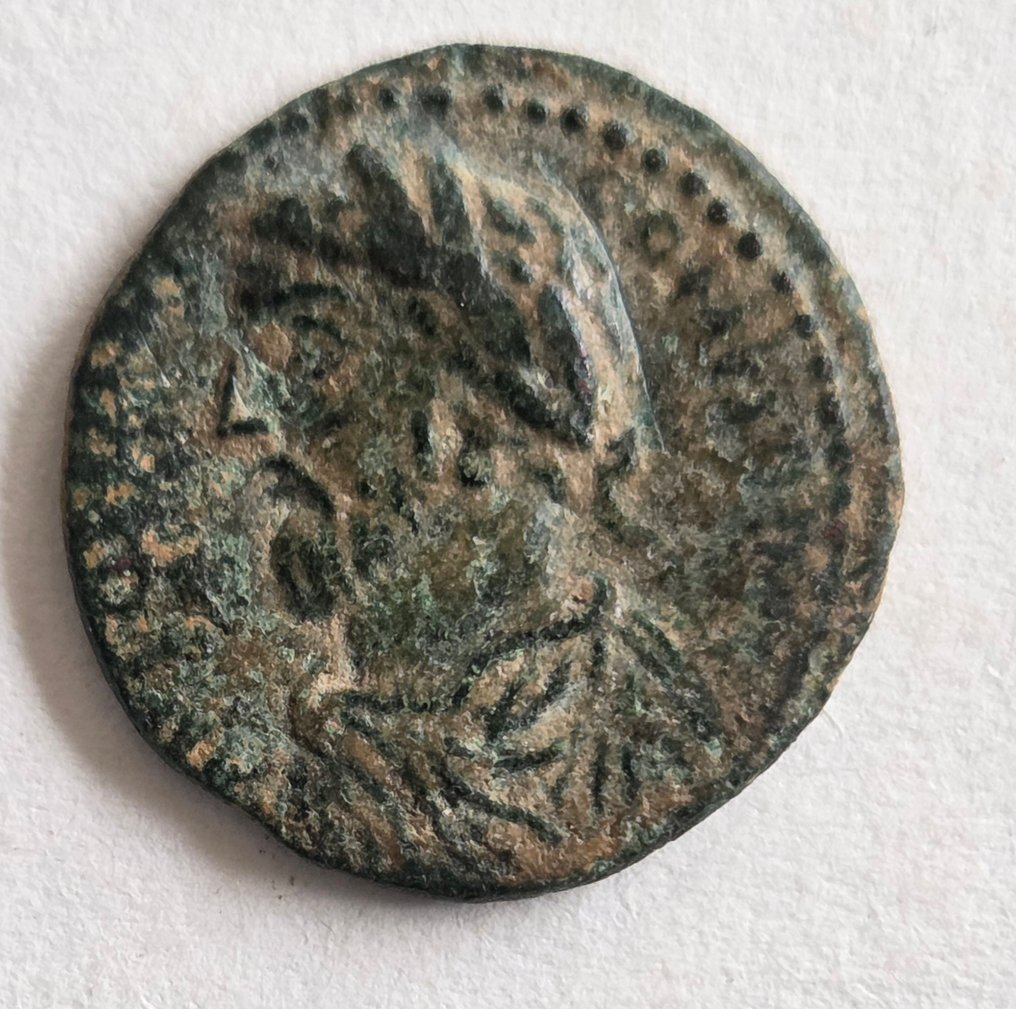
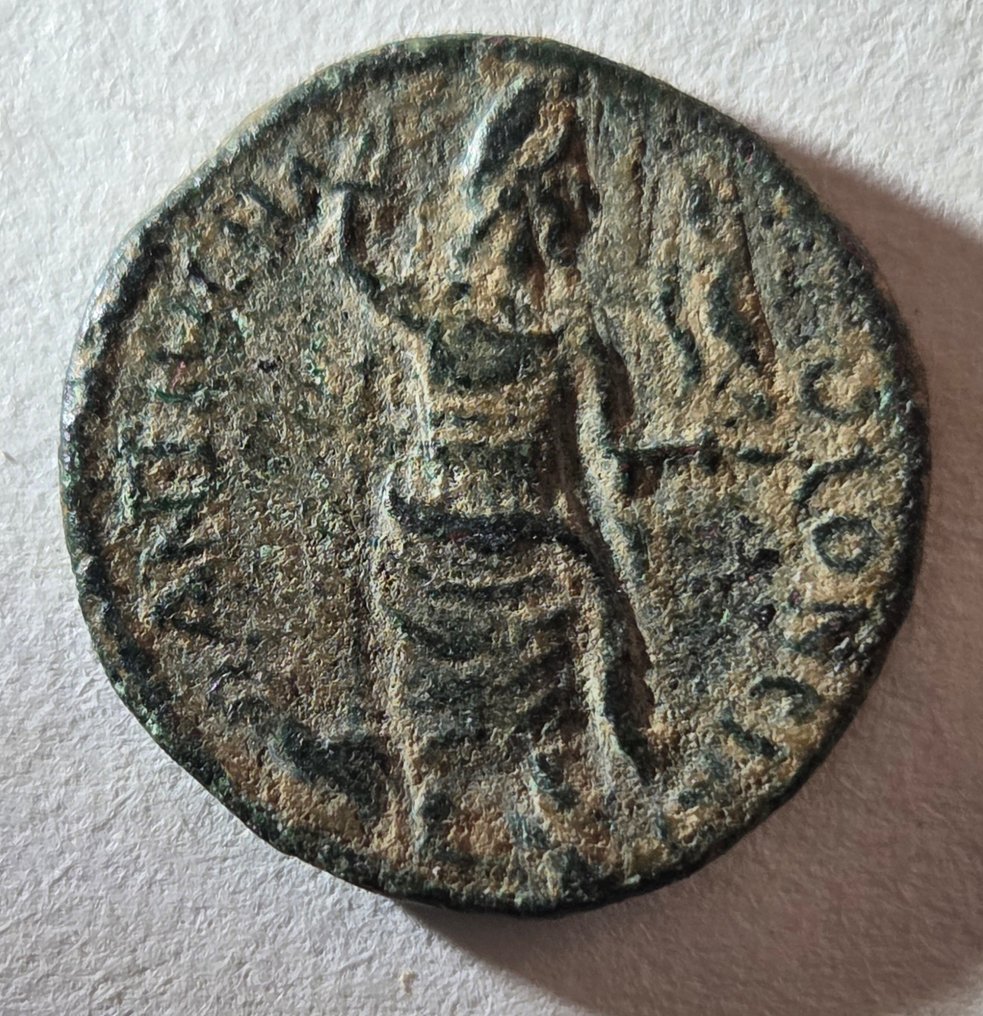
Roman Provincial AE coin from Pisidia, Antioch, issued under Commodus (AD 177–192); 21 mm, 4.43 g, obverse ANTONINVS-COMMODVS laureate, draped and cuirassed bust left seen from behind, reverse COLONEIAE-ANTIOCHAE with two men facing, Phrygian cap, bucranium, grounded scepter, Victory right and crescent, cock standing left.
AI-assisted summary
Description from the seller
Ancients Roman Provincial
PISIDIA. Antiochia. Commodus (AD 177-192). AE (21mm, 4.43 gm. ANTONINVS-COMMODVS, laureate, draped, and cuirassed bust of Commodus left, seen from behind / COLONEIAE-ANTIOCHAE, Men standing facing, head right, wearing Phrygian cap, foot on bucranium to right, holding grounded scepter in right hand, Victory right in outstretched left hand; crescent behind, cock standing left to left. RPC IV.3, 7377 (temporary).
The sole reign of Commodus, AD 180-192, is often viewed as the tipping point where the Roman Empire's long decline began. Commodus has thus been featured in novels, plays, and feature films as a villain, most recently in the cinema epics "Fall of the Roman Empire" (1964) and "Gladiator" (2001). Son of the greatly revered "Philosopher Emperor" Marcus Aurelius (AD 161-180), Commodus was the first emperor born "in the purple" in AD 161. Marcus made him co-Augustus in AD 177. He accompanied Marcus on a military campaign against the Germans in AD 178; worn out by his exertions, Marcus died on 17 March AD 180. Freed of his dutiful father's control, Commodus immediately cut a deal with the Germans and abandoned all further plans of military conquest. Returning to Rome, he plunged into sensual pursuits and left governing to a succession of favorites who plundered the public purse and aggrandized themselves.
Ancients Roman Provincial
PISIDIA. Antiochia. Commodus (AD 177-192). AE (21mm, 4.43 gm. ANTONINVS-COMMODVS, laureate, draped, and cuirassed bust of Commodus left, seen from behind / COLONEIAE-ANTIOCHAE, Men standing facing, head right, wearing Phrygian cap, foot on bucranium to right, holding grounded scepter in right hand, Victory right in outstretched left hand; crescent behind, cock standing left to left. RPC IV.3, 7377 (temporary).
The sole reign of Commodus, AD 180-192, is often viewed as the tipping point where the Roman Empire's long decline began. Commodus has thus been featured in novels, plays, and feature films as a villain, most recently in the cinema epics "Fall of the Roman Empire" (1964) and "Gladiator" (2001). Son of the greatly revered "Philosopher Emperor" Marcus Aurelius (AD 161-180), Commodus was the first emperor born "in the purple" in AD 161. Marcus made him co-Augustus in AD 177. He accompanied Marcus on a military campaign against the Germans in AD 178; worn out by his exertions, Marcus died on 17 March AD 180. Freed of his dutiful father's control, Commodus immediately cut a deal with the Germans and abandoned all further plans of military conquest. Returning to Rome, he plunged into sensual pursuits and left governing to a succession of favorites who plundered the public purse and aggrandized themselves.
Details
Era
Before 1400
Culture/region
Roman Empire (Provincial)
Year/Period and Variation
Pisidia, Antioch -
Ruler
Commodus (AD 177-192)
Metal
Æ
Condition
Ungraded
Number of items
1
Sold by