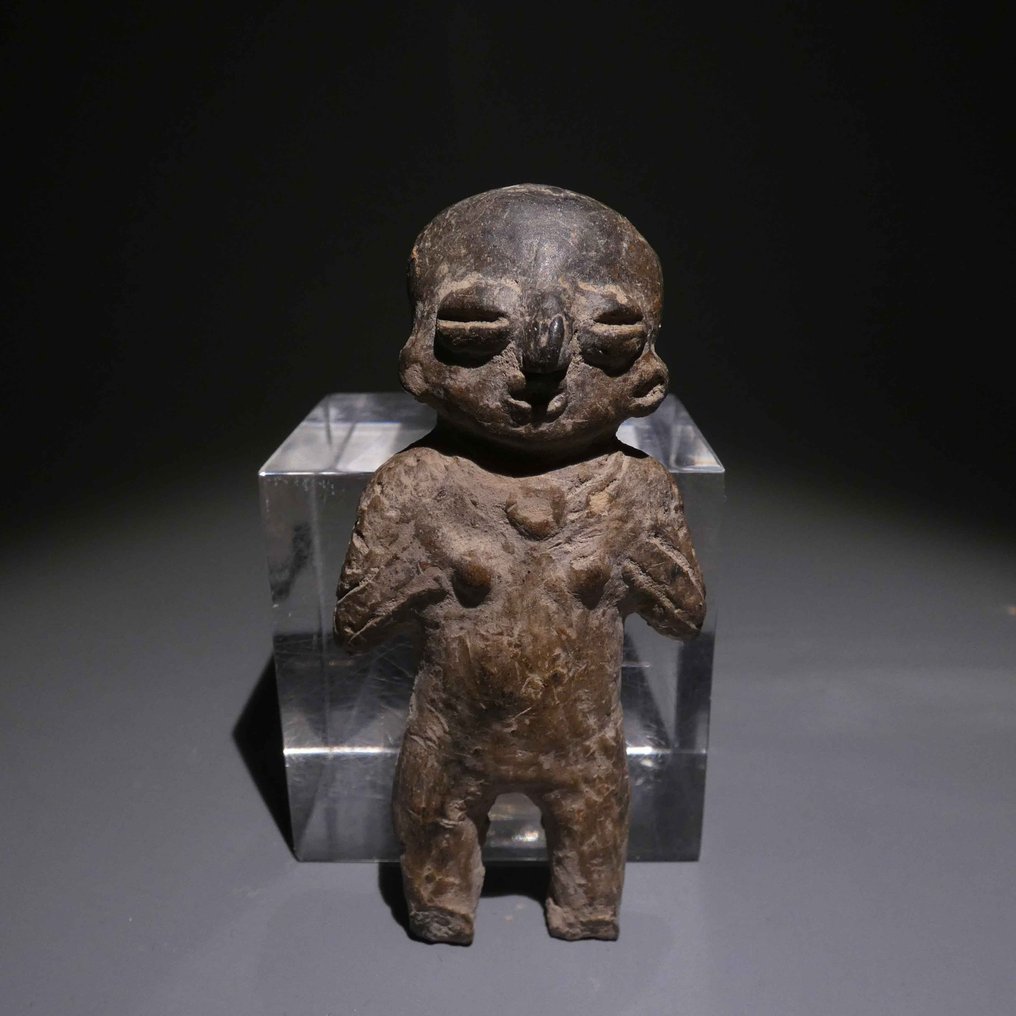
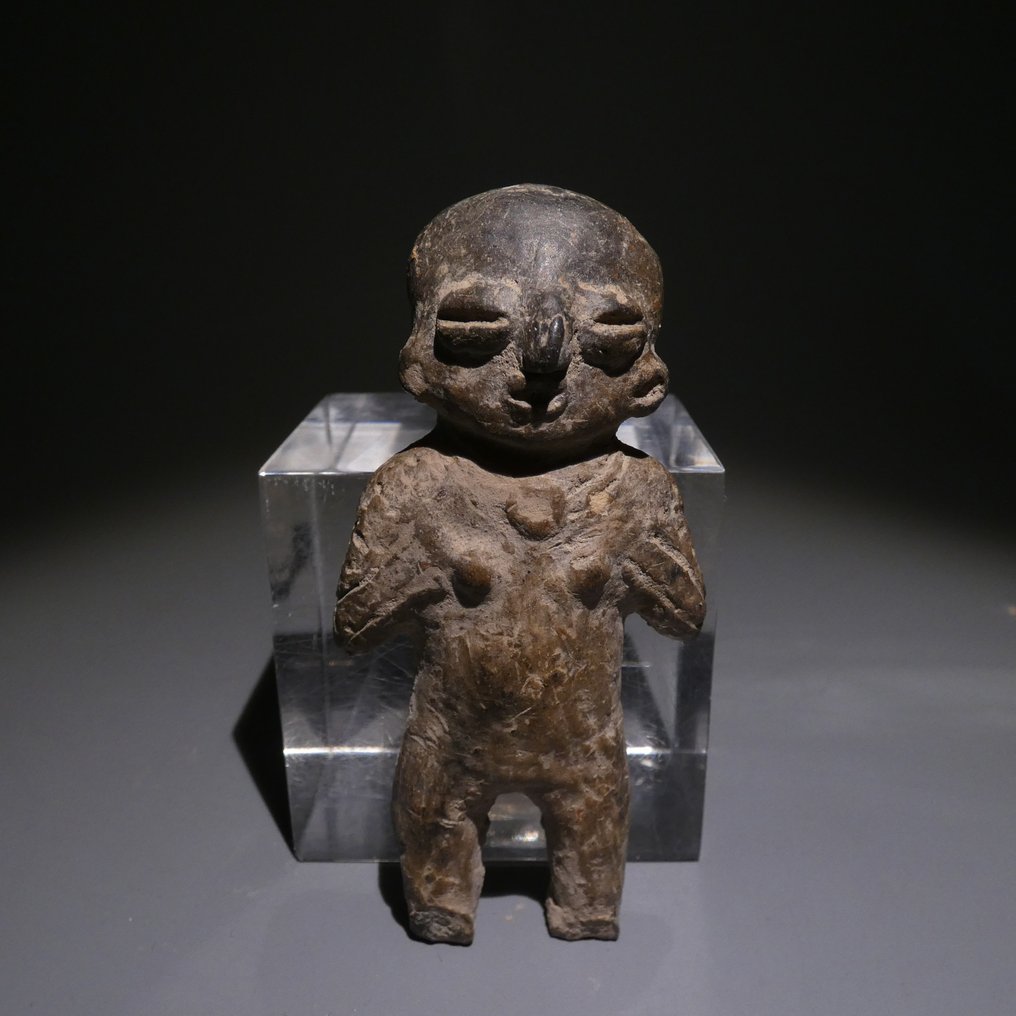
Chupicuaro, Mexico, Terracotta Figure. 8 cm H. 500 BC - 200 AD.. Spanish Export License


03
days
06
hours
03
minutes
22
seconds
Current bid
€ 30
Reserve price not met

Expert
Selected by Ruth Garrido Vila
Directed the Ifergan Collection Museum, specialising in Phoenician and Mediterranean archaeology.
Estimate € 900 - € 1,000
9 other people are watching this object
 Bidder 7628 Bidder 7628 | €30 | |
|---|---|---|
| Bidder 6957 | €5 | |
 Bidder 4525 Bidder 4525 | €4 | |
Catawiki Buyer Protection
Your payment’s safe with us until you receive your object.View details
Trustpilot 4.4 | 123779 reviews
Rated Excellent on Trustpilot.
Chupicuaro terracotta figure, 8 cm high, dating to 500 BC–200 AD, from a private collection, with a Spanish Export License and authenticity certificate, in good condition.
AI-assisted summary
Description from the seller
Figure -nice piece-
Chupicuaro, Mexico, 500 BC - 200 AD.
Terracotta
8 cm height.
Provenance:
- Private collection, J. R. (1928 - 2013) Barcelona, formed since 1950 until 2000. Thence by descendent.
DOCUMENTS:
- Spanish Export License.
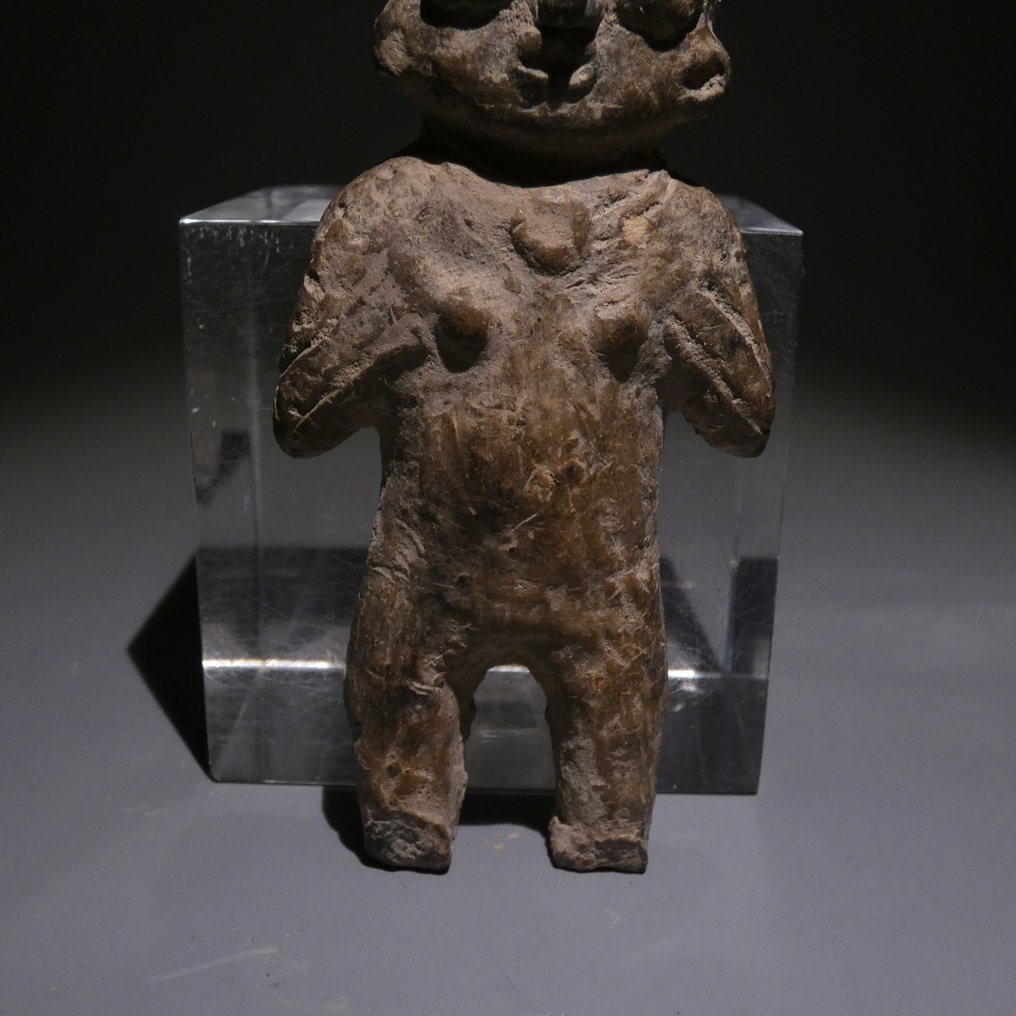
Condition: Good condition, see photos.
This culture’s territory was located in what is now the far north of Mexico, in the area of the states of Jalisco, Nayarit, Colima, Guerrero, Michoacán, and particularly Guanajuato. The region comprises three types of natural landscape: plateaus, volcanic mountain ranges, and grasslands. The grasslands are semi-tropical while the other areas have a temperate climate.
The Chupícuaro produced polished ceramics decorated mainly with black and cream geometrical designs on a red background. The ceramic forms they made include bowls with conical bases, dishes, and some bottles with stirrup handles. Multicolored human figurines were also made and decorated with the same designs used on their dishes, with barely discernable facial features. The best known Chupícuaro female figurines are the “diagonal eyed” figures, which were occasionally painted in vivid colors but usually left unpainted and finely decorated with appliqués of clay and clay slip. These figures are mostly represented nude and with clearly female anatomy, but some pieces are wearing elaborate headdresses and clothing, and all sport unique hairstyles and body decorations. The figurines date from the last stage of the ancient tradition of female representations that began with the Tlatilco culture. The Chupícuaro also produced ceramic flutes, ocarinas, and earpieces, and used bone and seashell to make a wide variety of ornaments.
The Chupícuaro buried their dead in simple tombs that were 1.5-2 meters deep. The bodies were laid out on their backs and in no fixed orientation, although graves are often found around tecuiles or fire sites. Other earlier gravesites are marked with balls of rock. Abundant offerings are found near the graves, including ceramic items, figurines, and jade ornaments. In some cases, dogs were carefully buried alongside the deceased, perhaps in order to guide their owners to the next world. Urn burials ascribed to the Chupícuaro have also been found, as well as uncontextualized decapitated skulls, which has been interpreted as evidence of headhunting.
Notes:
- The piece includes authenticity certificate.
- The piece includes Spanish Export License (Passport for European Union). NOT TAXES.
- According to Spanish legislation, items sent outside the European Union are subject to export taxes and will be added to the invoice, at the buyer's expense. These export fees are fixed on the final auction price and the tax rate is not applied directly on the total value of the item to be exported, but rather the different percentages by sections are applied to it:
- Up to 6,000 euros: 5%.
- From 6,001 to 60,000 euros: 10%.
This export permit application process can take between 1-2 months maximum.
- The seller guarantees that he acquired this piece according to all national and international laws related to the ownership of cultural property. Provenance statement seen by Catawiki.
Seller's Story
IMPORTANT NOTES:
-We are a professional seller.
- All items sold will come with their professional invoice.
- All items sold will come with their own Certificate of Authenticity (warranty document), including the description, image and provenance of the item.
- All items will be shipped via private courier with insurance (DHL express, CORREOS of Spain, or other similar with tracking number).
- All items when shipped (if required) will be declared as antiques over 100 years old and their price valued.
- For shipping outside of EU: Delivery time subject to customs clearance. Liability and Customs Regulations or Import Requirements applicable in the destination country are the sole responsibility of the buyer. We are not responsible for delays caused by customs procedures. Import taxes and vat are not included in the shipping costs. The import tax or VAT payable depends on the country of destination. Payments of any taxes or any disputes with the Customs Authorities are the sole responsibility of the buyer.
- For some of the items offered, for shipment outside the European Union it is necessary to obtain an Export Permit which will detail the payment by the buyer of Export Fees according to Spanish legislation. If it is necessary it will be mentioned in the description of the article, BECAUSE NOT IN ALL THE CASES IT IS LIKE THAT. These fees will be added to the invoice, at the buyer's expense. These export fees are fixed on the final auction price and the tax rate is not applied directly on the total value of the item to be exported, but rather the different percentages by sections are applied to it: Up to 6,000 euros: 5%. From 6,001 to 60,000 euros: 10%.
This export permit application process can take between 1-2 months maximum.
- We guarantee that he acquired this piece according to all national and international laws related to the ownership of cultural property.
Translated by Google TranslateFigure -nice piece-
Chupicuaro, Mexico, 500 BC - 200 AD.
Terracotta
8 cm height.
Provenance:
- Private collection, J. R. (1928 - 2013) Barcelona, formed since 1950 until 2000. Thence by descendent.
DOCUMENTS:
- Spanish Export License.
Condition: Good condition, see photos.
This culture’s territory was located in what is now the far north of Mexico, in the area of the states of Jalisco, Nayarit, Colima, Guerrero, Michoacán, and particularly Guanajuato. The region comprises three types of natural landscape: plateaus, volcanic mountain ranges, and grasslands. The grasslands are semi-tropical while the other areas have a temperate climate.
The Chupícuaro produced polished ceramics decorated mainly with black and cream geometrical designs on a red background. The ceramic forms they made include bowls with conical bases, dishes, and some bottles with stirrup handles. Multicolored human figurines were also made and decorated with the same designs used on their dishes, with barely discernable facial features. The best known Chupícuaro female figurines are the “diagonal eyed” figures, which were occasionally painted in vivid colors but usually left unpainted and finely decorated with appliqués of clay and clay slip. These figures are mostly represented nude and with clearly female anatomy, but some pieces are wearing elaborate headdresses and clothing, and all sport unique hairstyles and body decorations. The figurines date from the last stage of the ancient tradition of female representations that began with the Tlatilco culture. The Chupícuaro also produced ceramic flutes, ocarinas, and earpieces, and used bone and seashell to make a wide variety of ornaments.
The Chupícuaro buried their dead in simple tombs that were 1.5-2 meters deep. The bodies were laid out on their backs and in no fixed orientation, although graves are often found around tecuiles or fire sites. Other earlier gravesites are marked with balls of rock. Abundant offerings are found near the graves, including ceramic items, figurines, and jade ornaments. In some cases, dogs were carefully buried alongside the deceased, perhaps in order to guide their owners to the next world. Urn burials ascribed to the Chupícuaro have also been found, as well as uncontextualized decapitated skulls, which has been interpreted as evidence of headhunting.
Notes:
- The piece includes authenticity certificate.
- The piece includes Spanish Export License (Passport for European Union). NOT TAXES.
- According to Spanish legislation, items sent outside the European Union are subject to export taxes and will be added to the invoice, at the buyer's expense. These export fees are fixed on the final auction price and the tax rate is not applied directly on the total value of the item to be exported, but rather the different percentages by sections are applied to it:
- Up to 6,000 euros: 5%.
- From 6,001 to 60,000 euros: 10%.
This export permit application process can take between 1-2 months maximum.
- The seller guarantees that he acquired this piece according to all national and international laws related to the ownership of cultural property. Provenance statement seen by Catawiki.
Seller's Story
IMPORTANT NOTES:
-We are a professional seller.
- All items sold will come with their professional invoice.
- All items sold will come with their own Certificate of Authenticity (warranty document), including the description, image and provenance of the item.
- All items will be shipped via private courier with insurance (DHL express, CORREOS of Spain, or other similar with tracking number).
- All items when shipped (if required) will be declared as antiques over 100 years old and their price valued.
- For shipping outside of EU: Delivery time subject to customs clearance. Liability and Customs Regulations or Import Requirements applicable in the destination country are the sole responsibility of the buyer. We are not responsible for delays caused by customs procedures. Import taxes and vat are not included in the shipping costs. The import tax or VAT payable depends on the country of destination. Payments of any taxes or any disputes with the Customs Authorities are the sole responsibility of the buyer.
- For some of the items offered, for shipment outside the European Union it is necessary to obtain an Export Permit which will detail the payment by the buyer of Export Fees according to Spanish legislation. If it is necessary it will be mentioned in the description of the article, BECAUSE NOT IN ALL THE CASES IT IS LIKE THAT. These fees will be added to the invoice, at the buyer's expense. These export fees are fixed on the final auction price and the tax rate is not applied directly on the total value of the item to be exported, but rather the different percentages by sections are applied to it: Up to 6,000 euros: 5%. From 6,001 to 60,000 euros: 10%.
This export permit application process can take between 1-2 months maximum.
- We guarantee that he acquired this piece according to all national and international laws related to the ownership of cultural property.
Translated by Google TranslateDetails
Culture
Chupicuaro, Mexico,
Century/ Timeframe
500 BC - 200 AD.
Name of object
Figure. 8 cm H. 500 BC - 200 AD.. Spanish Export License
Acquired from
Private collection
Material
Terracotta
Condition
Good
Disclaimer
The seller was informed by Catawiki about documentation requirements and guarantees the following: - the object was legally obtained, - the seller has the right to sell and/or export the object, as relevant, - the seller will provide the necessary provenance information and arrange required documentation and permits/licenses, as applicable and as per local laws, - the seller will notify the buyer of any delays in obtaining permits/licenses. By bidding, you acknowledge that import documentation may be required depending on your country of residence and that obtaining permits/licenses may cause delays in the delivery of your object.
The seller was informed by Catawiki about documentation requirements and guarantees the following: - the object was legally obtained, - the seller has the right to sell and/or export the object, as relevant, - the seller will provide the necessary provenance information and arrange required documentation and permits/licenses, as applicable and as per local laws, - the seller will notify the buyer of any delays in obtaining permits/licenses. By bidding, you acknowledge that import documentation may be required depending on your country of residence and that obtaining permits/licenses may cause delays in the delivery of your object.
