Léopard - Sculpture - life - Benin (No reserve price)



03
days
02
hours
25
minutes
43
seconds

24 other people are watching this object
 Bidder 8016 Bidder 8016 | €36 | |
|---|---|---|
 Bidder 4824 Bidder 4824 | €29 | |
| Bidder 8016 | €28 | |
Catawiki Buyer Protection
Your payment’s safe with us until you receive your object.View details
Trustpilot 4.4 | 123418 reviews
Rated Excellent on Trustpilot.
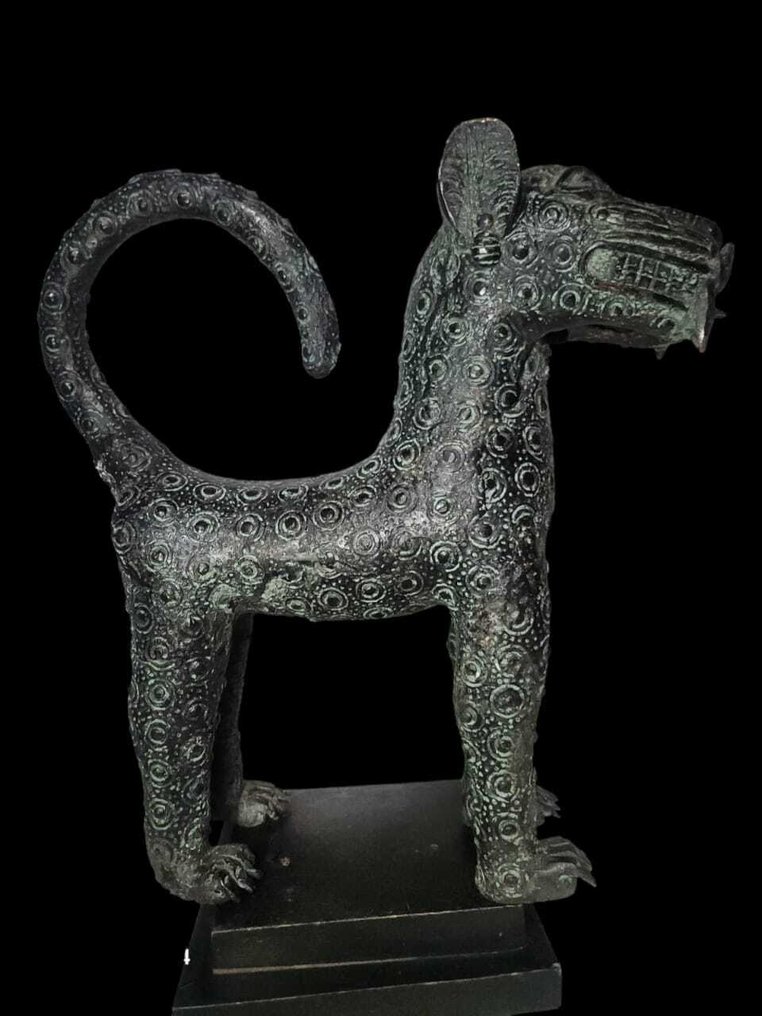
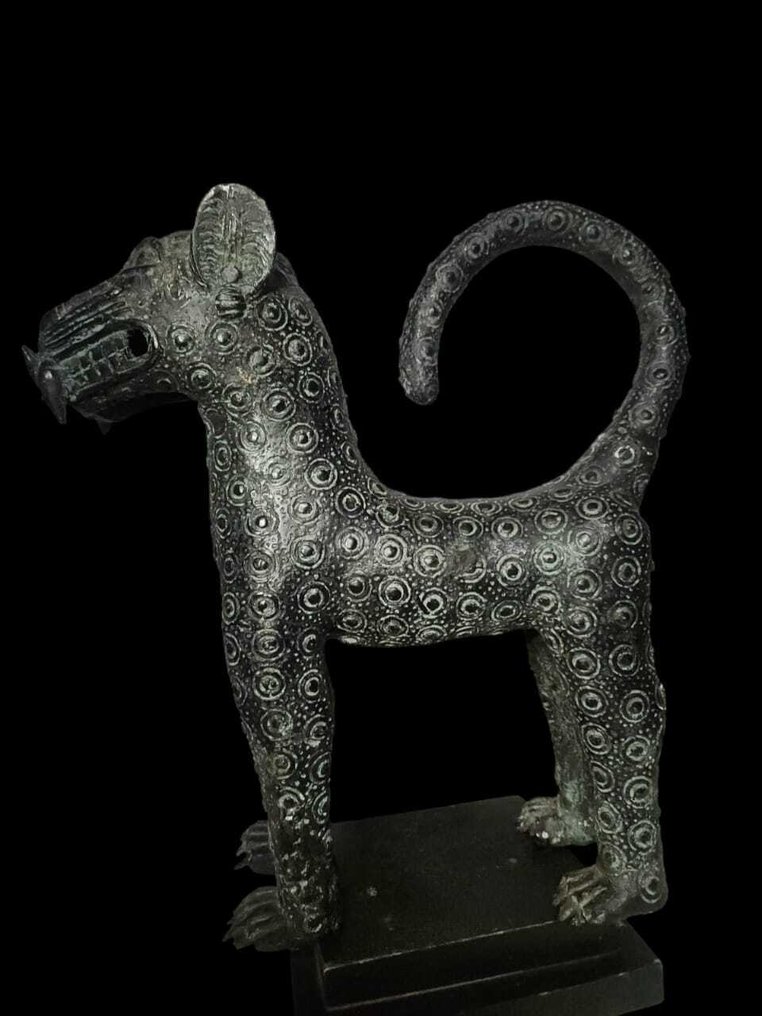
Leopard, a bronze sculpture from Benin of the Bini Edo culture, 40 cm high, 34 cm wide, 30 cm deep, unsigned and in good condition, without a stand.
AI-assisted summary
Description from the seller
Leopard Royal - Bini Edo - Benin - Bronzes of Benin
The Kingdom of Benin, south of present-day Nigeria, is renowned for its magnificent bronzes and ivory sculptures.
These works constitute one of the greatest treasures of humanity and are among the masterpieces of museums around the world.
The Oba's palace, where the magnificent royal sanctuaries were located, was considered the center of the capital and the kingdom.
Benin art is undoubtedly royal art.
Its management was carried out by one of the three ruling orders, Iwebo (the other two being Iweguae and Ibiwe).
This order was responsible for the jewelry and personal effects of the king.
Many guilds of artisans were affiliated with this order. They mainly worked for the king and could only undertake commissions for other clients with royal authorization.
The bronze founders, ivory sculptors, weavers, tailors, and leather artisans are some of the guilds led by the Iwebo.
Bronze leopards were intended to decorate the altars and usually came in pairs.
Since they were used during libations and purification sacrifices, they were often given the shape of an aquamanile.
In the past, leopards were among the palace pets. They were easy to tame and could even be kept on a leash.
On the occasion of great festivals, the Oba sacrificed a leopard — a custom that was observed until the early 20th century, during the Igue festival.
Leopard Royal - Bini Edo - Benin - Bronzes of Benin
The Kingdom of Benin, south of present-day Nigeria, is renowned for its magnificent bronzes and ivory sculptures.
These works constitute one of the greatest treasures of humanity and are among the masterpieces of museums around the world.
The Oba's palace, where the magnificent royal sanctuaries were located, was considered the center of the capital and the kingdom.
Benin art is undoubtedly royal art.
Its management was carried out by one of the three ruling orders, Iwebo (the other two being Iweguae and Ibiwe).
This order was responsible for the jewelry and personal effects of the king.
Many guilds of artisans were affiliated with this order. They mainly worked for the king and could only undertake commissions for other clients with royal authorization.
The bronze founders, ivory sculptors, weavers, tailors, and leather artisans are some of the guilds led by the Iwebo.
Bronze leopards were intended to decorate the altars and usually came in pairs.
Since they were used during libations and purification sacrifices, they were often given the shape of an aquamanile.
In the past, leopards were among the palace pets. They were easy to tame and could even be kept on a leash.
On the occasion of great festivals, the Oba sacrificed a leopard — a custom that was observed until the early 20th century, during the Igue festival.
Details
Era
1400-1900
Over 200 years old
No
Country of Origin
Benin
Material
Bronze
Title of artwork
Léopard
Signature
Not signed
Indigenous object name
life
Sold with stand
No
Condition
Good condition
Height
40 cm
Width
34 cm
Depth
30 cm
Sold by
