Bambara Sculpture - Bambara - Mali




Opens 11:00
Starting bid
€ 1
Add to your favourites to get an alert when the auction starts.

Expert
Selected by Dimitri André
Holds a postgraduate degree in African studies and 15 years experience in African art.
Estimate € 850 - € 950
Catawiki Buyer Protection
Your payment’s safe with us until you receive your object.View details
Trustpilot 4.4 | 123327 reviews
Rated Excellent on Trustpilot.
Description from the seller
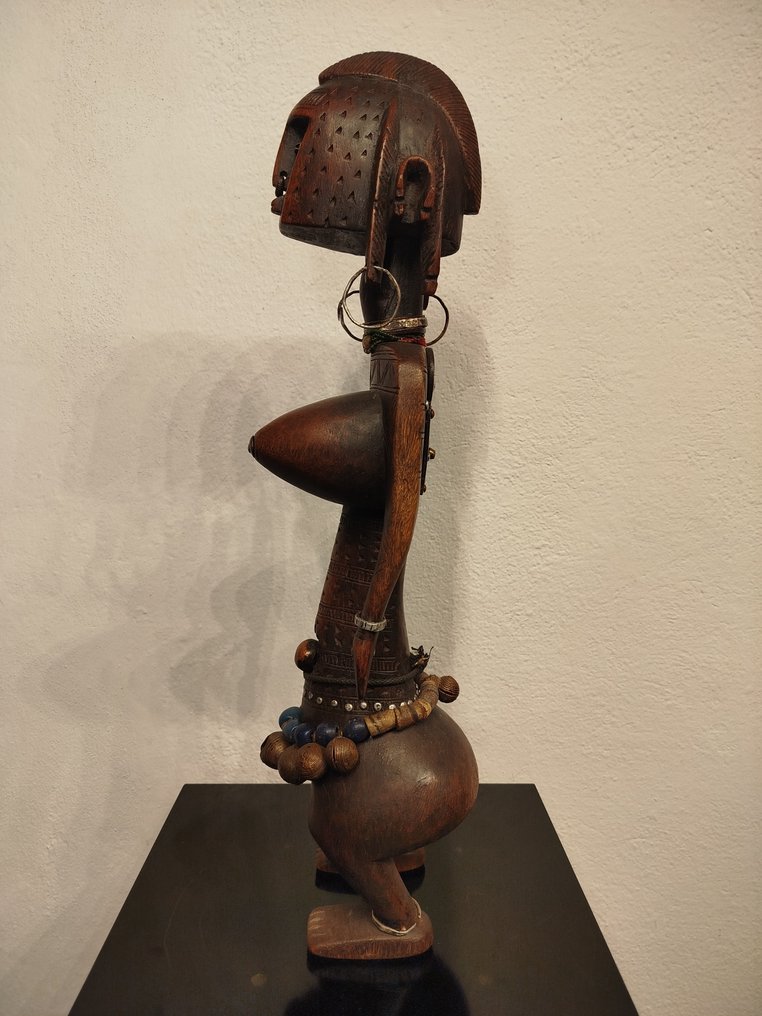
Elegant and powerful female ritual sculpture attributable to the Bamana (also known as Bambara) people of Mali, made of hand-carved wood with metal applications and beads. The piece dates to the 20th century and exemplifies the aesthetic and symbolic standards of the Bamana tradition.
The figure is depicted in a frontal position, with an elongated body and deliberately stylized proportions, symbolizing balance, strength, and ideal beauty. The head features an elaborate hairstyle-sculpture, typical of ritual female figures associated with the cults of fertility, maternity, and the continuity of lineage.
The bust is characterized by prominent breasts, a sign of fertility and abundance, while the body is decorated with engraved geometric motifs loaded with symbolic meanings. The metal studs and ornamental elements in metal and beads (necklace and belt) are not only decorative but also served protective and ritual functions.
The surface shows a dark, deep, and uniform patina, with signs of wear consistent with age and use, confirming the authenticity of the piece and enhancing its historical and ethnographic value.
Since 1970 in the private collection of designer Anacleto Spazzapan.
Elegant and powerful female ritual sculpture attributable to the Bamana (also known as Bambara) people of Mali, made of hand-carved wood with metal applications and beads. The piece dates to the 20th century and exemplifies the aesthetic and symbolic standards of the Bamana tradition.
The figure is depicted in a frontal position, with an elongated body and deliberately stylized proportions, symbolizing balance, strength, and ideal beauty. The head features an elaborate hairstyle-sculpture, typical of ritual female figures associated with the cults of fertility, maternity, and the continuity of lineage.
The bust is characterized by prominent breasts, a sign of fertility and abundance, while the body is decorated with engraved geometric motifs loaded with symbolic meanings. The metal studs and ornamental elements in metal and beads (necklace and belt) are not only decorative but also served protective and ritual functions.
The surface shows a dark, deep, and uniform patina, with signs of wear consistent with age and use, confirming the authenticity of the piece and enhancing its historical and ethnographic value.
Since 1970 in the private collection of designer Anacleto Spazzapan.
Details
No. of items
1
Ethnic group/ culture
Bambara
Country of Origin
Mali
Period
Early 20th century
Material
Metal and beads, Wood
Condition
Excellent condition
Title of artwork
Bambara Sculpture
Height
62 cm
Width
18 cm
Depth
17 cm
Provenance
Private collection
