Robots Milano - Bruno Munari - Bed - Interior - Steel


05
days
14
hours
59
minutes
33
seconds
Starting bid
€ 1
Reserve price not met

Expert
Selected by Alexander Fahl
Art historian with over 10 years' experience and expertise in Italian design.
Estimate € 900 - € 1,000
No bids placed
Catawiki Buyer Protection
Your payment’s safe with us until you receive your object.View details
Trustpilot 4.4 | 123418 reviews
Rated Excellent on Trustpilot.
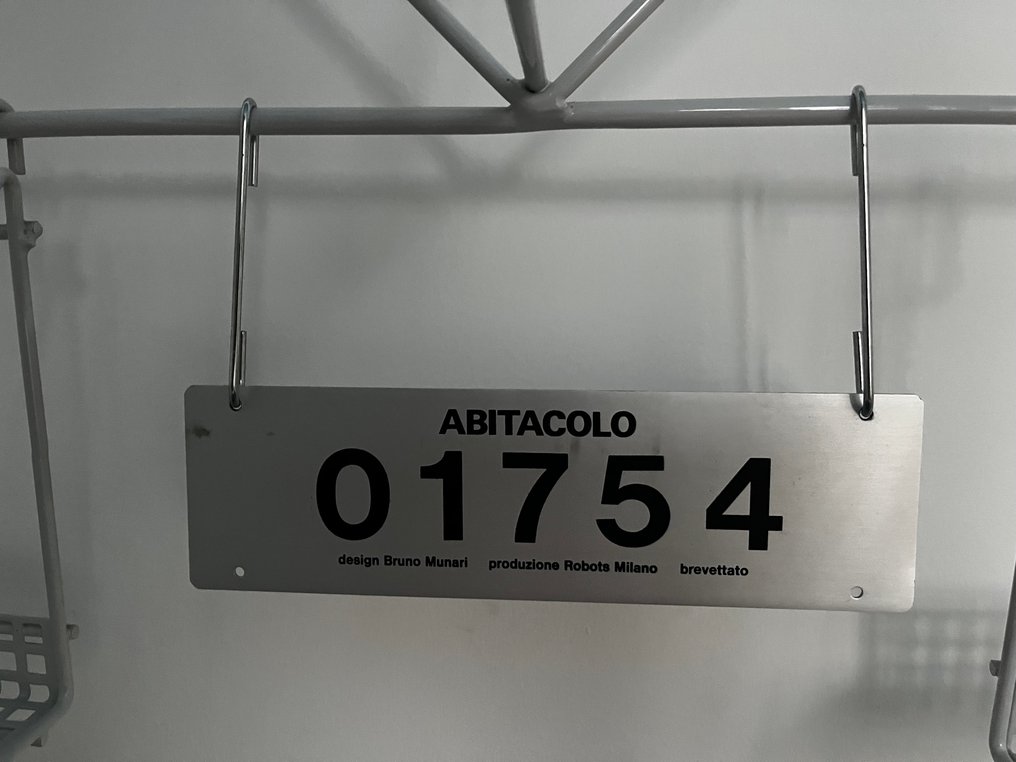
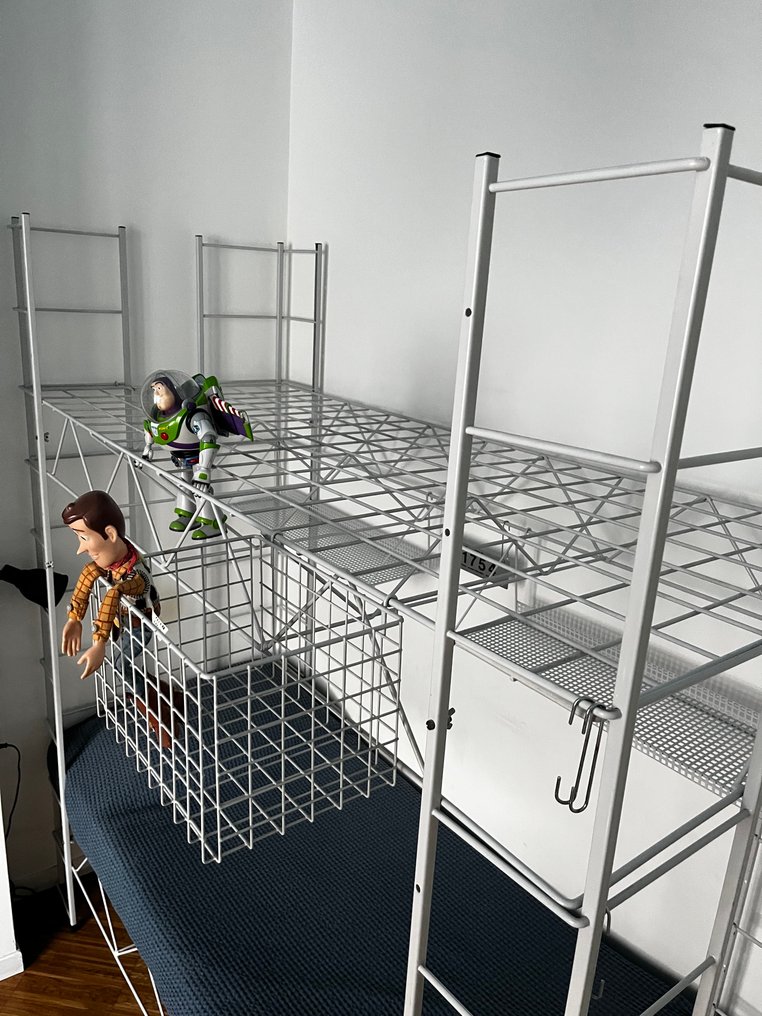
A single steel Abitacolo bed system designed by Bruno Munari and produced by Robots Milano in Italy, in grey, with bed base included, dimensions 206 cm deep, 194 cm high and 83 cm wide, dating to 1990–2000.
AI-assisted summary
Description from the seller
The Abitacolo bed, designed by Bruno Munari in 1971 and produced by Robots, is one of the most radical and visionary projects of Italian design in the second half of the twentieth century. More than just a bed, Abitacolo is a modular living system, conceived as a true 'machine for living,' capable of adapting to the daily needs of its user.
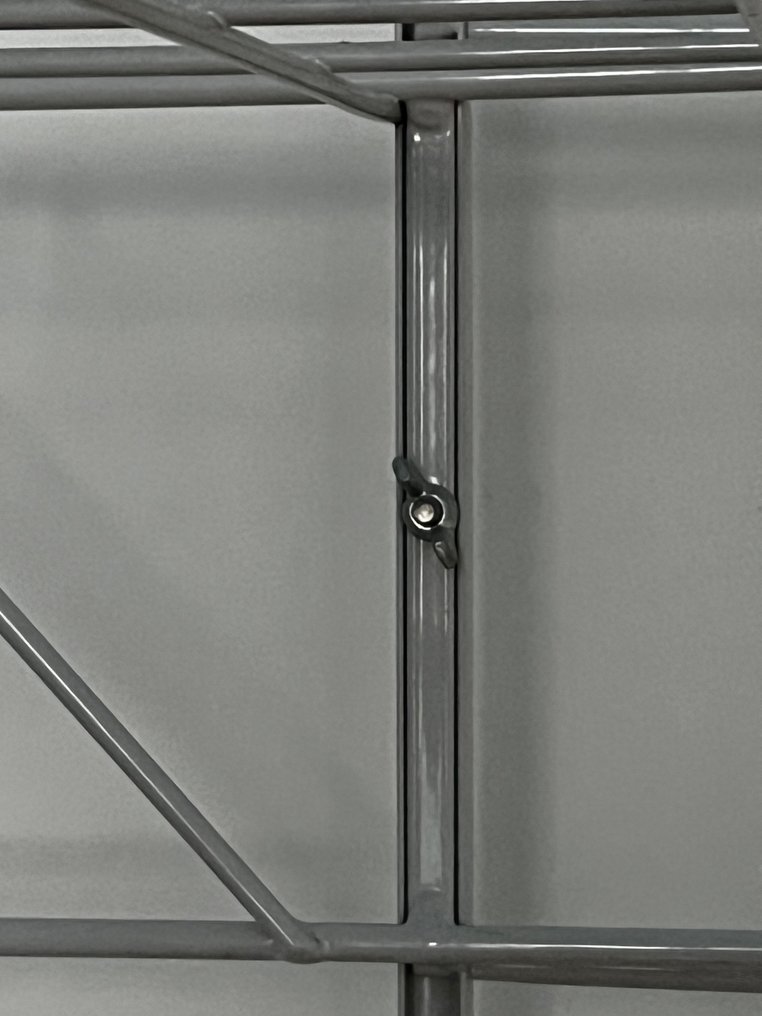
Made with a painted metallic tubular structure, the cabin integrates a bed, storage compartments, surfaces for resting, and supports for personal objects into a single architecture. Munari's idea was to create a flexible, essential, and customizable space where the user could freely organize their daily life, anticipating themes that are now central, such as modularity, participatory design, and sustainability of living.
The project perfectly embodies Munari's poetics: intelligent functionality, design irony, and a deep focus on the user experience. Exhibited in museums and international collections, Abitacolo is today considered an absolute icon of radical Italian design.
Designer
Bruno Munari (1907–1998)
Artist, designer, and theorist, a key figure of the Italian twentieth-century avant-garde. His work has spanned art, graphics, industrial design, and pedagogy, profoundly influencing contemporary design thinking.
The Abitacolo bed, designed by Bruno Munari in 1971 and produced by Robots, is one of the most radical and visionary projects of Italian design in the second half of the twentieth century. More than just a bed, Abitacolo is a modular living system, conceived as a true 'machine for living,' capable of adapting to the daily needs of its user.
Made with a painted metallic tubular structure, the cabin integrates a bed, storage compartments, surfaces for resting, and supports for personal objects into a single architecture. Munari's idea was to create a flexible, essential, and customizable space where the user could freely organize their daily life, anticipating themes that are now central, such as modularity, participatory design, and sustainability of living.
The project perfectly embodies Munari's poetics: intelligent functionality, design irony, and a deep focus on the user experience. Exhibited in museums and international collections, Abitacolo is today considered an absolute icon of radical Italian design.
Designer
Bruno Munari (1907–1998)
Artist, designer, and theorist, a key figure of the Italian twentieth-century avant-garde. His work has spanned art, graphics, industrial design, and pedagogy, profoundly influencing contemporary design thinking.
Details
Specific region of origin
Milano
Style subtype
Italian design
Weight
51 kg
Era
1900-2000
No. of items
1
Country of Origin
Italy
Manufacturer/ Brand
Robots Milano
Model
Interior
Designer/Artist/Maker
Bruno Munari
Material
Steel
Style
Design
Colour
Grey
Condition
Excellent condition: barely used with minimal signs of wear
Height
194 cm
Width
83 cm
Depth
206 cm
Estimated Period
1990-2000
Bed Base Included
Yes
Sold by