Metal statuette - lega - reputation (No reserve price)


06
days
23
hours
31
minutes
43
seconds

No bids placed
Catawiki Buyer Protection
Your payment’s safe with us until you receive your object.View details
Trustpilot 4.4 | 123536 reviews
Rated Excellent on Trustpilot.
Description from the seller
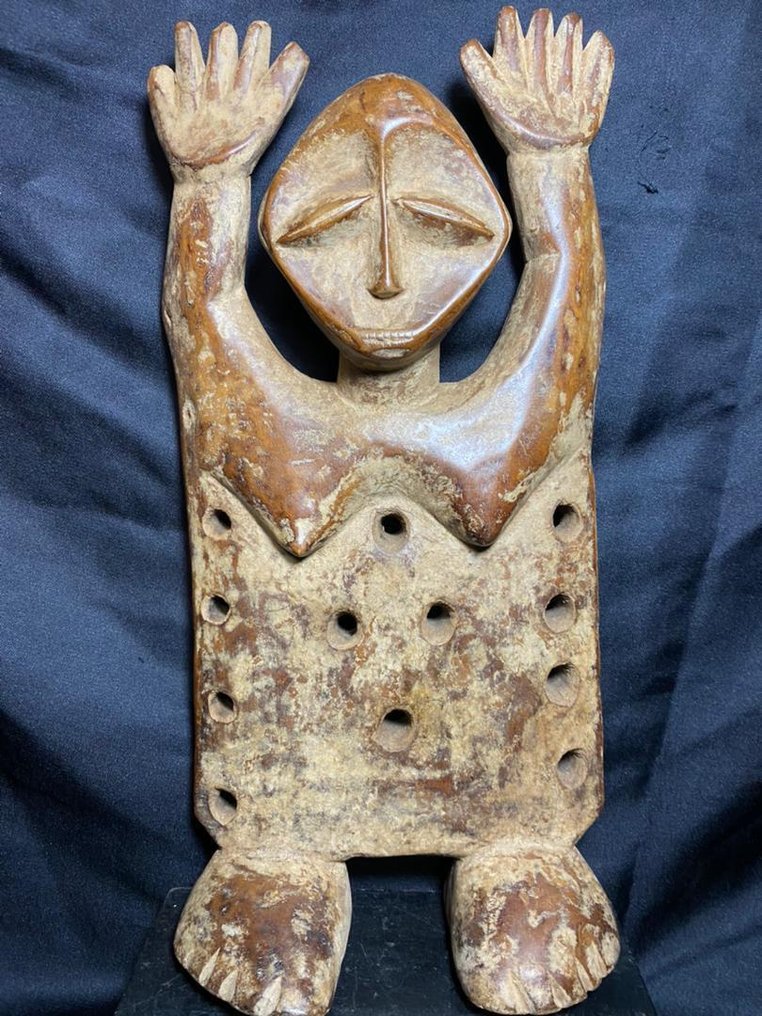
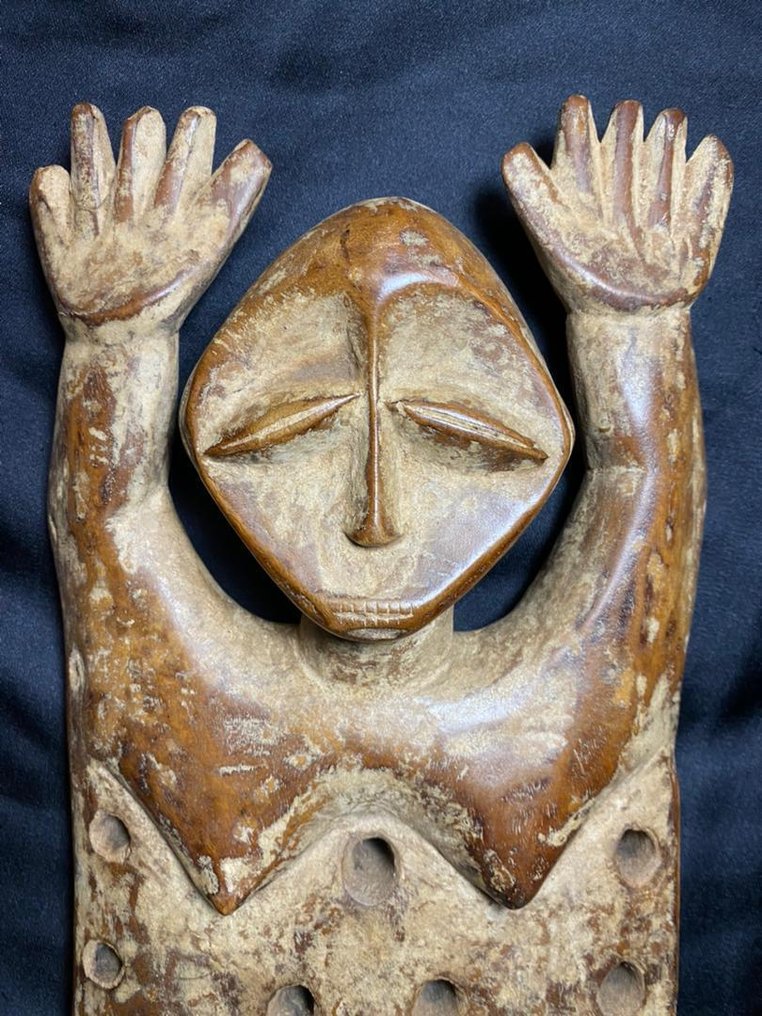
The Lega statues come from the region of the Democratic Republic of the Congo, where they are created by the Lega people.
These sculptures are generally made of wood and used during Bwami initiation ceremonies.
They are passed down through generations, symbolizing the learning and wisdom of ancestors.
Symbolism of Statues
Each Lega statue has a specific significance, often linked to moral and social values.
They represent stylized human figures, sometimes adorned with beads, that embody principles such as humility, loyalty, and courage.
The sculptures are used as educational tools to teach the codes of conduct within the community.
Knowing the lineages and traditional knowledge
Statues play a crucial role in maintaining and transmitting traditional knowledge within the Lega lineages.
They are essential not only for preserving culture but also for establishing a dialogue with the new generations. This ensures that the community's core values continue to thrive despite social and economic changes.
The Lega statues come from the region of the Democratic Republic of the Congo, where they are created by the Lega people.
These sculptures are generally made of wood and used during Bwami initiation ceremonies.
They are passed down through generations, symbolizing the learning and wisdom of ancestors.
Symbolism of Statues
Each Lega statue has a specific significance, often linked to moral and social values.
They represent stylized human figures, sometimes adorned with beads, that embody principles such as humility, loyalty, and courage.
The sculptures are used as educational tools to teach the codes of conduct within the community.
Knowing the lineages and traditional knowledge
Statues play a crucial role in maintaining and transmitting traditional knowledge within the Lega lineages.
They are essential not only for preserving culture but also for establishing a dialogue with the new generations. This ensures that the community's core values continue to thrive despite social and economic changes.
Details
No. of items
1
Ethnic group/ culture
lega
Country of Origin
reputation
Material
Wood
Sold with stand
No
Condition
Good condition
Title of artwork
Metal statuette
Height
35 cm
Width
20 cm
Depth
10 cm
Weight
3 kg
Sold by
