Mask - Côte d’Ivoire (No reserve price)


04
days
11
hours
57
minutes
26
seconds

No bids placed
Catawiki Buyer Protection
Your payment’s safe with us until you receive your object.View details
Trustpilot 4.4 | 123536 reviews
Rated Excellent on Trustpilot.
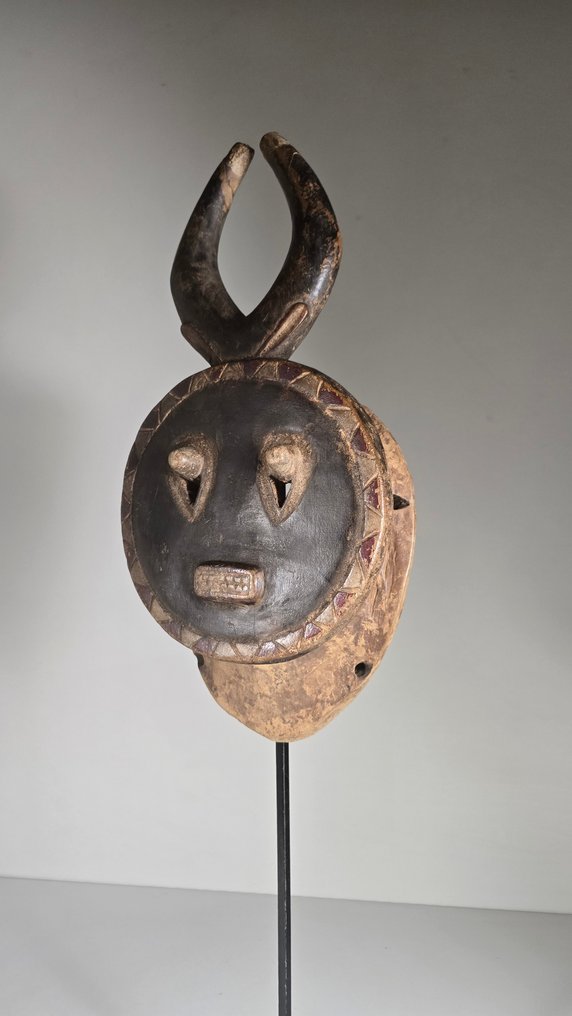
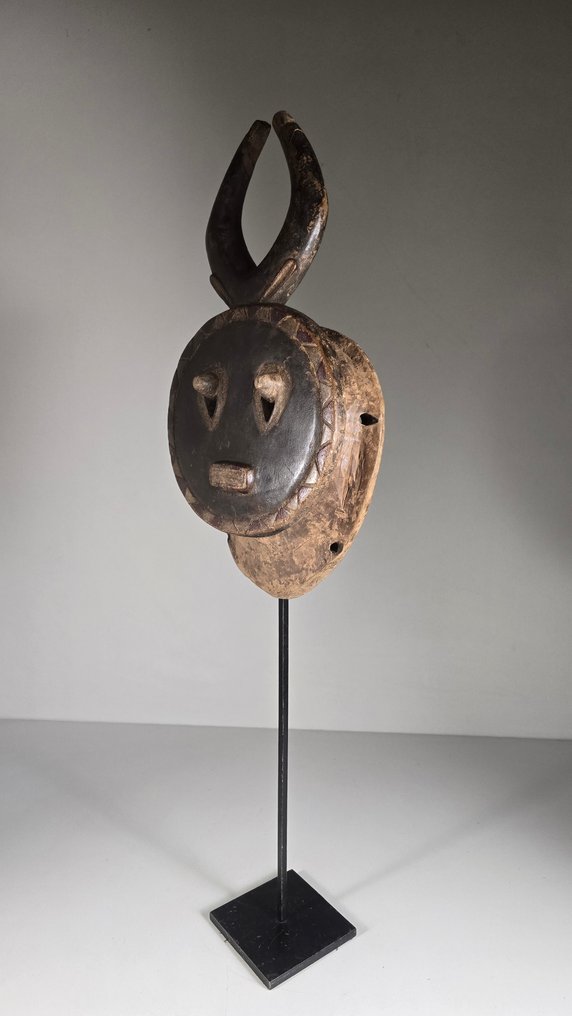
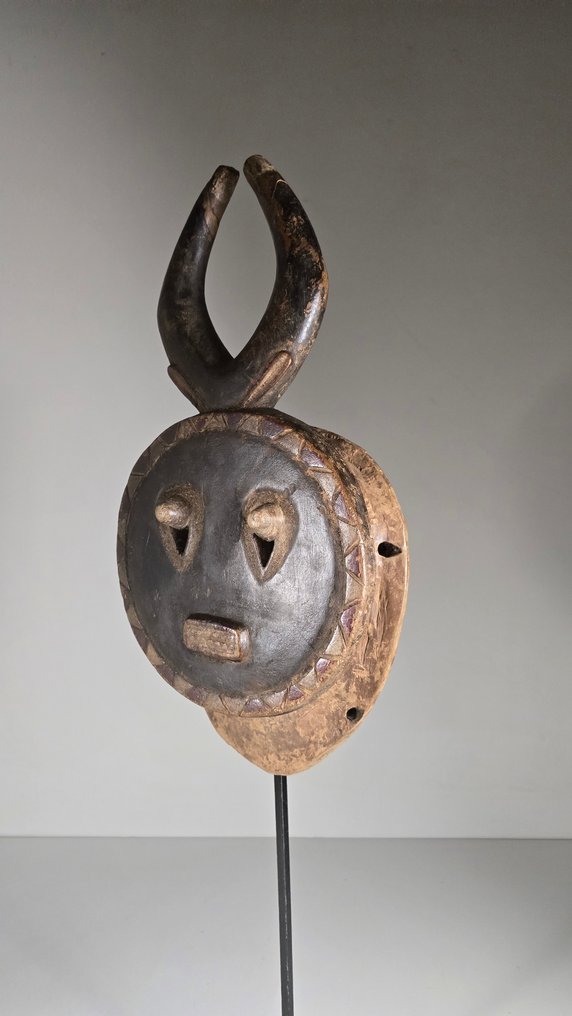
A circular Baoulé mask from Ivory Coast carved in wood, 44 cm high and 20 cm wide, dating to circa 1970–2000, in good condition with some wear and age-related staining.
AI-assisted summary
Description from the seller
Baoulé, Baoulé, Baoulé, Baoulé, Côte d'Ivoire living in the situation.
A circular mask with hollowed eyes topped with protruding pupils, it features a rectangular mouth with sculpted teeth, related to the traditional image of teeth among the young. It has a beautiful patina eroded and scattered with traces of wear. The female mask Kplekple, according to some authors (African Masks Barbier-Mueller, p.116), is said to be red. Vogel (Baule), on the other hand, indicates that in the Baoulé version of the Goli, the male mask is painted red, and the female one is black. It is likely that this attribution varies from village to village.
Generally preceding a series of masks from the 'Goli' family, this circular mask with rounded horns resembling an antelope is considered a male mask, kplekple yassoua or yaswa, as opposed to the female kplekple bla. It appears discreetly during the day and then in the evening to announce the arrival of its kin under the traits of the goli glin or the kpwan. It is during events such as epidemics or funerals that its appearance occurs among the Wan and Baoulé, aiming to appease the favor of the 'amwin' spirits, who grant such benefits as prosperity, health, or safety. Nowadays, it appears during festive events, with the Goli gradually replacing all other masked dances, whether sacred or entertainment-related.
Baoulé, Baoulé, Baoulé, Baoulé, Côte d'Ivoire living in the situation.
A circular mask with hollowed eyes topped with protruding pupils, it features a rectangular mouth with sculpted teeth, related to the traditional image of teeth among the young. It has a beautiful patina eroded and scattered with traces of wear. The female mask Kplekple, according to some authors (African Masks Barbier-Mueller, p.116), is said to be red. Vogel (Baule), on the other hand, indicates that in the Baoulé version of the Goli, the male mask is painted red, and the female one is black. It is likely that this attribution varies from village to village.
Generally preceding a series of masks from the 'Goli' family, this circular mask with rounded horns resembling an antelope is considered a male mask, kplekple yassoua or yaswa, as opposed to the female kplekple bla. It appears discreetly during the day and then in the evening to announce the arrival of its kin under the traits of the goli glin or the kpwan. It is during events such as epidemics or funerals that its appearance occurs among the Wan and Baoulé, aiming to appease the favor of the 'amwin' spirits, who grant such benefits as prosperity, health, or safety. Nowadays, it appears during festive events, with the Goli gradually replacing all other masked dances, whether sacred or entertainment-related.
Details
Era
1900-2000
No. of items
1
Material
Wood
Country of Origin
Côte d’Ivoire
Condition
Good condition - used with small signs of aging & blemishes
Height
44 cm
Width
20 cm
Estimated Period
1970-2000
