Praktica Nova + CZJ Tessar 2,8/50mm | Analogue camera


06
days
21
hours
26
minutes
22
seconds

No bids placed
Catawiki Buyer Protection
Your payment’s safe with us until you receive your object.View details
Trustpilot 4.4 | 123536 reviews
Rated Excellent on Trustpilot.
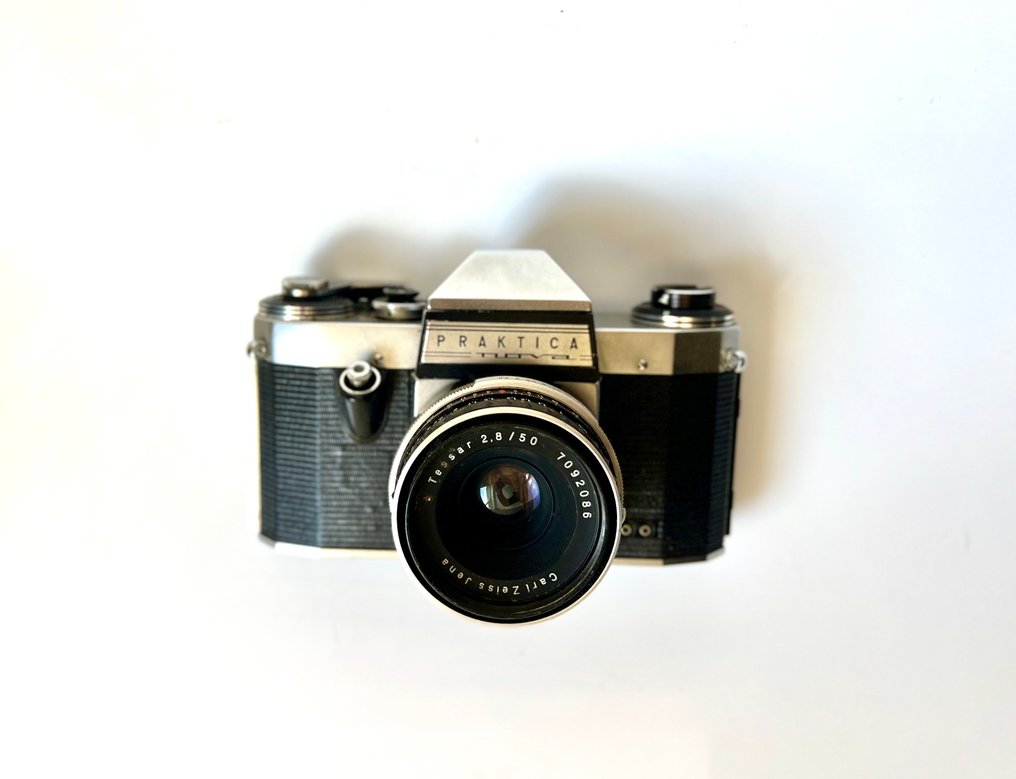
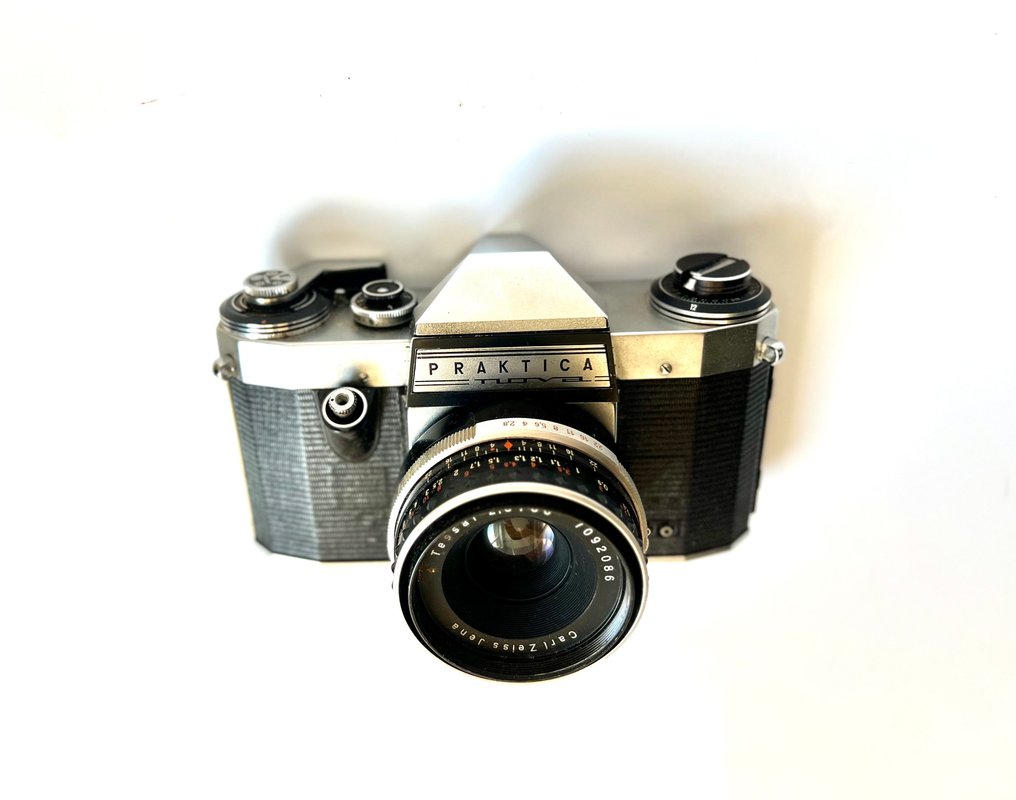
Praktica Nova 35mm SLR with a Carl Zeiss Jena Tessar 2.8/50mm lens, in good physical condition and tested and working.
AI-assisted summary
Description from the seller
• Original Praktica nova 35mm SLR from the golden age of East-German camera engineering
• Equipped with the genuine Carl Zeiss Jena Tessar 2.8/50, a legendary standard lens
• Fully mechanical operation with robust metal construction and M42 universal mount
• Highly desirable mid-1960s collectible, equally suited for shooting and display
⸻
The Praktica nova stands as a landmark in post-war European photographic history, embodying a moment when reliability, optical discipline, and functional clarity defined serious camera design. Introduced in 1963 by VEB Pentacon in Dresden, the nova was conceived as a refined evolution of earlier Praktica models, offering improved ergonomics and dependable performance while preserving the mechanical honesty that made these cameras respected worldwide.
This camera was built in an era when photographic instruments were expected to endure intensive use, harsh conditions, and long service lives. Its solid metal chassis, purposeful proportions, and restrained industrial aesthetic reflect a design language driven by engineering logic rather than fashion. Every control communicates intent: shutter speed selection, film advance, and focus adjustment are precise, tactile, and confidence-inspiring.
Mounted on this body is the Carl Zeiss Jena Tessar 50mm f/2.8, an optic whose reputation rests on decades of proven results. The Tessar design is celebrated for its clarity, balanced contrast, and faithful tonal reproduction. It excels in portraiture with natural separation, renders architecture with disciplined geometry, and delivers landscapes with crisp detail and subtle gradation. Stopped down, the lens reveals remarkable uniformity across the frame, while wide apertures maintain a pleasing, classic character.
The Praktica nova operates entirely mechanically, requiring no batteries for shutter function. This autonomy ensures longevity and makes the camera especially appealing to collectors and analog photographers who value independence from electronic vulnerability. The M42 screw mount further enhances versatility, granting access to an extensive universe of vintage lenses produced across Europe and Asia, each bringing its own visual signature.
Beyond its technical merits, the Praktica nova occupies a unique cultural position. It represents Cold War–era industrial craftsmanship, where photographic tools were instruments of documentation, education, and artistic expression. Whether used today for deliberate film photography or preserved as a historical artifact, it conveys authenticity, seriousness, and respect for the photographic process.
Discreetly interwoven within this description are discoverability elements such as: analog, vintage, collectible, retro, classic, mechanical, optical, precision, craftsmanship, industrial, heritage, historic, ColdWar, European, German, DDR, filmbased, SLRsystem, manualfocus, primeoptic, glassformula, sharpness, contrast, rendering, bokeh, metalbody, durability, reliability, timeless, aesthetic, minimalist, functionalist, authentic, original, factory, engineering, documentary, portraiture, landscape, streetphotography, creative, artistic, archival, enthusiast, connoisseur, photohistory, darkroom, negatives, exposure, shutterplane, viewfinder, pentaprism, knurled, tactile, mechanicalfeel, universalmount, adaptability, longevity, patina, collectability, rarity, analogculture, opticalheritage, photographicinstrument.
Year of production:
The Praktica nova was manufactured between 1963 and 1969. Based on design features and lens pairing, this example dates from the mid-1960s, approximately 1964–1967.
• Original Praktica nova 35mm SLR from the golden age of East-German camera engineering
• Equipped with the genuine Carl Zeiss Jena Tessar 2.8/50, a legendary standard lens
• Fully mechanical operation with robust metal construction and M42 universal mount
• Highly desirable mid-1960s collectible, equally suited for shooting and display
⸻
The Praktica nova stands as a landmark in post-war European photographic history, embodying a moment when reliability, optical discipline, and functional clarity defined serious camera design. Introduced in 1963 by VEB Pentacon in Dresden, the nova was conceived as a refined evolution of earlier Praktica models, offering improved ergonomics and dependable performance while preserving the mechanical honesty that made these cameras respected worldwide.
This camera was built in an era when photographic instruments were expected to endure intensive use, harsh conditions, and long service lives. Its solid metal chassis, purposeful proportions, and restrained industrial aesthetic reflect a design language driven by engineering logic rather than fashion. Every control communicates intent: shutter speed selection, film advance, and focus adjustment are precise, tactile, and confidence-inspiring.
Mounted on this body is the Carl Zeiss Jena Tessar 50mm f/2.8, an optic whose reputation rests on decades of proven results. The Tessar design is celebrated for its clarity, balanced contrast, and faithful tonal reproduction. It excels in portraiture with natural separation, renders architecture with disciplined geometry, and delivers landscapes with crisp detail and subtle gradation. Stopped down, the lens reveals remarkable uniformity across the frame, while wide apertures maintain a pleasing, classic character.
The Praktica nova operates entirely mechanically, requiring no batteries for shutter function. This autonomy ensures longevity and makes the camera especially appealing to collectors and analog photographers who value independence from electronic vulnerability. The M42 screw mount further enhances versatility, granting access to an extensive universe of vintage lenses produced across Europe and Asia, each bringing its own visual signature.
Beyond its technical merits, the Praktica nova occupies a unique cultural position. It represents Cold War–era industrial craftsmanship, where photographic tools were instruments of documentation, education, and artistic expression. Whether used today for deliberate film photography or preserved as a historical artifact, it conveys authenticity, seriousness, and respect for the photographic process.
Discreetly interwoven within this description are discoverability elements such as: analog, vintage, collectible, retro, classic, mechanical, optical, precision, craftsmanship, industrial, heritage, historic, ColdWar, European, German, DDR, filmbased, SLRsystem, manualfocus, primeoptic, glassformula, sharpness, contrast, rendering, bokeh, metalbody, durability, reliability, timeless, aesthetic, minimalist, functionalist, authentic, original, factory, engineering, documentary, portraiture, landscape, streetphotography, creative, artistic, archival, enthusiast, connoisseur, photohistory, darkroom, negatives, exposure, shutterplane, viewfinder, pentaprism, knurled, tactile, mechanicalfeel, universalmount, adaptability, longevity, patina, collectability, rarity, analogculture, opticalheritage, photographicinstrument.
Year of production:
The Praktica nova was manufactured between 1963 and 1969. Based on design features and lens pairing, this example dates from the mid-1960s, approximately 1964–1967.
Details
Era
1900-2000
Brand
Praktica
Model/ type nr
Nova + CZJ Tessar 2,8/50mm |
Physical condition
Good
Functional condition
Tested and working
Lens Mount Type
Carl Zeiss Jena Tessar 2.8/50
Estimated Period
1960-1970
Sold by