Four-legged stool – West Africa - Burkina Faso (No reserve price)


02
days
17
hours
12
minutes
12
seconds

34 other people are watching this object
 Bidder 3919 Bidder 3919 | €30 | |
|---|---|---|
 Bidder 8604 Bidder 8604 | €25 | |
 Bidder 4608 Bidder 4608 | €24 | |
Catawiki Buyer Protection
Your payment’s safe with us until you receive your object.View details
Trustpilot 4.4 | 123779 reviews
Rated Excellent on Trustpilot.
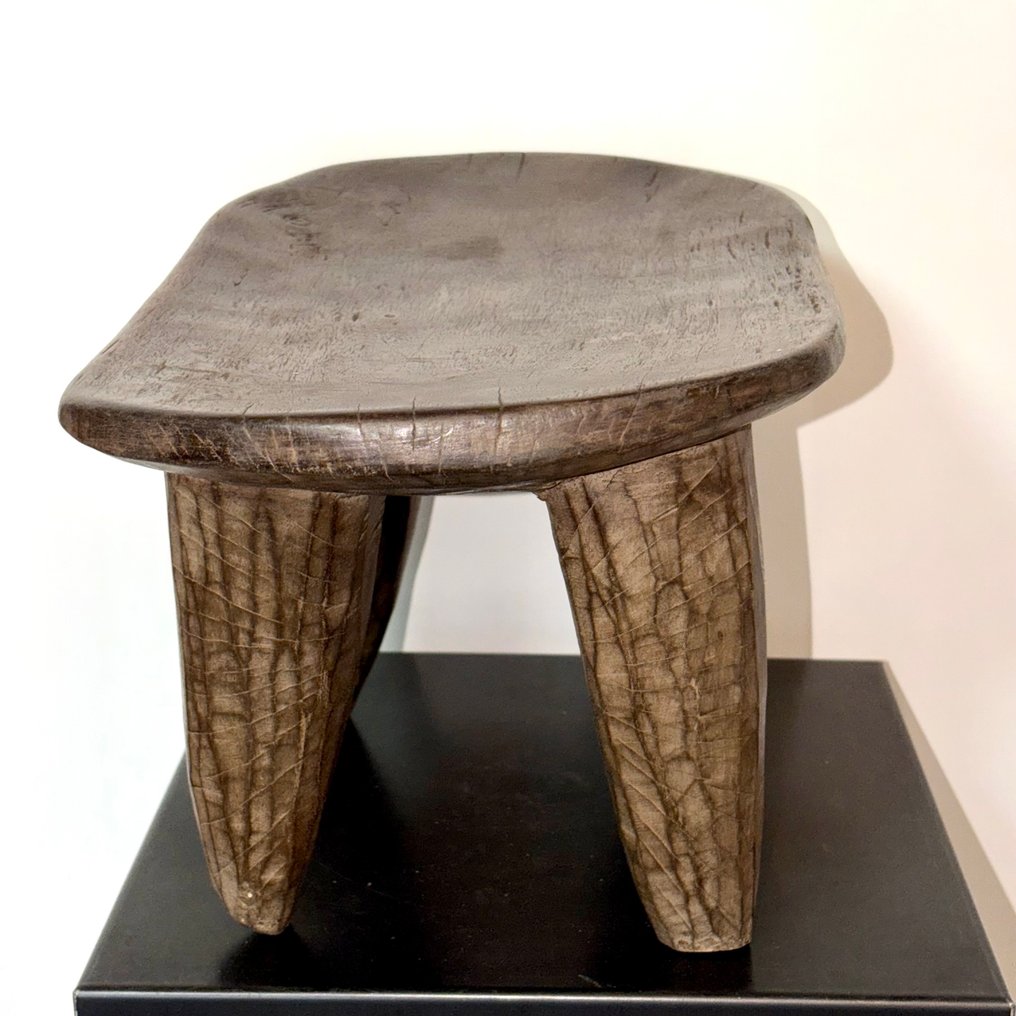
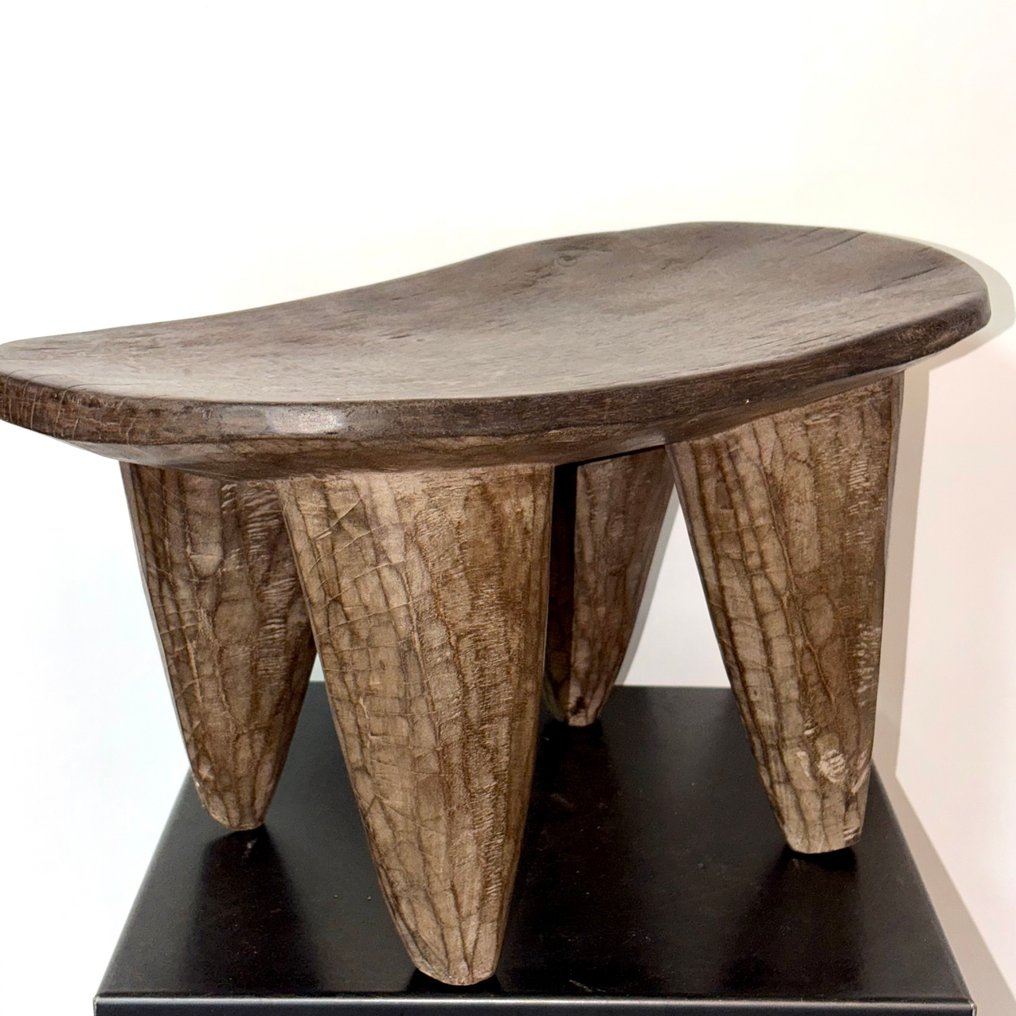
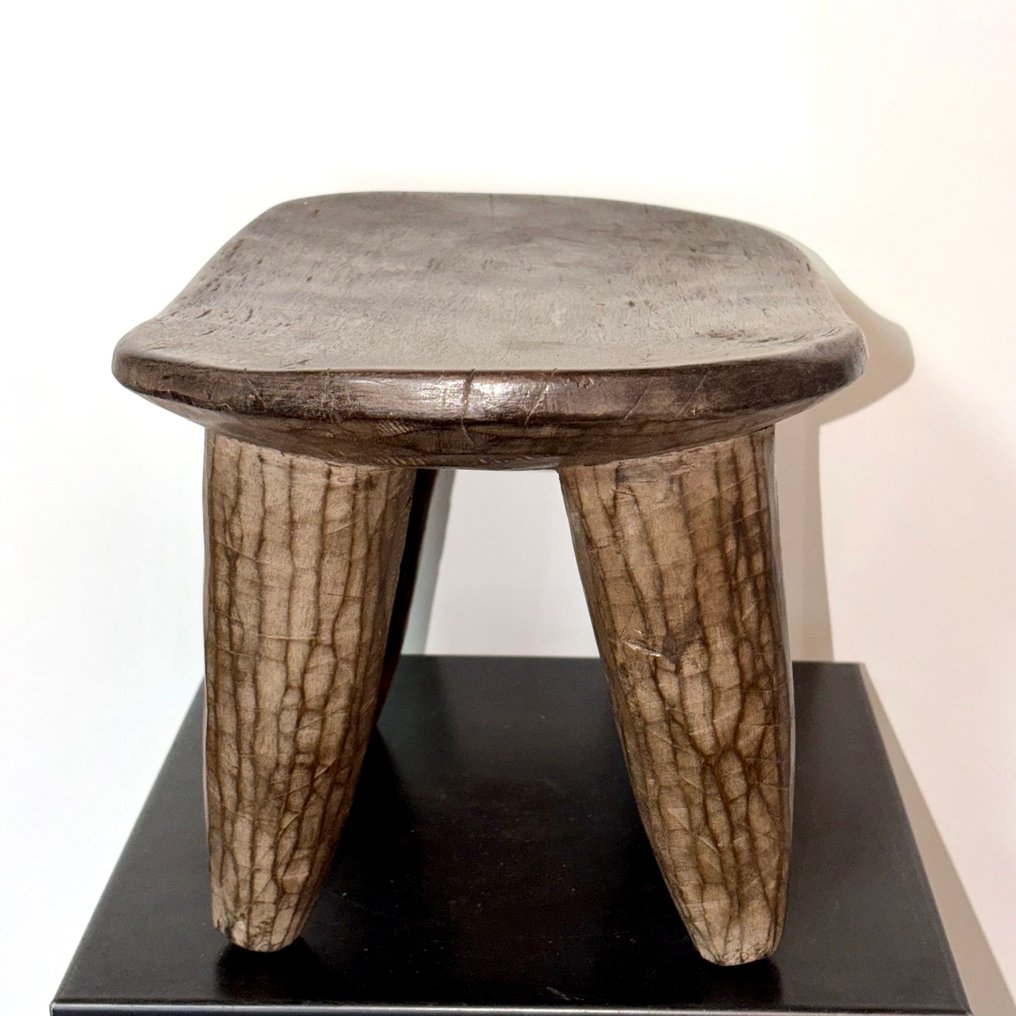
Tabouret à quatre Pieds – Afrique de l’Ouest is a West African wooden stool from Burkina Faso, carved from a single block and likely linked to Lobi, Senufo or Gurunsi traditions, dating to the late 20th century, with dimensions 39 cm wide, 24 cm deep and 22 cm high.
AI-assisted summary
Description from the seller
Object description:
Four-Legged Stool – West Africa
Object type: traditional furniture / ethnographic object
Material: Carved wood (probably a dense local species like iroko or African walnut)
Probable stylistic origin: West Africa (may evoke the styles of the Lobi, Senufo, or Gurunsi peoples).
Formal description:
This monolithic stool (carved from a single block of wood) rests on five massive conical legs, evenly spaced. The seat is slightly curved, asymmetrical, with edges softened by wear, suggesting prolonged use.
The wood is patinated, dark, with visible marks of manual work and age.
Function:
Originally a utilitarian object, used as a personal seat in traditional societies — often reserved for a chief, an elder, or an authority figure.
In some cultures, the stool is also considered a symbolic object, connected to land, identity, or status.
Style and Aesthetics
Minimalist, robust, balanced. The absence of decoration enhances its functional beauty.
He embodies an aesthetic of necessity, where each line derives from use, and each form from a tradition.
Contemporary interpretation
This type of furniture today finds its place as an art object or raw design piece, valued for its authenticity, sculptural strength, and connection to ancient cultures.
Object description:
Four-Legged Stool – West Africa
Object type: traditional furniture / ethnographic object
Material: Carved wood (probably a dense local species like iroko or African walnut)
Probable stylistic origin: West Africa (may evoke the styles of the Lobi, Senufo, or Gurunsi peoples).
Formal description:
This monolithic stool (carved from a single block of wood) rests on five massive conical legs, evenly spaced. The seat is slightly curved, asymmetrical, with edges softened by wear, suggesting prolonged use.
The wood is patinated, dark, with visible marks of manual work and age.
Function:
Originally a utilitarian object, used as a personal seat in traditional societies — often reserved for a chief, an elder, or an authority figure.
In some cultures, the stool is also considered a symbolic object, connected to land, identity, or status.
Style and Aesthetics
Minimalist, robust, balanced. The absence of decoration enhances its functional beauty.
He embodies an aesthetic of necessity, where each line derives from use, and each form from a tradition.
Contemporary interpretation
This type of furniture today finds its place as an art object or raw design piece, valued for its authenticity, sculptural strength, and connection to ancient cultures.
Details
Country of Origin
Burkina Faso
Period
Late 20th century
Material
Wood
Sold with stand
No
Condition
Good condition
Title of artwork
Four-legged stool – West Africa
Height
22 cm
Width
39 cm
Depth
24 cm
Sold by
