Double helmet mask - Ejagham - Ekoi - Cameroon



06
days
06
hours
39
minutes
46
seconds
Starting bid
€ 1
Reserve price not met

Expert
Selected by Dimitri André
Holds a postgraduate degree in African studies and 15 years experience in African art.
Estimate € 500 - € 550
No bids placed
Catawiki Buyer Protection
Your payment’s safe with us until you receive your object.View details
Trustpilot 4.4 | 123609 reviews
Rated Excellent on Trustpilot.
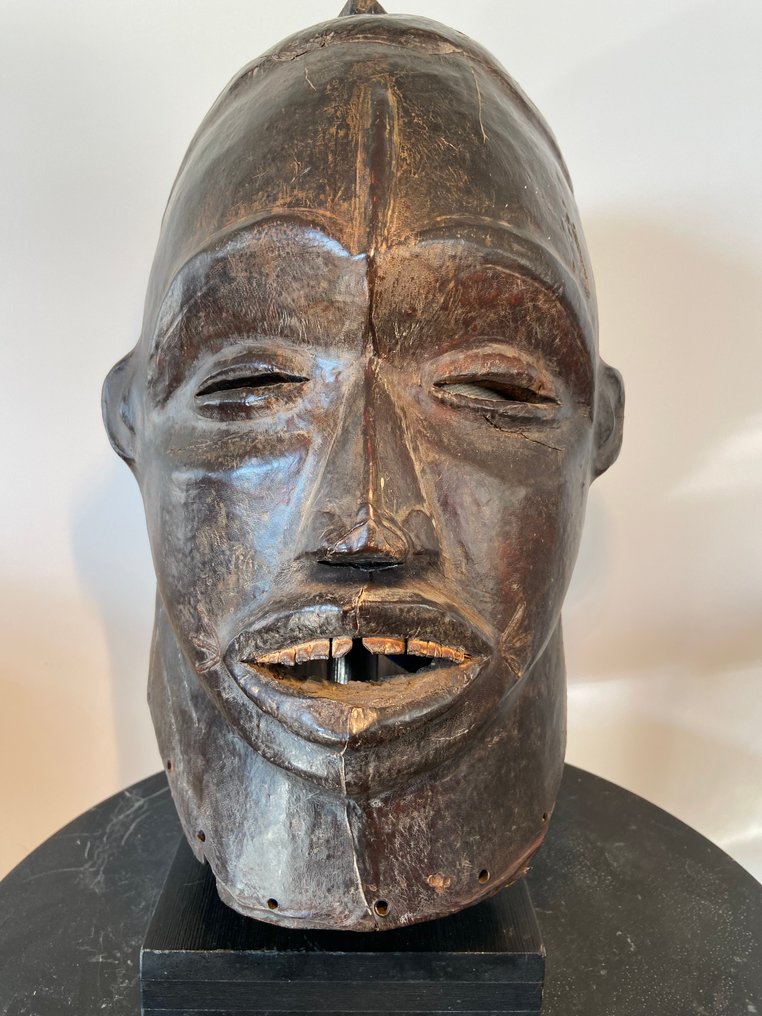
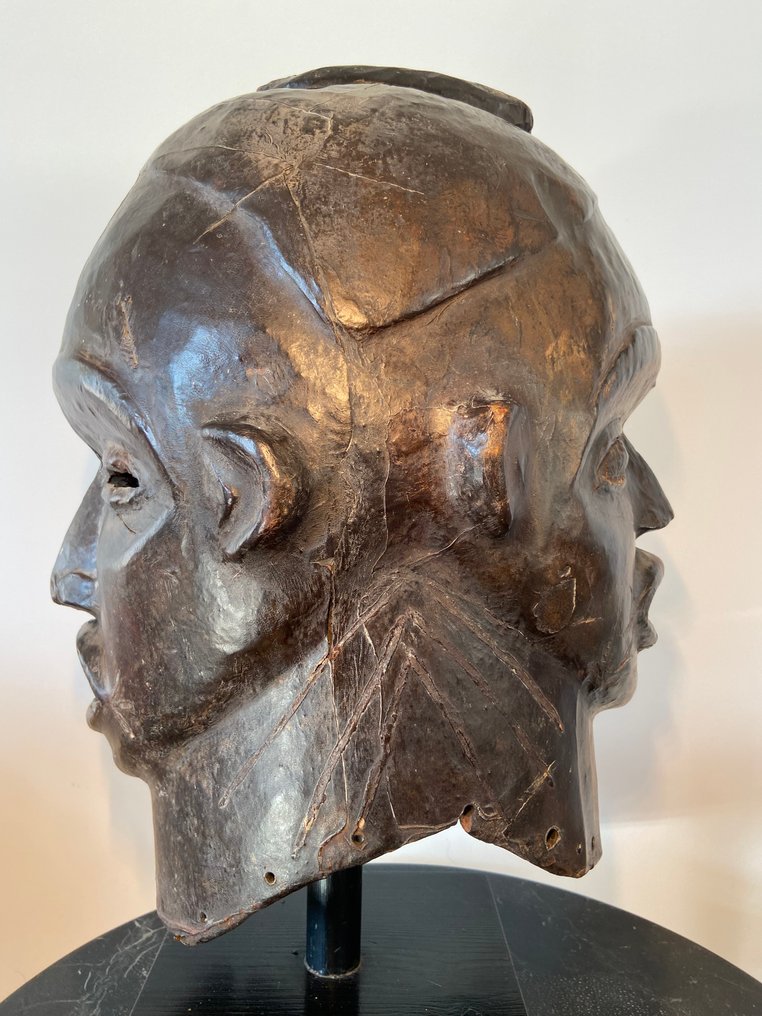
Máscara casco doble from Camerún, an Ejagham – Ekoi double-helmet mask dating to the mid-20th century, carved in wood with skin, 42 cm high, provenance Colección privada.
AI-assisted summary
Description from the seller
In southwestern Cameroon and the neighboring Nigerian territories lives the Ekoi group, which comprises various tribes settled in the interior of the lush virgin forest, along the middle course of the Cross River: the Keaka, the Anyang, the Banyang, the Obang, the Boka, and others. The Ekoi like to call themselves Ejagham. The absolute dominance of secret societies and the environment, virgin forest, gives these peoples relatively uniform cultural characteristics. The origin of their masks, marked by realism, comes from the custom of the ancient Ekoi headhunters. The victors used to tie the heads of their dead enemies to their own heads and then, drunk with the conquest they had achieved, throw themselves into frenzied dances. According to a deep-rooted belief, the blood of the defeated enemies had the power to fertilize the fields. Wooden heads, usually covered with skin, later replaced human heads, but faithfully assumed their characteristics.
It is a double-helmet mask, with a male face with closed eyes, although with a small slit so that the wearer can see, and a female face with open eyes, representing the dualism between life and death.
Provenance: Medicus Mundi missionaries
Argiles collection, Barcelona
In southwestern Cameroon and the neighboring Nigerian territories lives the Ekoi group, which comprises various tribes settled in the interior of the lush virgin forest, along the middle course of the Cross River: the Keaka, the Anyang, the Banyang, the Obang, the Boka, and others. The Ekoi like to call themselves Ejagham. The absolute dominance of secret societies and the environment, virgin forest, gives these peoples relatively uniform cultural characteristics. The origin of their masks, marked by realism, comes from the custom of the ancient Ekoi headhunters. The victors used to tie the heads of their dead enemies to their own heads and then, drunk with the conquest they had achieved, throw themselves into frenzied dances. According to a deep-rooted belief, the blood of the defeated enemies had the power to fertilize the fields. Wooden heads, usually covered with skin, later replaced human heads, but faithfully assumed their characteristics.
It is a double-helmet mask, with a male face with closed eyes, although with a small slit so that the wearer can see, and a female face with open eyes, representing the dualism between life and death.
Provenance: Medicus Mundi missionaries
Argiles collection, Barcelona
Details
No. of items
1
Ethnic group/ culture
Ejagham - Ekoi
Country of Origin
Cameroon
Period
Mid 20th century
Material
Skin, Wood
Sold with stand
No
Condition
Good condition
Title of artwork
Double helmet mask
Height
42 cm
Provenance
Private collection
