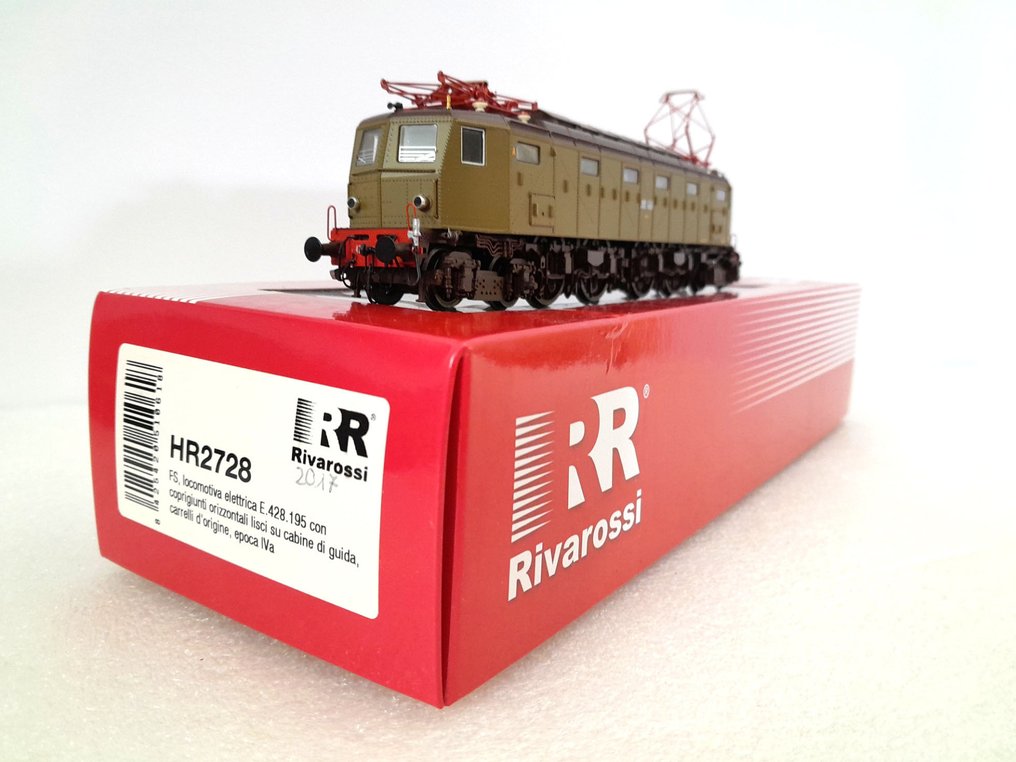
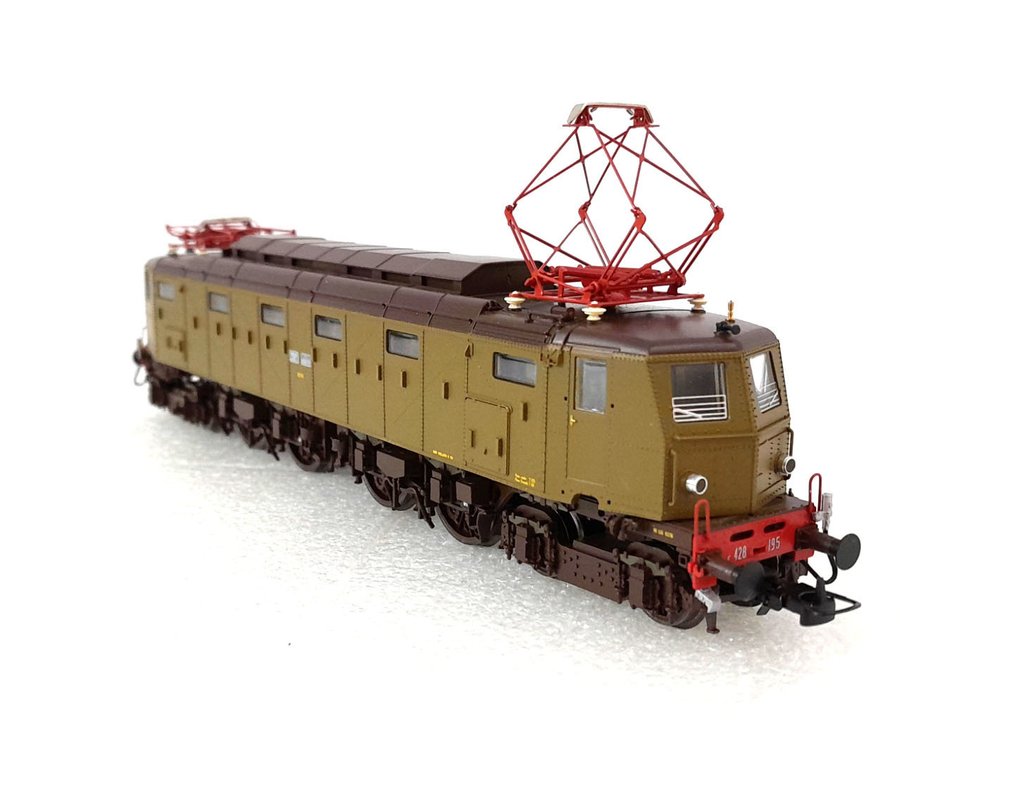
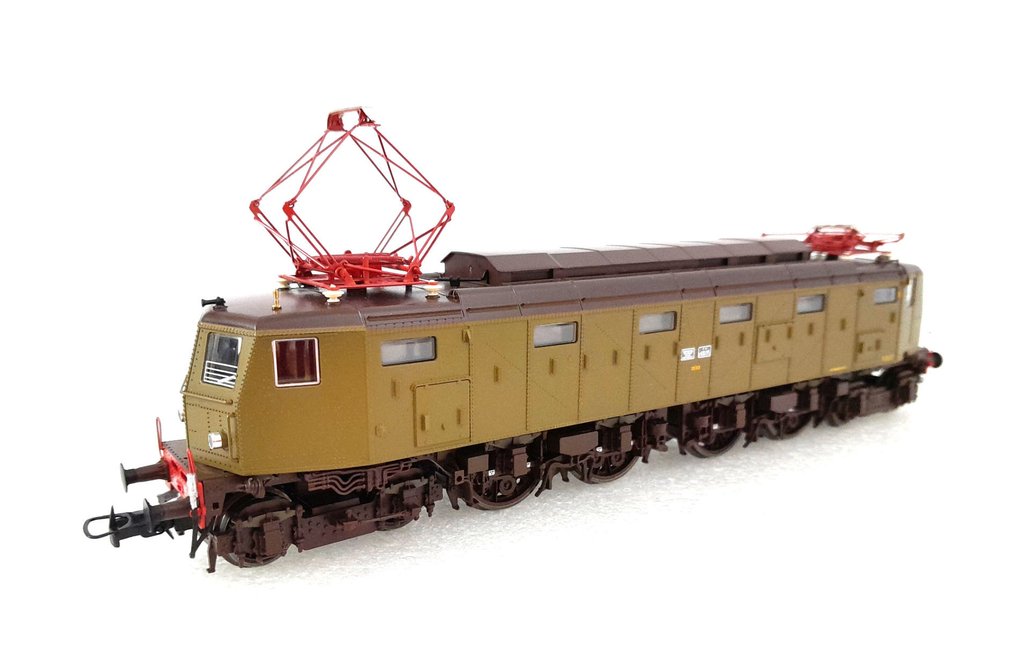
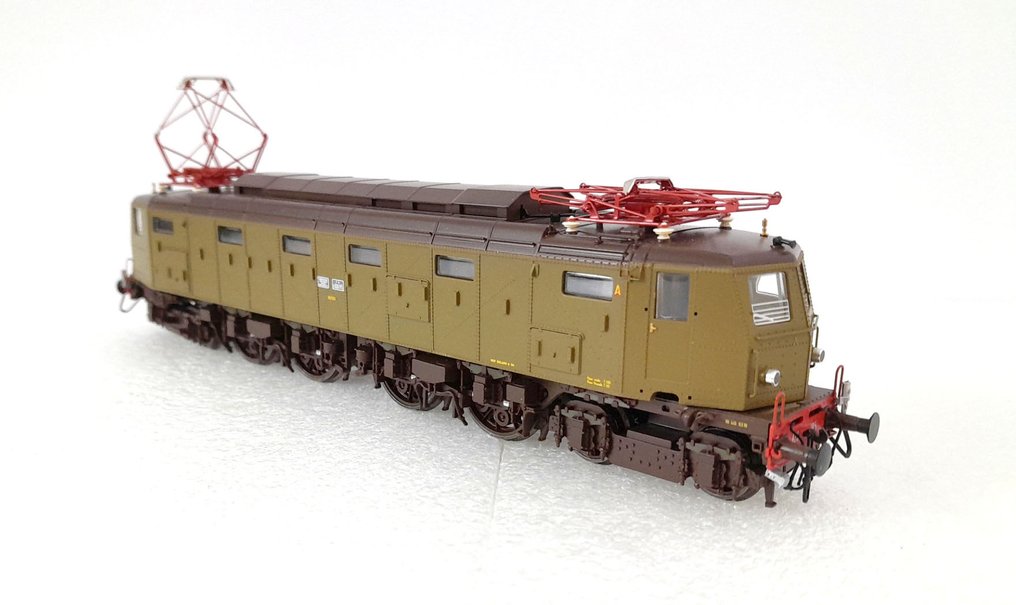
Rivarossi H0 - HR2728 - Electric locomotive (1) - E428 195, original box, manual and accessories, digital setup. - FS

04
days
14
hours
21
minutes
29
seconds
Current bid
€ 195
Reserve price met

Expert
Selected by Guido Gamba
Model train expert with 40+ years of experience, specialising in Märklin and rare collectible locomotives
Estimate € 180 - € 200
12 other people are watching this object
 Bidder 2829 Bidder 2829 | €195 | |
|---|---|---|
| Bidder 6888 | €185 | |
| Bidder 2829 | €178 | |
Catawiki Buyer Protection
Your payment’s safe with us until you receive your object.View details
Trustpilot 4.4 | 123779 reviews
Rated Excellent on Trustpilot.
Brand Hornby Rivarossi, Scale H0, E428 195 locomotive with analogue control in original box and digital readiness.
AI-assisted summary
Description from the seller
Locomotive E428 195 semi-aerodynamic produced by Hornby Rivarossi.
Model in perfect working condition, like new, complete with extras, leaflets, and digital setup.
It will be shipped in a package that is not very elegant but very sturdy.
The E.428 FS group of locomotives are a series of electric locomotives produced for the Italian State Railways in the 1930s, designed for high-speed passenger service.
They were the flagship machines of the commercial fleet for over 25 years until the advent of the first articulated vehicles.
The E.428 were, for their time, impressive due to the combination of factors that characterized them: large size, heavy weight, high power, and speed. They were built to challenge any competitor. It is enough to think that they surpassed the E.626, already in service at the time, by over four meters, and weighed ten to twenty tons more due to the two 'extra' motors; for this reason, they quickly became one of the points of pride of national technology. Additionally, the initial requirement was for a maximum speed of 150 km/h, later reduced to 'only' 130.
Regarding the production batches, the E.428 can be distinguished into 4 series:
- First series, with 'avancorpi': E.428 built from 1934 to 1937, total weight 131 tons, adhesive mass (driving wheels) 76 tons; from E.428-001 to E.428-096.
Second series, with 'avancorpi': E.428 built from 1937 to 1938, with a total mass of 135 tons, driving wheel mass (motors) of 78 tons, improved braking system; from E.428-097 to E.428-122. Essentially, this was a second batch of the first series, with some minor modifications.
Third series, 'semi-aerodynamic': E.428 built from 1938 to 1940, total mass 135 tons, adhesive mass (driving wheels) 78 tons; from E.428-123 to E.428-203. Many of these units experimented with the use of the first Extrarapidi switches from CGE or Brown Boveri, for the protection of the AC circuit. Additionally, some of these units were equipped in the sixties with the new AP-1110 bogies and rubber tampon transmission 'Silent Block', to improve mechanical reliability above 100 km/h.
Fourth series, 'aerodynamics': E.428 units built from 1940 to 1943, with a total mass of 135 tons and a traction mass (drive wheels) of 78 tons; from E.428-204 to E.428-242. They were the first units equipped, right from the factory, with a pressure anti-slip device that increased the mass on the driving axles during train start-up. This modification was later extended to all other E.428 units from 1947. Additionally, some of these units were fitted, in the 1960s, with new AP-1110 bogies and rubber buffer transmission 'silent block' to improve mechanical reliability above 100 km/h.
Locomotive E428 195 semi-aerodynamic produced by Hornby Rivarossi.
Model in perfect working condition, like new, complete with extras, leaflets, and digital setup.
It will be shipped in a package that is not very elegant but very sturdy.
The E.428 FS group of locomotives are a series of electric locomotives produced for the Italian State Railways in the 1930s, designed for high-speed passenger service.
They were the flagship machines of the commercial fleet for over 25 years until the advent of the first articulated vehicles.
The E.428 were, for their time, impressive due to the combination of factors that characterized them: large size, heavy weight, high power, and speed. They were built to challenge any competitor. It is enough to think that they surpassed the E.626, already in service at the time, by over four meters, and weighed ten to twenty tons more due to the two 'extra' motors; for this reason, they quickly became one of the points of pride of national technology. Additionally, the initial requirement was for a maximum speed of 150 km/h, later reduced to 'only' 130.
Regarding the production batches, the E.428 can be distinguished into 4 series:
- First series, with 'avancorpi': E.428 built from 1934 to 1937, total weight 131 tons, adhesive mass (driving wheels) 76 tons; from E.428-001 to E.428-096.
Second series, with 'avancorpi': E.428 built from 1937 to 1938, with a total mass of 135 tons, driving wheel mass (motors) of 78 tons, improved braking system; from E.428-097 to E.428-122. Essentially, this was a second batch of the first series, with some minor modifications.
Third series, 'semi-aerodynamic': E.428 built from 1938 to 1940, total mass 135 tons, adhesive mass (driving wheels) 78 tons; from E.428-123 to E.428-203. Many of these units experimented with the use of the first Extrarapidi switches from CGE or Brown Boveri, for the protection of the AC circuit. Additionally, some of these units were equipped in the sixties with the new AP-1110 bogies and rubber tampon transmission 'Silent Block', to improve mechanical reliability above 100 km/h.
Fourth series, 'aerodynamics': E.428 units built from 1940 to 1943, with a total mass of 135 tons and a traction mass (drive wheels) of 78 tons; from E.428-204 to E.428-242. They were the first units equipped, right from the factory, with a pressure anti-slip device that increased the mass on the driving axles during train start-up. This modification was later extended to all other E.428 units from 1947. Additionally, some of these units were fitted, in the 1960s, with new AP-1110 bogies and rubber buffer transmission 'silent block' to improve mechanical reliability above 100 km/h.
Details
Era
1900-2000
No. of items
1
Brand
Rivarossi
Railroad company
FS
Scale
H0
Catalogue Number
HR2728
Power supply
DC - Direct current
Control
Analogue, DCC ready
Condition
Mint
Packaging
In original box
Additional information
E428 195, original box, manual and accessories, digital setup.
Sold by