Pende Kwilu Mask - Mbuya Gabundula - Pende - DR Congo


Open for bids in 60min
Starting bid
€ 1
Add to your favourites to get an alert when the auction starts.

Expert
Selected by Dimitri André
Holds a postgraduate degree in African studies and 15 years experience in African art.
Estimate € 380 - € 430
Catawiki Buyer Protection
Your payment’s safe with us until you receive your object.View details
Trustpilot 4.4 | 127145 reviews
Rated Excellent on Trustpilot.
Description from the seller
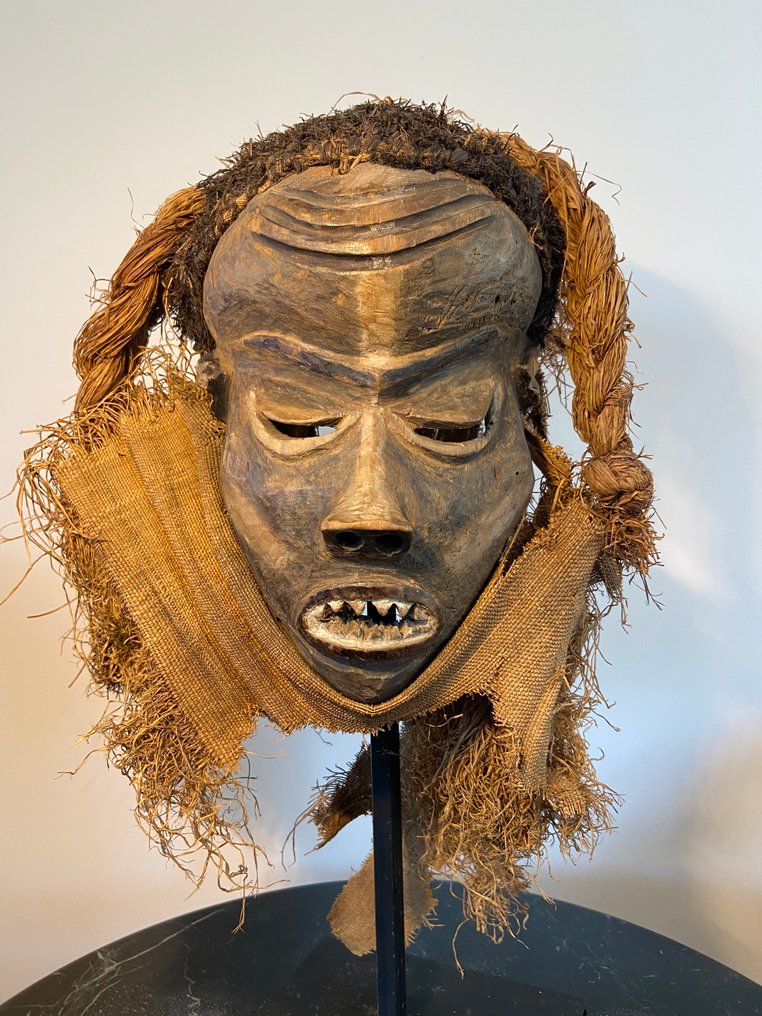
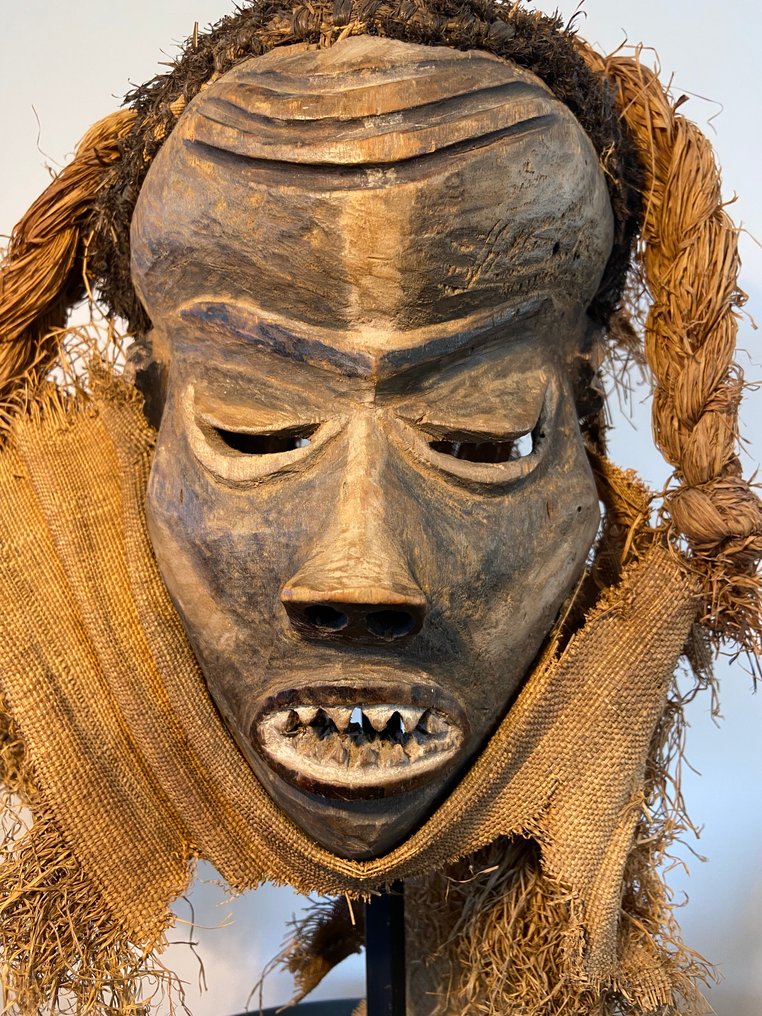
The Mbuya masks of the Pende Kwilu or Western Pende are primarily used in the dance that marks the culmination of the initiation period for young people, performed before an assembly of all the villagers. The interpretation of the human face is typical of the western Pende (with influences from the Woyo and Bashilele), featuring a continuous line of eyebrows, in relief, in a V shape occupying the entire width of the face and painted black; a bulging forehead with Mifunyi folds; the upper eyelids curving downwards; the upturned, pierced nose; the open mouth revealing pointed teeth and the pointed chin. The Gabundula or Executioner mask represents the executioner of the witchcraft society; its fearsome character is symbolized by the Mifunyi folds on the forehead. Europeans associate furrowed brows and a wrinkled forehead; the Pende see these deep furrows as a manifestation of resentment, irascibility, and aggression. In the late 1920s and 1930s, many Pende sculptors from the Center sought to illustrate this state of mind by representing the wrinkles as grooves carved into the forehead. This is a convention reserved for frightening characters such as the executioner (Mbuya Gabundula). Gabundula's mouth is larger and more angular. Nguedia says that Pumbu 'makes a grimace,' indicating that he is a man who is permanently angry, a dangerous man.
Provenance: Berthe Hartert collection
Argiles Collection, Barcelona
The Mbuya masks of the Pende Kwilu or Western Pende are primarily used in the dance that marks the culmination of the initiation period for young people, performed before an assembly of all the villagers. The interpretation of the human face is typical of the western Pende (with influences from the Woyo and Bashilele), featuring a continuous line of eyebrows, in relief, in a V shape occupying the entire width of the face and painted black; a bulging forehead with Mifunyi folds; the upper eyelids curving downwards; the upturned, pierced nose; the open mouth revealing pointed teeth and the pointed chin. The Gabundula or Executioner mask represents the executioner of the witchcraft society; its fearsome character is symbolized by the Mifunyi folds on the forehead. Europeans associate furrowed brows and a wrinkled forehead; the Pende see these deep furrows as a manifestation of resentment, irascibility, and aggression. In the late 1920s and 1930s, many Pende sculptors from the Center sought to illustrate this state of mind by representing the wrinkles as grooves carved into the forehead. This is a convention reserved for frightening characters such as the executioner (Mbuya Gabundula). Gabundula's mouth is larger and more angular. Nguedia says that Pumbu 'makes a grimace,' indicating that he is a man who is permanently angry, a dangerous man.
Provenance: Berthe Hartert collection
Argiles Collection, Barcelona
Details
Indigenous object name
Mbuya Gabundula
No. of items
1
Ethnic group/ culture
Pende
Country of Origin
DR Congo
Period
Mid 20th century
Material
Fiber, Wood
Sold with stand
No
Condition
Fair condition
Title of artwork
Pende Kwilu Mask
Height
30 cm
Provenance
Private collection
