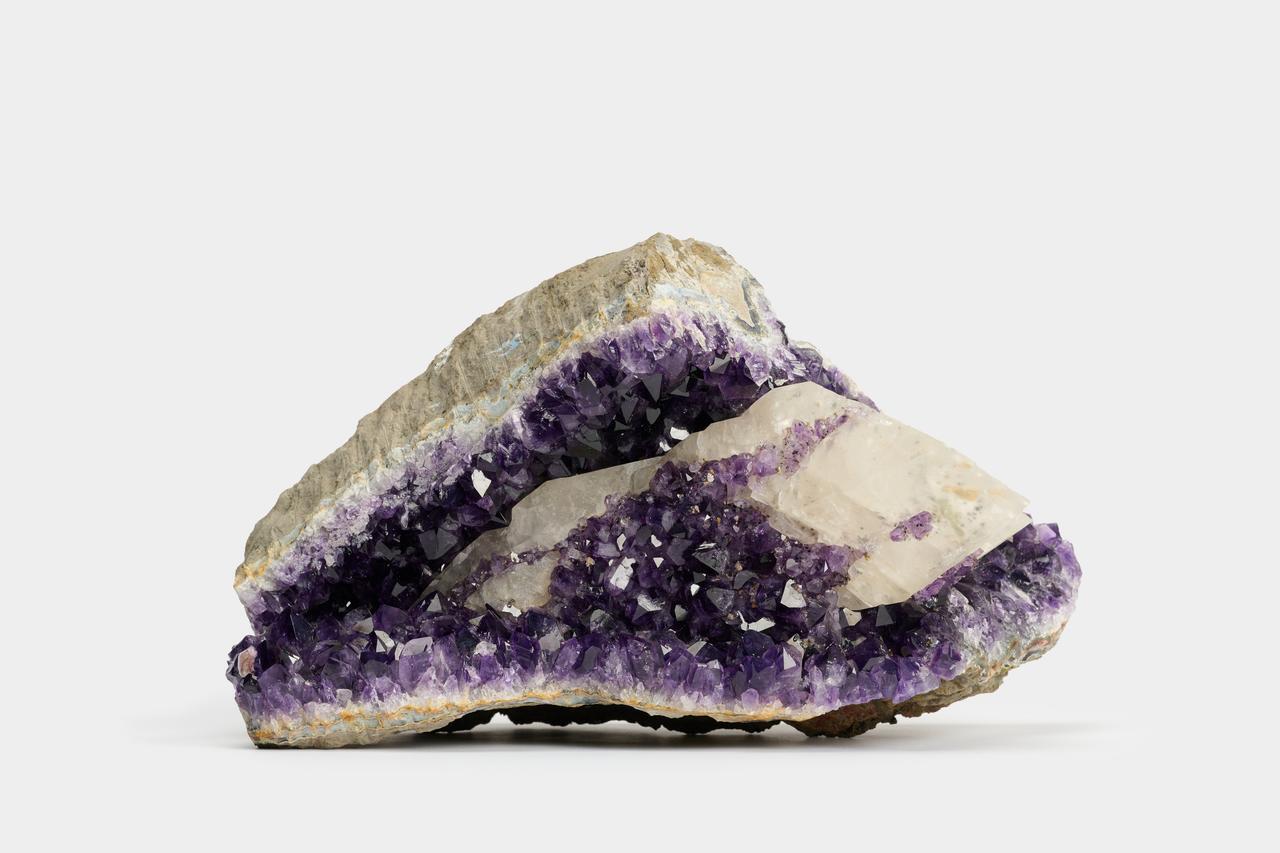
Garnet Crystals- 20 g - (34)


Opens tomorrow
Starting bid
€ 1
Add to your favourites to get an alert when the auction starts.

Catawiki Buyer Protection
Your payment’s safe with us until you receive your object.View details
Trustpilot 4.4 | 124985 reviews
Rated Excellent on Trustpilot.
Description from the seller
BASIC DESCRIPTION
Professional grade 100+ ct (34 pieces) lot of natural Rhodolite Garnet (rough) sourced from Southern Province, Zambia. This material is characterized by its deep "burgundy-wine" red color with strong almandine-pyrope saturation.
Unlike "alluvial" stones (from secondary deposits) that are smoothed by river transport, this material is recovered close to the host rock (from primary deposits), preserving their sharp, crystal-like structure which accounts for the "rugged" and angular crystal fragments seen in the lot.
The lot is precisely sorted by weight (see distribution below) and is ideal for gemstone cutters looking for consistent material for commercial cuts. Most importantly, the lot contains several premium pieces ~5 ct, capable of producing investment-grade focal stones.
--------------------
LOT DETAILS
Number of Items: 34
Total Weight (in carats): approx. 100+ ct
Approximate individual weights (in carats): 5.40; 5.10; 4.80; 4.80; 4.70; 4.35; 3.70; 3.65; 3.50; 3.45; 3.25; 3.15; 3.10; 3.05; 3.00; 2.95; 2.95; 2.95; 2.85; 2.70; 2.65; 2.45; 2.25; 2.10; 2.05; 2.00; 2.00; 2.00; 2.00; 1.95; 1.85; 1.75; 1.50; 0.95
Color: Deep, saturated burgundy to raspberry-red.
Clarity: Transparent, with a high percentage of facetable material. Ranging from Eye-clean to Included.
Treatment: 100% Natural, No Heat, No Treatment.
--------------------
TECHNICAL DETAILS
Origin: Southern Province, Zambia.
Type: Natural Pyrope-Almandine Garnet (Rhodolite).
Chemical Classification: A solid-state solution of Pyrope and Almandine Mg3Al2(SiO4)3 - Fe3Al2(SiO4)3.
Crystal System: Cubic (Isotropic).
Hardness: 7.0 – 7.5 on the Mohs scale (excellent for daily-wear jewelry).
Specific Gravity: 3.70 – 3.90
Refractive Index: 1.770 – 1.785.
Other Optical Properties: The high iron (Almandine) content results in a superior Refractive Index, ensuring high brilliance and "fire" in finished stones.
NOTE FOR CUTTERS: Due to the high iron content typical for this Zambian location, we recommend shallow pavilion angles to maintain brilliance and prevent "blacking out" in finished stones.
--------------------
HISTORICAL CONTEXT
These garnets are hosted within the Zambezi Belt, a major geological structure formed during the Pan-African orogeny hundreds of millions of years ago.
Discovery: While Zambia is globally famous for its emeralds, the garnet deposits in the Southern Province (specifically the Kalomo and Siavonga districts) were among the first colored gemstones to be commercially recognized in the region.
Mining Tradition: Unlike the mechanized emerald mines, rhodolite in this area is traditionally mined by small-scale artisanal miners, making each parcel a direct product of local craftsmanship and heritage.
Global Recognition: Since the late 20th century, Zambian rhodolite has gained a reputation among international lapidaries for its "clean" crystal structure and its ability to compete with the finest Tanzanian material in terms of color saturation.
Scientific Significance: The Southern Province material is scientifically noted for its high Almandine-to-Pyrope ratio, which historically helped gemologists differentiate Zambian origins from lighter East African varieties.
--------------------
GEOLOGICAL ORIGIN AND FORMATION
The Zambezi Belt & Metamorphic Genesis: These garnets are found within the Zambezi Belt, a major tectonic domain formed during the Pan-African orogeny (approx. 500–800 million years ago). Unlike crystals that grow in open cavities, these rhodolites are the result of intense geological "cooking." They formed deep within the Earth's crust under high-pressure (5–15 kbar) and high-temperature conditions (700°C – 900°C, reaching amphibolite to granulite facies). In this environment, aluminum-rich sedimentary rocks were completely recrystallized into garnet-bearing schists and gneisses.
The Chemical "Cocktail": Rhodolite is not a single mineral but a complex isomorphous mixture—a solid-state blend of two garnet species: Magnesium-rich Pyrope (Mg3Al2(SiO4)3) and Iron-rich Almandine (Fe3Al2(SiO4)3). The specific vibrant purplish-red tint of this Zambian material is the result of a precise ratio between Magnesium and Iron, often influenced by trace amounts of manganese or chromium.
The characteristics of the rough material depend on how it was recovered:
Primary Deposits: These stones are found embedded directly in the host rock (matrix). Because mining here requires manual extraction or explosives to break the hard rock, the fragments often preserve their sharp, "rugged," and angular crystal structures.
Secondary (Alluvial) Deposits: Over millions of years, weathering erodes the host rock, and rivers carry the heavy, durable garnets downstream. This process naturally "pre-tests" the stones for durability, though it rounds them into river-worn pebbles.
--------------------
GEMOLOGICAL PROFILE
Crystallography: As part of the Garnet group, these stones belong to the cubic (isometric) crystal system, meaning they are singly refractive (isotropic).
Chemical Hybridization: Rhodolite is a solid-state solution (mix) of two garnet end-members: Pyrope (Mg3Al2) and Almandine (Fe3Al2).
The "Iron" Signature: The Southern Zambian material is noted for a slightly higher Almandine-to-Pyrope ratio compared to East African deposits, which accounts for its higher Specific Gravity (3.70–3.90) and its deep, blood-wine saturation.
Optical Brilliance: Due to its high Refractive Index (1.770–1.785), this material possesses exceptional "fire" and dispersion, making it a favorite for "brilliant-style" faceting.
Internal Characteristics: Professional gemologists recognize these stones by their typical internal features, which may include fine acicular (needle-like) inclusions or small crystalline "protogenetic" inclusions that serve as a fingerprint of their natural Zambian origin.
Luster: Vitreous to sub-adamantine.
Cleavage: None (conchoidal fracture), which provides excellent durability during the cutting process.
Pleochroism: None (due to cubic structure), ensuring consistent color from all viewing angles.
--------------------
MARKET INSIGHTS (2026)
Zambian Rhodolite is highly regarded in the gemstone trade, often competing with material from Sri Lanka or Tanzania.
The "Grape" Premium: The most valuable stones are those with a "grape" or "raspberry" color—a vibrant purplish-red. If the stone is too dark (brownish or overly deep red), the price drops significantly. The resulting saturation of color shows after proper cutting.
Clarity Advantage: Unlike emeralds, garnets are expected to be "eye-clean" (no visible inclusions). Zambian deposits often produce high-clarity crystals, making them a favorite for high-end "calibrated" cutting (standard sizes for jewelry mass production).
Market Position: It is marketed as a natural, untreated alternative to heated rubies or pink sapphires. In a world where consumers demand "no treatment," garnet’s natural beauty is a huge selling point.
Pricing:
Standard quality: $20–$50 per carat.
Top "Grape" color (3+ carats): Can reach $150–$300+ per carat.
--------------------
METAPHYSICAL & TRADITIONAL LORE
!!! IMPORTANT DISCLAIMER: The seller does not guarantee any medical, healing, metaphysical, magical and/or esoterical properties of any of the provided goods. The information is for the context and information only. !!!
Birthstone: Traditional birthstone for January.
Anniversary: Designated gemstone for the 2nd and 15th wedding anniversaries.
Zodiac: Associated with Capricorn and Aquarius.
Magical Properties: Known as a stone of inspiration and hope, believed to encourage compassion and emotional balance.
Energy: Highly valued for its untreated, "pure" earth energy.
In the world of crystal healing and New Age spirituality, Rhodolite (the pyrope-almandine mix) is often called the "Stone of Inspiration" or the "Stone of Emotional Healing." Because Zambian stones are known for their exceptional clarity and "grape" purple-red hues, they are considered high-vibration gems.
Rhodolite is unique because its color combines red (vitality) and purple/pink (spirituality).
- The Root Chakra (Muladhara): It provides grounding and physical security.
- The Heart Chakra (Anahata): It opens the heart to compassion and love.
- The Crown Chakra (Sahasrara): Because of the purple tint, it’s also linked to spiritual wisdom.
Practitioners believe Rhodolite bridges these centers, helping you manifest your heart's desires into physical reality.
Shamballa and Spiritual Protection: Used for "Shamballa bracelets" (macramé-style jewelry).
Inner Peace: In these traditions, Rhodolite is used to represent the path to Shamballa (a mythical kingdom of peace). It is said to protect the traveler from negative energies and self-doubt.
Light Body (Merkaba): New Age healers claim that the intense color of Zambian Rhodolite helps "attune" the wearer’s aura, making it easier to reach higher states of meditation or "light work."
The "Zambian" Energy Signature:
Prosperity Magnet: Zambia’s earth is rich in minerals, and its garnets are said to carry the "energy of abundance."
Emotional First Aid: Unlike deep red Almandine, which can be perceived as "heavy" or "aggressive," the Zambian Rhodolite is seen as gentle but powerful. It’s used specifically for healing trauma related to worthiness and shame.
Healing of the "Broken Heart": It is said to soothe the emotional body after a breakup or loss.
Boost of Sexual Energy: It’s thought to be more refined than regular garnet, promoting "healthy" and "soul-connected" intimacy.
Physical Benefits: Esoterics claim it supports the circulatory system, pituitary gland, and metabolism.
BASIC DESCRIPTION
Professional grade 100+ ct (34 pieces) lot of natural Rhodolite Garnet (rough) sourced from Southern Province, Zambia. This material is characterized by its deep "burgundy-wine" red color with strong almandine-pyrope saturation.
Unlike "alluvial" stones (from secondary deposits) that are smoothed by river transport, this material is recovered close to the host rock (from primary deposits), preserving their sharp, crystal-like structure which accounts for the "rugged" and angular crystal fragments seen in the lot.
The lot is precisely sorted by weight (see distribution below) and is ideal for gemstone cutters looking for consistent material for commercial cuts. Most importantly, the lot contains several premium pieces ~5 ct, capable of producing investment-grade focal stones.
--------------------
LOT DETAILS
Number of Items: 34
Total Weight (in carats): approx. 100+ ct
Approximate individual weights (in carats): 5.40; 5.10; 4.80; 4.80; 4.70; 4.35; 3.70; 3.65; 3.50; 3.45; 3.25; 3.15; 3.10; 3.05; 3.00; 2.95; 2.95; 2.95; 2.85; 2.70; 2.65; 2.45; 2.25; 2.10; 2.05; 2.00; 2.00; 2.00; 2.00; 1.95; 1.85; 1.75; 1.50; 0.95
Color: Deep, saturated burgundy to raspberry-red.
Clarity: Transparent, with a high percentage of facetable material. Ranging from Eye-clean to Included.
Treatment: 100% Natural, No Heat, No Treatment.
--------------------
TECHNICAL DETAILS
Origin: Southern Province, Zambia.
Type: Natural Pyrope-Almandine Garnet (Rhodolite).
Chemical Classification: A solid-state solution of Pyrope and Almandine Mg3Al2(SiO4)3 - Fe3Al2(SiO4)3.
Crystal System: Cubic (Isotropic).
Hardness: 7.0 – 7.5 on the Mohs scale (excellent for daily-wear jewelry).
Specific Gravity: 3.70 – 3.90
Refractive Index: 1.770 – 1.785.
Other Optical Properties: The high iron (Almandine) content results in a superior Refractive Index, ensuring high brilliance and "fire" in finished stones.
NOTE FOR CUTTERS: Due to the high iron content typical for this Zambian location, we recommend shallow pavilion angles to maintain brilliance and prevent "blacking out" in finished stones.
--------------------
HISTORICAL CONTEXT
These garnets are hosted within the Zambezi Belt, a major geological structure formed during the Pan-African orogeny hundreds of millions of years ago.
Discovery: While Zambia is globally famous for its emeralds, the garnet deposits in the Southern Province (specifically the Kalomo and Siavonga districts) were among the first colored gemstones to be commercially recognized in the region.
Mining Tradition: Unlike the mechanized emerald mines, rhodolite in this area is traditionally mined by small-scale artisanal miners, making each parcel a direct product of local craftsmanship and heritage.
Global Recognition: Since the late 20th century, Zambian rhodolite has gained a reputation among international lapidaries for its "clean" crystal structure and its ability to compete with the finest Tanzanian material in terms of color saturation.
Scientific Significance: The Southern Province material is scientifically noted for its high Almandine-to-Pyrope ratio, which historically helped gemologists differentiate Zambian origins from lighter East African varieties.
--------------------
GEOLOGICAL ORIGIN AND FORMATION
The Zambezi Belt & Metamorphic Genesis: These garnets are found within the Zambezi Belt, a major tectonic domain formed during the Pan-African orogeny (approx. 500–800 million years ago). Unlike crystals that grow in open cavities, these rhodolites are the result of intense geological "cooking." They formed deep within the Earth's crust under high-pressure (5–15 kbar) and high-temperature conditions (700°C – 900°C, reaching amphibolite to granulite facies). In this environment, aluminum-rich sedimentary rocks were completely recrystallized into garnet-bearing schists and gneisses.
The Chemical "Cocktail": Rhodolite is not a single mineral but a complex isomorphous mixture—a solid-state blend of two garnet species: Magnesium-rich Pyrope (Mg3Al2(SiO4)3) and Iron-rich Almandine (Fe3Al2(SiO4)3). The specific vibrant purplish-red tint of this Zambian material is the result of a precise ratio between Magnesium and Iron, often influenced by trace amounts of manganese or chromium.
The characteristics of the rough material depend on how it was recovered:
Primary Deposits: These stones are found embedded directly in the host rock (matrix). Because mining here requires manual extraction or explosives to break the hard rock, the fragments often preserve their sharp, "rugged," and angular crystal structures.
Secondary (Alluvial) Deposits: Over millions of years, weathering erodes the host rock, and rivers carry the heavy, durable garnets downstream. This process naturally "pre-tests" the stones for durability, though it rounds them into river-worn pebbles.
--------------------
GEMOLOGICAL PROFILE
Crystallography: As part of the Garnet group, these stones belong to the cubic (isometric) crystal system, meaning they are singly refractive (isotropic).
Chemical Hybridization: Rhodolite is a solid-state solution (mix) of two garnet end-members: Pyrope (Mg3Al2) and Almandine (Fe3Al2).
The "Iron" Signature: The Southern Zambian material is noted for a slightly higher Almandine-to-Pyrope ratio compared to East African deposits, which accounts for its higher Specific Gravity (3.70–3.90) and its deep, blood-wine saturation.
Optical Brilliance: Due to its high Refractive Index (1.770–1.785), this material possesses exceptional "fire" and dispersion, making it a favorite for "brilliant-style" faceting.
Internal Characteristics: Professional gemologists recognize these stones by their typical internal features, which may include fine acicular (needle-like) inclusions or small crystalline "protogenetic" inclusions that serve as a fingerprint of their natural Zambian origin.
Luster: Vitreous to sub-adamantine.
Cleavage: None (conchoidal fracture), which provides excellent durability during the cutting process.
Pleochroism: None (due to cubic structure), ensuring consistent color from all viewing angles.
--------------------
MARKET INSIGHTS (2026)
Zambian Rhodolite is highly regarded in the gemstone trade, often competing with material from Sri Lanka or Tanzania.
The "Grape" Premium: The most valuable stones are those with a "grape" or "raspberry" color—a vibrant purplish-red. If the stone is too dark (brownish or overly deep red), the price drops significantly. The resulting saturation of color shows after proper cutting.
Clarity Advantage: Unlike emeralds, garnets are expected to be "eye-clean" (no visible inclusions). Zambian deposits often produce high-clarity crystals, making them a favorite for high-end "calibrated" cutting (standard sizes for jewelry mass production).
Market Position: It is marketed as a natural, untreated alternative to heated rubies or pink sapphires. In a world where consumers demand "no treatment," garnet’s natural beauty is a huge selling point.
Pricing:
Standard quality: $20–$50 per carat.
Top "Grape" color (3+ carats): Can reach $150–$300+ per carat.
--------------------
METAPHYSICAL & TRADITIONAL LORE
!!! IMPORTANT DISCLAIMER: The seller does not guarantee any medical, healing, metaphysical, magical and/or esoterical properties of any of the provided goods. The information is for the context and information only. !!!
Birthstone: Traditional birthstone for January.
Anniversary: Designated gemstone for the 2nd and 15th wedding anniversaries.
Zodiac: Associated with Capricorn and Aquarius.
Magical Properties: Known as a stone of inspiration and hope, believed to encourage compassion and emotional balance.
Energy: Highly valued for its untreated, "pure" earth energy.
In the world of crystal healing and New Age spirituality, Rhodolite (the pyrope-almandine mix) is often called the "Stone of Inspiration" or the "Stone of Emotional Healing." Because Zambian stones are known for their exceptional clarity and "grape" purple-red hues, they are considered high-vibration gems.
Rhodolite is unique because its color combines red (vitality) and purple/pink (spirituality).
- The Root Chakra (Muladhara): It provides grounding and physical security.
- The Heart Chakra (Anahata): It opens the heart to compassion and love.
- The Crown Chakra (Sahasrara): Because of the purple tint, it’s also linked to spiritual wisdom.
Practitioners believe Rhodolite bridges these centers, helping you manifest your heart's desires into physical reality.
Shamballa and Spiritual Protection: Used for "Shamballa bracelets" (macramé-style jewelry).
Inner Peace: In these traditions, Rhodolite is used to represent the path to Shamballa (a mythical kingdom of peace). It is said to protect the traveler from negative energies and self-doubt.
Light Body (Merkaba): New Age healers claim that the intense color of Zambian Rhodolite helps "attune" the wearer’s aura, making it easier to reach higher states of meditation or "light work."
The "Zambian" Energy Signature:
Prosperity Magnet: Zambia’s earth is rich in minerals, and its garnets are said to carry the "energy of abundance."
Emotional First Aid: Unlike deep red Almandine, which can be perceived as "heavy" or "aggressive," the Zambian Rhodolite is seen as gentle but powerful. It’s used specifically for healing trauma related to worthiness and shame.
Healing of the "Broken Heart": It is said to soothe the emotional body after a breakup or loss.
Boost of Sexual Energy: It’s thought to be more refined than regular garnet, promoting "healthy" and "soul-connected" intimacy.
Physical Benefits: Esoterics claim it supports the circulatory system, pituitary gland, and metabolism.
Details
Number of items
34
Main Mineral
Garnet
Mineral Form
Crystals
Weight
20 g
Origin (Region/ City)
Southern Province, Southern Zambezi belt
Country of Origin
Zambia
Sold by
Disclaimer
It is believed that certain gemstones and minerals have beneficial health and spiritual properties. However, using or wearing gemstones or minerals does not mean that you can treat, cure or prevent any disease. Please consult your health care professional for information on health care issues and do not stop any medications or courses of treatment, without first consulting your health care professional. The use of gemstones or minerals as a wellness therapy is one of personal choice. While stones or crystals have been used historically to relieve or prevent symptoms, the objects sold on our website offer no guarantee of results. Therefore, Catawiki cannot guarantee or be held liable for the effectiveness of these objects sold herein.
It is believed that certain gemstones and minerals have beneficial health and spiritual properties. However, using or wearing gemstones or minerals does not mean that you can treat, cure or prevent any disease. Please consult your health care professional for information on health care issues and do not stop any medications or courses of treatment, without first consulting your health care professional. The use of gemstones or minerals as a wellness therapy is one of personal choice. While stones or crystals have been used historically to relieve or prevent symptoms, the objects sold on our website offer no guarantee of results. Therefore, Catawiki cannot guarantee or be held liable for the effectiveness of these objects sold herein.