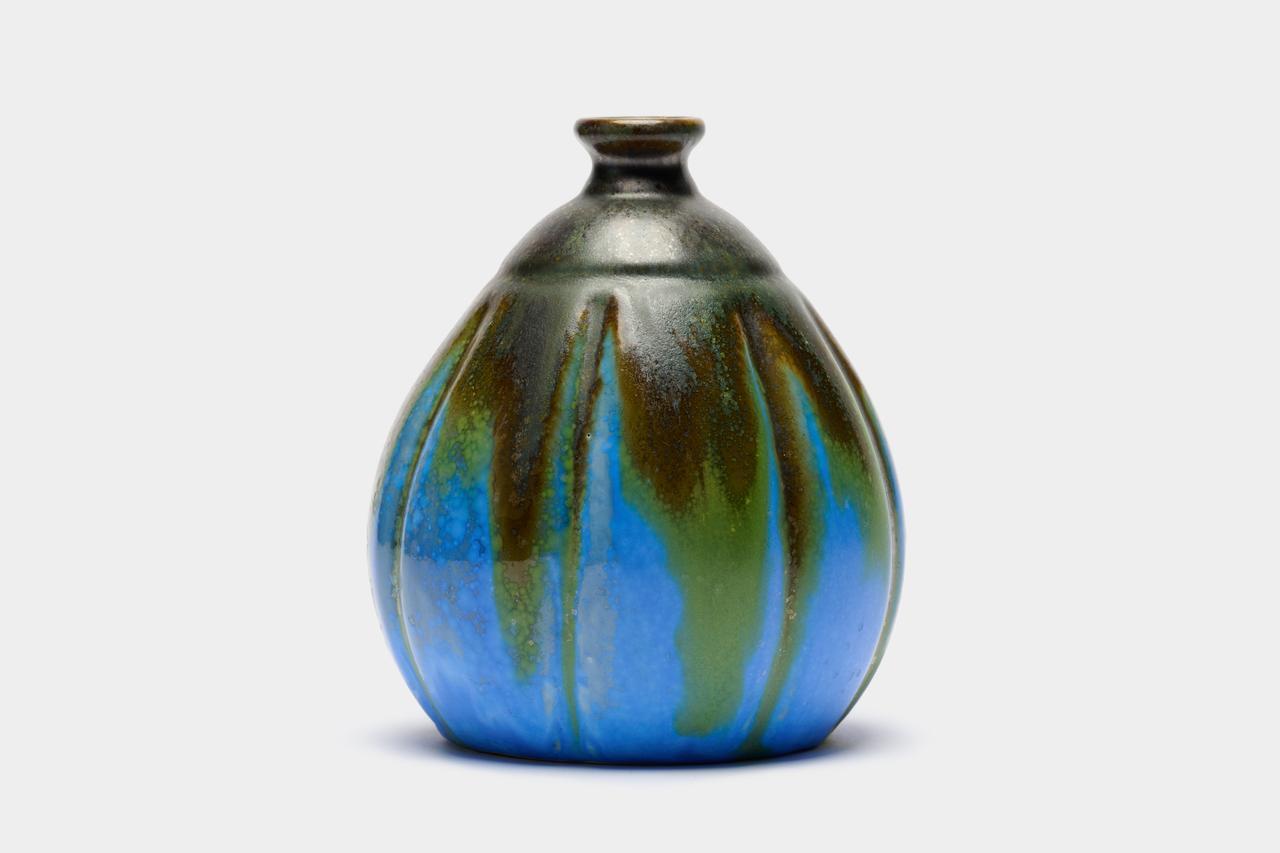
Spode - Tea caddy/ box - Bone china


06
days
19
hours
50
minutes
48
seconds

No bids placed
Catawiki Buyer Protection
Your payment’s safe with us until you receive your object.View details
Trustpilot 4.4 | 125857 reviews
Rated Excellent on Trustpilot.
A rare Spode bone china tea canister dating to November 1883, standing 15.5 cm high, 12.5 cm wide and 9 cm deep, with twin loop handles, hand‑painted floral design with gilt, maker's mark on the lid and base and minor wear to gilding.
AI-assisted summary
Description from the seller
An extremely rare china tea canister. The canister has twin loop style handles and a hand painted floral design with gilt highlighting, this is a genuine Spode piece and both the lid and base bear the makers mark, the base also has a diamond registered design number allowing us to date the piece quite precisely to November 1883. The canister stands 15.5cm (6.1") high. The canister is in excellent condition with no breaks, chips or repairs similarly the paintwork remains in excellent condition with bright sharp colours with only some minor wear to the gilded highlights on the lid.
Spode is one of the great names of English ceramics, with a history that runs from the late 18th century right through the height of Victorian taste. Founded in Stoke‑on‑Trent by Josiah Spode in the 1770s, the factory became renowned for technical innovation, especially in refining “bone china” – a strong, fine, translucent porcelain body that quickly set the standard for luxury tablewares.
By the mid‑19th century Spode (then trading as Copeland & Spode / W.T. Copeland & Sons) was producing richly decorated hand‑painted services for the domestic and export markets, often dated and artist‑signed, and frequently shown at the international exhibitions that made the firm’s reputation worldwide. Pieces from the 1880s, such as your dated 1883 tea canister, sit firmly in this golden period, when Spode’s decorators were known for exquisitely detailed botanical and Japonisme‑influenced designs, lavish gilding and superb enamelling on high‑quality bone china or stone china bodies.
Collectors today prize genuine Victorian Spode for its combination of artistry and craftsmanship, documented factory marks and, in the case of precisely dated examples, its secure place in the chronology of one of Britain’s most important potteries. This hand‑painted and dated 1883 canister can therefore be presented not only as an attractive decorative object, but as a tangible piece of Spode’s late‑Victorian story.
Seller's Story
Welcome to Beautiful Old England. We specialise in Antiquarian Books, Antique Surgical Instruments, art and collectibles from old England, for collectors all over the world. We have supplied customers in over 30 countries, nearly all with same day despatch.
An extremely rare china tea canister. The canister has twin loop style handles and a hand painted floral design with gilt highlighting, this is a genuine Spode piece and both the lid and base bear the makers mark, the base also has a diamond registered design number allowing us to date the piece quite precisely to November 1883. The canister stands 15.5cm (6.1") high. The canister is in excellent condition with no breaks, chips or repairs similarly the paintwork remains in excellent condition with bright sharp colours with only some minor wear to the gilded highlights on the lid.
Spode is one of the great names of English ceramics, with a history that runs from the late 18th century right through the height of Victorian taste. Founded in Stoke‑on‑Trent by Josiah Spode in the 1770s, the factory became renowned for technical innovation, especially in refining “bone china” – a strong, fine, translucent porcelain body that quickly set the standard for luxury tablewares.
By the mid‑19th century Spode (then trading as Copeland & Spode / W.T. Copeland & Sons) was producing richly decorated hand‑painted services for the domestic and export markets, often dated and artist‑signed, and frequently shown at the international exhibitions that made the firm’s reputation worldwide. Pieces from the 1880s, such as your dated 1883 tea canister, sit firmly in this golden period, when Spode’s decorators were known for exquisitely detailed botanical and Japonisme‑influenced designs, lavish gilding and superb enamelling on high‑quality bone china or stone china bodies.
Collectors today prize genuine Victorian Spode for its combination of artistry and craftsmanship, documented factory marks and, in the case of precisely dated examples, its secure place in the chronology of one of Britain’s most important potteries. This hand‑painted and dated 1883 canister can therefore be presented not only as an attractive decorative object, but as a tangible piece of Spode’s late‑Victorian story.
Seller's Story
Welcome to Beautiful Old England. We specialise in Antiquarian Books, Antique Surgical Instruments, art and collectibles from old England, for collectors all over the world. We have supplied customers in over 30 countries, nearly all with same day despatch.
Details
Era
1400-1900
Country of Origin
United Kingdom
Manufacturer/ Brand
Spode
Material
Bone china
Condition
Good condition - used with small signs of ageing
Height
15.5 cm
Width
12.5 cm
Depth
9 cm
Estimated period
1850-1900
Sold by