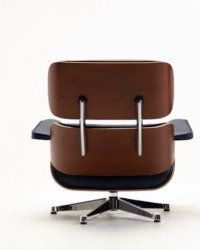
Wittmann Austria - Josef Hoffmann - Chair - Velvet


| €1 |
|---|
Catawiki Buyer Protection
Your payment’s safe with us until you receive your object.View details
Trustpilot 4.4 | 125661 reviews
Rated Excellent on Trustpilot.
Armchair designed by Josef Hoffmann and manufactured by Wittmann Austria, dating to 1980–1990, in black velvet with black and white welting, in excellent condition.
Description from the seller
Large armchair designed by Josef Hoffmann and made by Wittmann, Austria.
Originally designed for the Koller House in 1911. Black velvet with black and white welting. Marked with label and bronze plaque underneath the chair.
About the designer.
The Josef Hoffmann Haus Koller is a residential building located in the Austrian town of Brtnice. Designed by the famous Austrian architect and designer Josef Hoffmann, the building was constructed between 1911 and 1912. The building is an excellent example of Hoffmann’s architectural style, which was heavily influenced by the Wiener Werkstätte, a design movement that sought to create functional and aesthetically pleasing objects for everyday use. The building features clean lines, geometric shapes, and a minimalist aesthetic. The use of natural materials, such as wood and stone, gives the building a warm and inviting atmosphere. The building is considered a masterpiece of early 20th-century Austrian architecture and is a protected cultural monument. Today the building is used as a residential building and is not open to the public.
Seller's Story
Translated by Google TranslateLarge armchair designed by Josef Hoffmann and made by Wittmann, Austria.
Originally designed for the Koller House in 1911. Black velvet with black and white welting. Marked with label and bronze plaque underneath the chair.
About the designer.
The Josef Hoffmann Haus Koller is a residential building located in the Austrian town of Brtnice. Designed by the famous Austrian architect and designer Josef Hoffmann, the building was constructed between 1911 and 1912. The building is an excellent example of Hoffmann’s architectural style, which was heavily influenced by the Wiener Werkstätte, a design movement that sought to create functional and aesthetically pleasing objects for everyday use. The building features clean lines, geometric shapes, and a minimalist aesthetic. The use of natural materials, such as wood and stone, gives the building a warm and inviting atmosphere. The building is considered a masterpiece of early 20th-century Austrian architecture and is a protected cultural monument. Today the building is used as a residential building and is not open to the public.