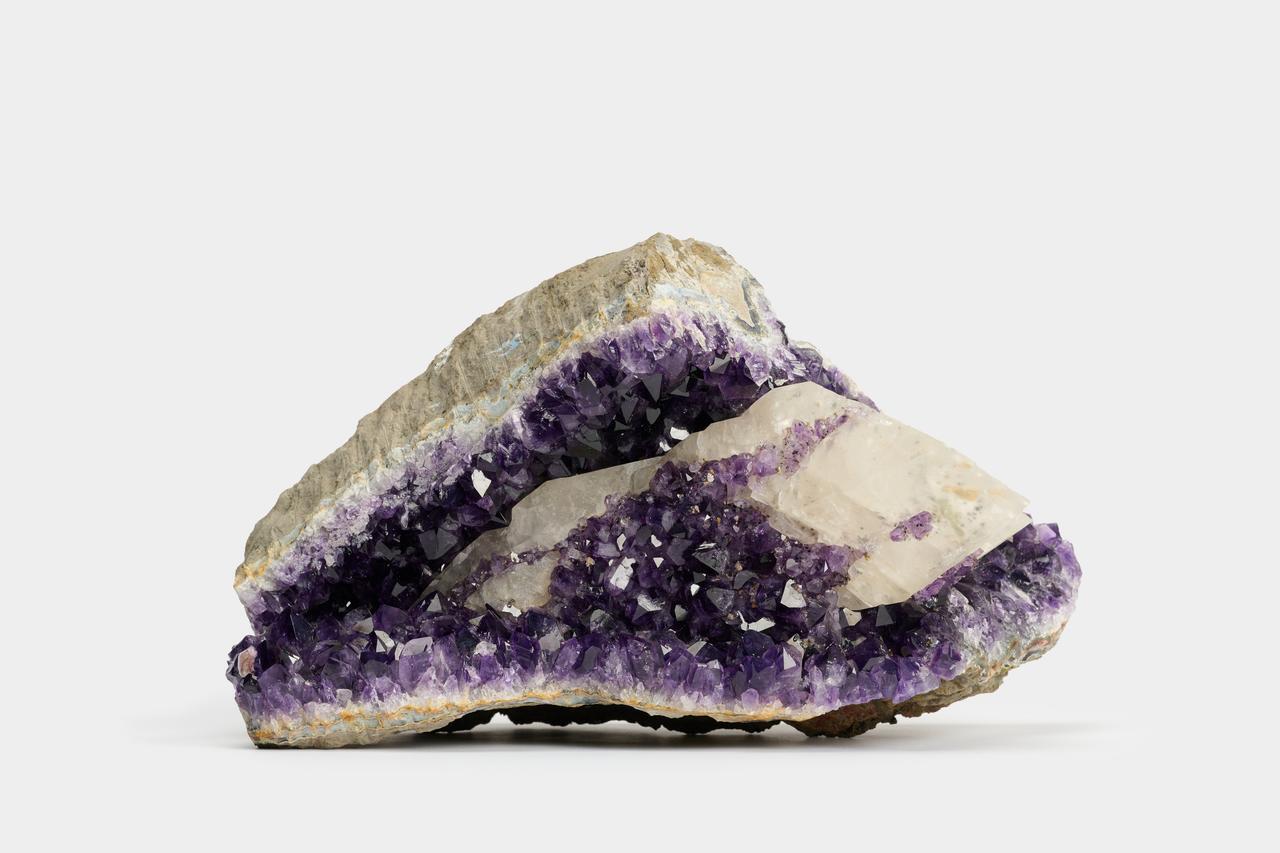
Pyrite Sphere — Geodeic Formation with Cubic Crystals - Height: 100 mm - Width: 100 mm- 1995 g


05
days
16
hours
57
minutes
04
seconds
Current bid
€ 50
Reserve price not met

Expert
Selected by Antonio Rapisarda
Holds a master’s in chemistry with 25 years’ experience in minerals consulting.
Estimate € 430 - € 480
2 other people are watching this object
 Bidder 6715 Bidder 6715 | €50 |
|---|
Catawiki Buyer Protection
Your payment’s safe with us until you receive your object.View details
Trustpilot 4.4 | 126478 reviews
Rated Excellent on Trustpilot.
Pyrite sphere in a geodic formation with cubic crystals from Peru, weighing 1995 g and measuring 100 × 100 × 100 mm.
AI-assisted summary
Description from the seller
Derived from a massive block of pyrite from the mining regions of Peru, this sphere represents a meeting between natural geology and lapidary craftsmanship. The internal structure, originally part of a geode cavity, reveals a dense and compact crystalline fabric, composed of interconnected micro and macro cubic crystals. The polished outer surface alternates with natural windows where metallic facets reflect light at countless points, creating a powerful visual contrast: mineral compactness on the outside, shimmering geometric architecture at the core. Pyrite, a crystallized iron sulfide in the cubic system, is known for its perfect geometry, expressed in isometric shapes that seem shaped by a mathematical design rather than nature. In Andean deposits, hydrothermal conditions and the slow precipitation of mineralized fluids favored the formation of solid, stable aggregates capable of maintaining the definition of crystalline volumes even after processing. In this sphere, polishing reveals silky, metallic surfaces, while the naturally left cavities tell the story of crystal growth: small, mirror-like clusters, golden reflections, overlapping layers reminiscent of crystalline terraces formed over millennia. Historically, pyrite has been associated with sunlight, constructive strength, and natural order. In mineralogy, it is one of the best examples of metallic crystallization, while in aesthetic collections, it is appreciated for its natural brilliance and its ability to transform light into a solid, geometric body.
Seller's Story
The Mineral Art Gallery offers minerals, fossils, shells and natural elements.
Born in Italy in 2017, today she collaborates with international galleries and collectors, she is a direct importer of large minerals and naturalistic collectible elements; deals with the processing to insert them inside the living space. A section of the gallery was dedicated to the Wunderkammer, "chamber of wonders or cabinet of curiosities" in which Mirabilia elements are presented: naturalia and italiania, a union between "the present is the past".
All lots are shipped via DHL Express and Fercam couriers, with insured parcel and tracking.
Translated by Google TranslateDerived from a massive block of pyrite from the mining regions of Peru, this sphere represents a meeting between natural geology and lapidary craftsmanship. The internal structure, originally part of a geode cavity, reveals a dense and compact crystalline fabric, composed of interconnected micro and macro cubic crystals. The polished outer surface alternates with natural windows where metallic facets reflect light at countless points, creating a powerful visual contrast: mineral compactness on the outside, shimmering geometric architecture at the core. Pyrite, a crystallized iron sulfide in the cubic system, is known for its perfect geometry, expressed in isometric shapes that seem shaped by a mathematical design rather than nature. In Andean deposits, hydrothermal conditions and the slow precipitation of mineralized fluids favored the formation of solid, stable aggregates capable of maintaining the definition of crystalline volumes even after processing. In this sphere, polishing reveals silky, metallic surfaces, while the naturally left cavities tell the story of crystal growth: small, mirror-like clusters, golden reflections, overlapping layers reminiscent of crystalline terraces formed over millennia. Historically, pyrite has been associated with sunlight, constructive strength, and natural order. In mineralogy, it is one of the best examples of metallic crystallization, while in aesthetic collections, it is appreciated for its natural brilliance and its ability to transform light into a solid, geometric body.
Seller's Story
The Mineral Art Gallery offers minerals, fossils, shells and natural elements.
Born in Italy in 2017, today she collaborates with international galleries and collectors, she is a direct importer of large minerals and naturalistic collectible elements; deals with the processing to insert them inside the living space. A section of the gallery was dedicated to the Wunderkammer, "chamber of wonders or cabinet of curiosities" in which Mirabilia elements are presented: naturalia and italiania, a union between "the present is the past".
All lots are shipped via DHL Express and Fercam couriers, with insured parcel and tracking.
Translated by Google TranslateDetails
Mineral Form
Pyrite Sphere — Geodeic Formation with Cubic Crystals
Weight
1995 g
Country of Origin
Peru
Height
100 mm
Width
100 mm
Depth
100 mm
Sold by