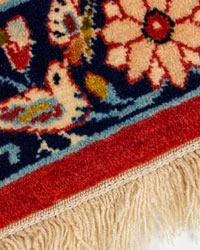
Morocco - Berber - Rug - 351 cm - 302 cm - Modern Rugs


04
days
16
hours
41
minutes
21
seconds
Current bid
€ 1
Reserve price not met

Expert
Selected by Richard Ebbers
Certified appraiser at Federation TMV with 30 years' professional antiques experience.
Estimate € 3,100 - € 3,500
4 other people are watching this object
 Bidder 8645 Bidder 8645 | €1 |
|---|
Catawiki Buyer Protection
Your payment’s safe with us until you receive your object.View details
Trustpilot 4.4 | 125857 reviews
Rated Excellent on Trustpilot.
Marokko - Berber model wool-on-wool carpet, blue, 351 cm by 302 cm, dating from the late 20th century, in very good condition and professionally cleaned.
AI-assisted summary
Description from the seller
Berber carpets, woven by nomads in Morocco, are unique works of art that are deeply rooted in the rich culture and history of the Berbers, or Imazighen. These carpets are not only functional but also expressions of artistic self-actualization and traditional craftsmanship. Here are some key elements that characterize Berber carpets:
- Materials and production: Traditionally, Berber carpets are made from the wool of sheep kept by the nomadic tribes in the mountains of Morocco. The wool is washed, carded, and then spun by hand into yarn. The weaving process is labor-intensive and can take weeks or even months depending on the size and complexity of the design.
- Designs and patterns:
Berber rugs are known for their diverse designs and patterns.
These patterns are often abstract and symbolic, with each tribal region having its own distinctive designs.
The patterns can include geometric shapes, lines, and sometimes symbolic representations of animals, plants, or everyday objects.
Many patterns also carry symbolic meaning and serve as expressions of stories, beliefs, and life experiences.
- Colors: The colors of Berber rugs vary widely.
Originally, natural dyes were used, extracted from plants or minerals.
Today, both natural and synthetic dyes are used.
The palette ranges from natural earth tones to vibrant colors.
White, brown, black, red, and blue are common colors in Berber rugs.
- Cultural significance: Berber carpets are not only decorative objects but also important cultural artifacts. They reflect the way of life, the traditions, and the history of the Berber nomads. Each carpet tells a story and is often an expression of personal or collective identity.
- Regional differences: Within Morocco, there are various regions known for their carpets, such as the Atlas Mountains and the Sahara region. Each region has its own characteristic styles and techniques.
- Popularity and trade: Berber carpets are popular worldwide and are often exported. They are known for their durability and quality and are highly sought after by collectors and lovers of craftsmanship.
Overall, Berber carpets are a vibrant example of Moroccan cultural heritage and craftsmanship, carried on through the skills and traditions of the Berber nomads. They are not merely functional objects, but also works of art that represent a rich history and culture.
Beautify your home with our high-quality carpets.
Our carpets have all been professionally cleaned and restored.
They can be deployed immediately.
Shipping with UPS.
Seller's Story
Welcome to the carpet world from the family business Akhavan Farshchi. With its name, our company stands for a long-term perspective and high product quality in the field of oriental carpets. With M. Ebrahim Akhavan Farshchi, we are now in the fourth generation of the successful family business and are at your side with our expertise.
Translated by Google TranslateBerber carpets, woven by nomads in Morocco, are unique works of art that are deeply rooted in the rich culture and history of the Berbers, or Imazighen. These carpets are not only functional but also expressions of artistic self-actualization and traditional craftsmanship. Here are some key elements that characterize Berber carpets:
- Materials and production: Traditionally, Berber carpets are made from the wool of sheep kept by the nomadic tribes in the mountains of Morocco. The wool is washed, carded, and then spun by hand into yarn. The weaving process is labor-intensive and can take weeks or even months depending on the size and complexity of the design.
- Designs and patterns:
Berber rugs are known for their diverse designs and patterns.
These patterns are often abstract and symbolic, with each tribal region having its own distinctive designs.
The patterns can include geometric shapes, lines, and sometimes symbolic representations of animals, plants, or everyday objects.
Many patterns also carry symbolic meaning and serve as expressions of stories, beliefs, and life experiences.
- Colors: The colors of Berber rugs vary widely.
Originally, natural dyes were used, extracted from plants or minerals.
Today, both natural and synthetic dyes are used.
The palette ranges from natural earth tones to vibrant colors.
White, brown, black, red, and blue are common colors in Berber rugs.
- Cultural significance: Berber carpets are not only decorative objects but also important cultural artifacts. They reflect the way of life, the traditions, and the history of the Berber nomads. Each carpet tells a story and is often an expression of personal or collective identity.
- Regional differences: Within Morocco, there are various regions known for their carpets, such as the Atlas Mountains and the Sahara region. Each region has its own characteristic styles and techniques.
- Popularity and trade: Berber carpets are popular worldwide and are often exported. They are known for their durability and quality and are highly sought after by collectors and lovers of craftsmanship.
Overall, Berber carpets are a vibrant example of Moroccan cultural heritage and craftsmanship, carried on through the skills and traditions of the Berber nomads. They are not merely functional objects, but also works of art that represent a rich history and culture.
Beautify your home with our high-quality carpets.
Our carpets have all been professionally cleaned and restored.
They can be deployed immediately.
Shipping with UPS.
Seller's Story
Welcome to the carpet world from the family business Akhavan Farshchi. With its name, our company stands for a long-term perspective and high product quality in the field of oriental carpets. With M. Ebrahim Akhavan Farshchi, we are now in the fourth generation of the successful family business and are at your side with our expertise.
Translated by Google TranslateDetails
Era
1900-2000
Title additional information
Modern Rugs
Model
Morocco - Berber
Colour
Blue
Length
351 cm
Width
302 cm
Material
Wool on wool
Country of Origin
Morocco
Condition
In very good condition
Professionally Cleaned
Yes
Manufacturing period
Late 20th century
Sold by