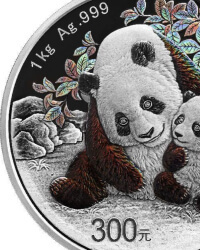
Tuvalu. 1 Dollar 2011


Opens 11:00
Starting bid
€ 1
Add to your favourites to get an alert when the auction starts.

Expert
Selected by Yunheng Deng
Has over 30 years of experience collecting coins, with extensive professional contacts in Asia. Passionate about the stories behind contemporary coins.
Estimate € 190 - € 210
Catawiki Buyer Protection
Your payment’s safe with us until you receive your object.View details
Trustpilot 4.4 | 126446 reviews
Rated Excellent on Trustpilot.
Description from the seller
Technical data:
Issuer: Tuvalu, an island nation in the Pacific
Mint: The Perth Mint, Australia
Year of issue: 2011
Denomination: 1 Dollar
Weight: one ounce or 31.1 g
Metal: silver, purity 999/1000
Diameter: 40.6 mm
Thickness of the silver coin: 4 mm
Manufacturing: Proof – polished to a high shine
Decoration: colored relief of a mother with a cub
Mint: 5,000 pieces, long sold out
Certificate: included
No 4311
Man – Homo sapiens or thinking man – has already caused many extinctions of animal species. We consider the Australian Aborigines to be a tribe that is kind to nature and to whom the earth is worthy of all respect and sacred, as are its gifts. In previous millennia, the Aborigines behaved towards animals in the same way as homo sapiens elsewhere in the world. And wherever the “thinking man” appeared, he began to sow death among the animals that were dear to him for food. He did this in many places to the point of extermination. Most archaeologists assume that a combination of human activity and climate change led to their extinction. But hunting went even further. Man even kills for pleasure and for hunting trophies. Man is also to blame for the extinction of the Tasmanian tiger, and this was at the beginning of the last century, when we already knew about the extinction of species.
The Tasmanian tiger is not biologically a big cat, but a wolf. It inhabited Tasmania, New Guinea and Australia. It got its name from the transverse stripes on its back. It is a carnivore and a marsupial, similar to a kangaroo. Males also have a pouch, which houses the external genitalia. In addition to this special feature, the Tasmanian tiger also has an extremely powerful jaw joint, which allows it to open its mouth incredibly wide.
Scientists are seriously considering how to clone a new Tasmanian tiger from the DNA that is still available.
Technical data:
Issuer: Tuvalu, an island nation in the Pacific
Mint: The Perth Mint, Australia
Year of issue: 2011
Denomination: 1 Dollar
Weight: one ounce or 31.1 g
Metal: silver, purity 999/1000
Diameter: 40.6 mm
Thickness of the silver coin: 4 mm
Manufacturing: Proof – polished to a high shine
Decoration: colored relief of a mother with a cub
Mint: 5,000 pieces, long sold out
Certificate: included
No 4311
Man – Homo sapiens or thinking man – has already caused many extinctions of animal species. We consider the Australian Aborigines to be a tribe that is kind to nature and to whom the earth is worthy of all respect and sacred, as are its gifts. In previous millennia, the Aborigines behaved towards animals in the same way as homo sapiens elsewhere in the world. And wherever the “thinking man” appeared, he began to sow death among the animals that were dear to him for food. He did this in many places to the point of extermination. Most archaeologists assume that a combination of human activity and climate change led to their extinction. But hunting went even further. Man even kills for pleasure and for hunting trophies. Man is also to blame for the extinction of the Tasmanian tiger, and this was at the beginning of the last century, when we already knew about the extinction of species.
The Tasmanian tiger is not biologically a big cat, but a wolf. It inhabited Tasmania, New Guinea and Australia. It got its name from the transverse stripes on its back. It is a carnivore and a marsupial, similar to a kangaroo. Males also have a pouch, which houses the external genitalia. In addition to this special feature, the Tasmanian tiger also has an extremely powerful jaw joint, which allows it to open its mouth incredibly wide.
Scientists are seriously considering how to clone a new Tasmanian tiger from the DNA that is still available.
Details
Era
After 2000
Country/province
Tuvalu
Year/Period and Variation
2011
Denomination
1 Dollar
Precious metal
AR
Condition
Sealed
Certification number
4311
Weight
1 oz
Number of items
1
Theme
Animals
Coin type
Modern world coins (non Euro coins post-1960)
Sold by