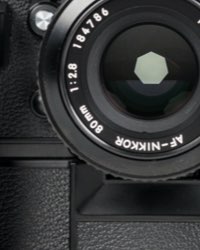
Olympus Trip 35 with D.Zuiko 2.8/40mm | Viewfinder camera


06
days
19
hours
53
minutes
02
seconds

2 other people are watching this object
 Bidder 3550 Bidder 3550 | €50 |
|---|
Catawiki Buyer Protection
Your payment’s safe with us until you receive your object.View details
Trustpilot 4.4 | 126009 reviews
Rated Excellent on Trustpilot.
The Trip 35 with D.Zuiko 2.8/40mm, serial no. 2822610, from the 1960s, is tested and working.
AI-assisted summary
Description from the seller
Trip 35 was a point-and-shoot model with a 40 mm ƒ/2.8 lens, a self-contained selenium light meter, and only two shutter speeds. In the “A” mode the camera operates in automatic, selecting either 1/40 s or 1/200 s. The camera could also synchronize with a flash and has an aperture range from ƒ/2.8 to ƒ/22. In flash synchronization mode the shutter is set to 1/40 s. Apart from a simple four-position focusing system and an ISO setting from 25 to 400, [ 2 ] the camera has no other photographic controls. The camera has a Prontor-Compur sync socket and a hot shoe. Its lens was the coated Zuiko 40 mm ƒ/2.8 with four elements in three groups.
The camera offers an ISO range of 25–400, because films with ISO higher than 400 were rare at the time and offered lower image quality. ISO 25 allowed using Kodachrome film stocks, while ISO 400 enabled using Kodak Tri-X and other fast (high-sensitivity) films in low light. Earlier models, from the first few years of production, had a maximum ISO of 200.
Using a selenium photocell to select the shutter speed and aperture allows beginner users to operate the camera as a point-and-shoot camera. No batteries are required to power the camera.
Using no more than two shutter speeds was not a problem. At 1/200 s and f/22 with ISO 400 film, the camera could achieve proper exposure in bright sun, whereas at 1/40 s and f/2.8, proper exposure could be obtained in bright fluorescent light, without using a flash.
Trip 35 was a point-and-shoot model with a 40 mm ƒ/2.8 lens, a self-contained selenium light meter, and only two shutter speeds. In the “A” mode the camera operates in automatic, selecting either 1/40 s or 1/200 s. The camera could also synchronize with a flash and has an aperture range from ƒ/2.8 to ƒ/22. In flash synchronization mode the shutter is set to 1/40 s. Apart from a simple four-position focusing system and an ISO setting from 25 to 400, [ 2 ] the camera has no other photographic controls. The camera has a Prontor-Compur sync socket and a hot shoe. Its lens was the coated Zuiko 40 mm ƒ/2.8 with four elements in three groups.
The camera offers an ISO range of 25–400, because films with ISO higher than 400 were rare at the time and offered lower image quality. ISO 25 allowed using Kodachrome film stocks, while ISO 400 enabled using Kodak Tri-X and other fast (high-sensitivity) films in low light. Earlier models, from the first few years of production, had a maximum ISO of 200.
Using a selenium photocell to select the shutter speed and aperture allows beginner users to operate the camera as a point-and-shoot camera. No batteries are required to power the camera.
Using no more than two shutter speeds was not a problem. At 1/200 s and f/22 with ISO 400 film, the camera could achieve proper exposure in bright sun, whereas at 1/40 s and f/2.8, proper exposure could be obtained in bright fluorescent light, without using a flash.
Details
Era
1900-2000
Brand
Olympus
Model/ type nr
Trip 35 with D.Zuiko 2.8/40mm |
Physical condition
Very good
Functional condition
Tested and working
Film type
35mm
Serial number
2822610
Estimated Period
1960-1970
Sold by