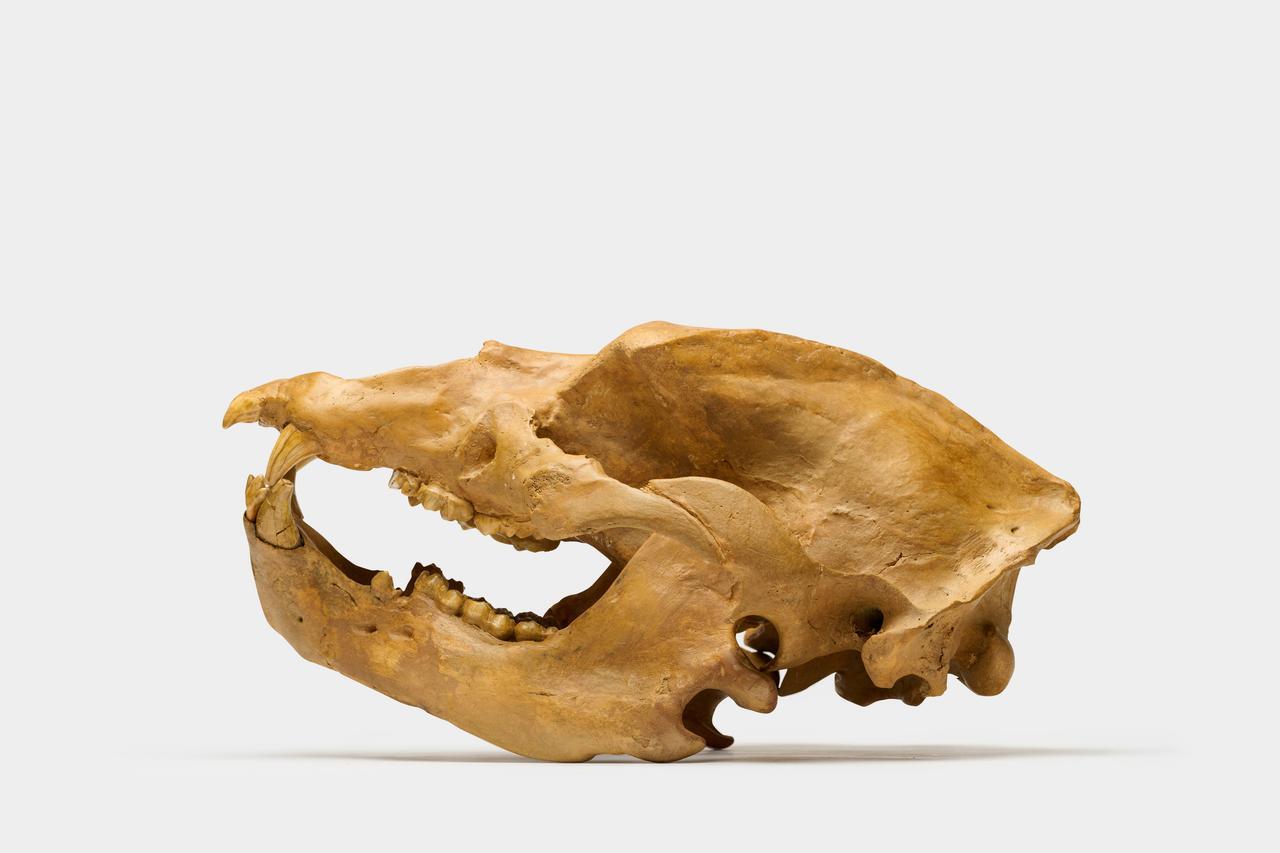
Bison - Fossil skull - Bison Priscus - 33 cm - 105 cm



04
days
04
hours
40
minutes
50
seconds

No bids placed
Catawiki Buyer Protection
Your payment’s safe with us until you receive your object.View details
Trustpilot 4.4 | 126253 reviews
Rated Excellent on Trustpilot.
Bison Priscus skull, Bizon specimen from Poland, Pleistoceen period (2.58–0.0117 million years ago), not treated, in natural condition, about 105 cm wide, 33 cm high and 30 cm deep.
AI-assisted summary
Description from the seller
A remarkable large fossil skull of Bison priscus. This steppe wisent was the ancestor of the woodland- and prairie-bison (Bison antiquus) as we know them today. They were no less than 50% larger.
Bison priscus could reach a shoulder height of up to 2 m and weigh almost 1,000 kg. As grazers, they lived in large, impressive herds, bulls and cows mixed together with calves. They lived in the Pleistocene until about 5,000 years ago.
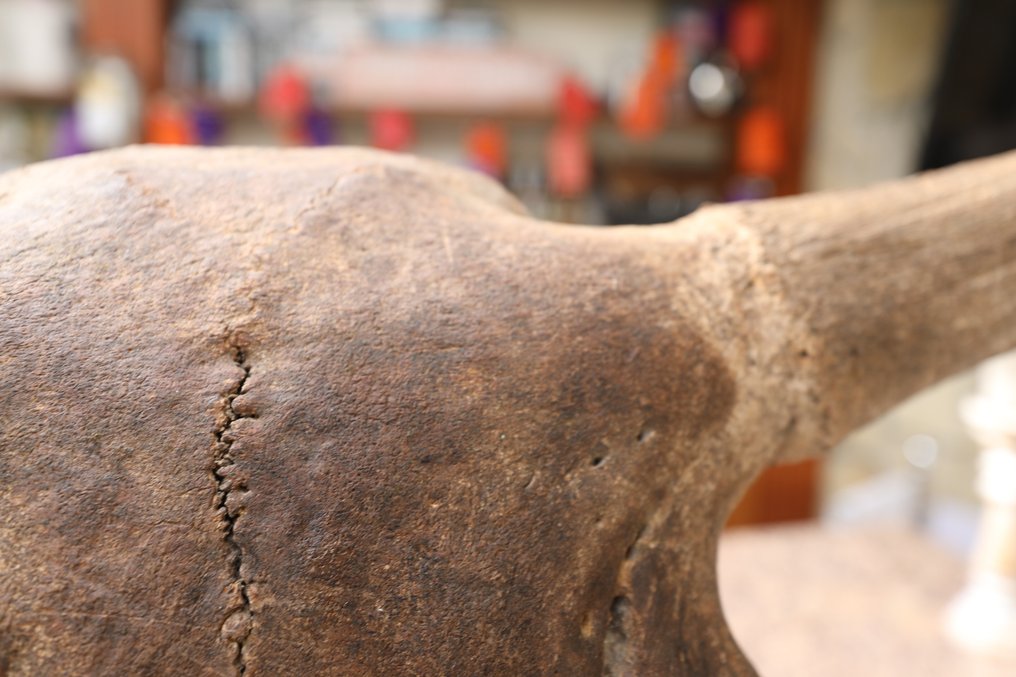
This large and very complete skull was found in Poland and is approximately 75,000 years old. The sutures are very clearly visible.
Around 130,000 years ago it was possible to reach America via Alaska, and in large numbers they left Eurasia.
Neanderthals hunted these bison and were their main food source.
This skull was owned for over 100 years by a distinguished French family.
The skull remains completely stable to this day and has not been treated.
approximately 105 cm wide
A remarkable large fossil skull of Bison priscus. This steppe wisent was the ancestor of the woodland- and prairie-bison (Bison antiquus) as we know them today. They were no less than 50% larger.
Bison priscus could reach a shoulder height of up to 2 m and weigh almost 1,000 kg. As grazers, they lived in large, impressive herds, bulls and cows mixed together with calves. They lived in the Pleistocene until about 5,000 years ago.
This large and very complete skull was found in Poland and is approximately 75,000 years old. The sutures are very clearly visible.
Around 130,000 years ago it was possible to reach America via Alaska, and in large numbers they left Eurasia.
Neanderthals hunted these bison and were their main food source.
This skull was owned for over 100 years by a distinguished French family.
The skull remains completely stable to this day and has not been treated.
approximately 105 cm wide
Details
Number of items
1
Specimen
Bison
Scientific name
Bison Priscus
Country of Origin
Poland
Geological Period
Quaternary, Pleistocene (2.58 - 0.0117 million years)
Condition
Natural
Height
33 cm
Width
105 cm
Depth
30 cm