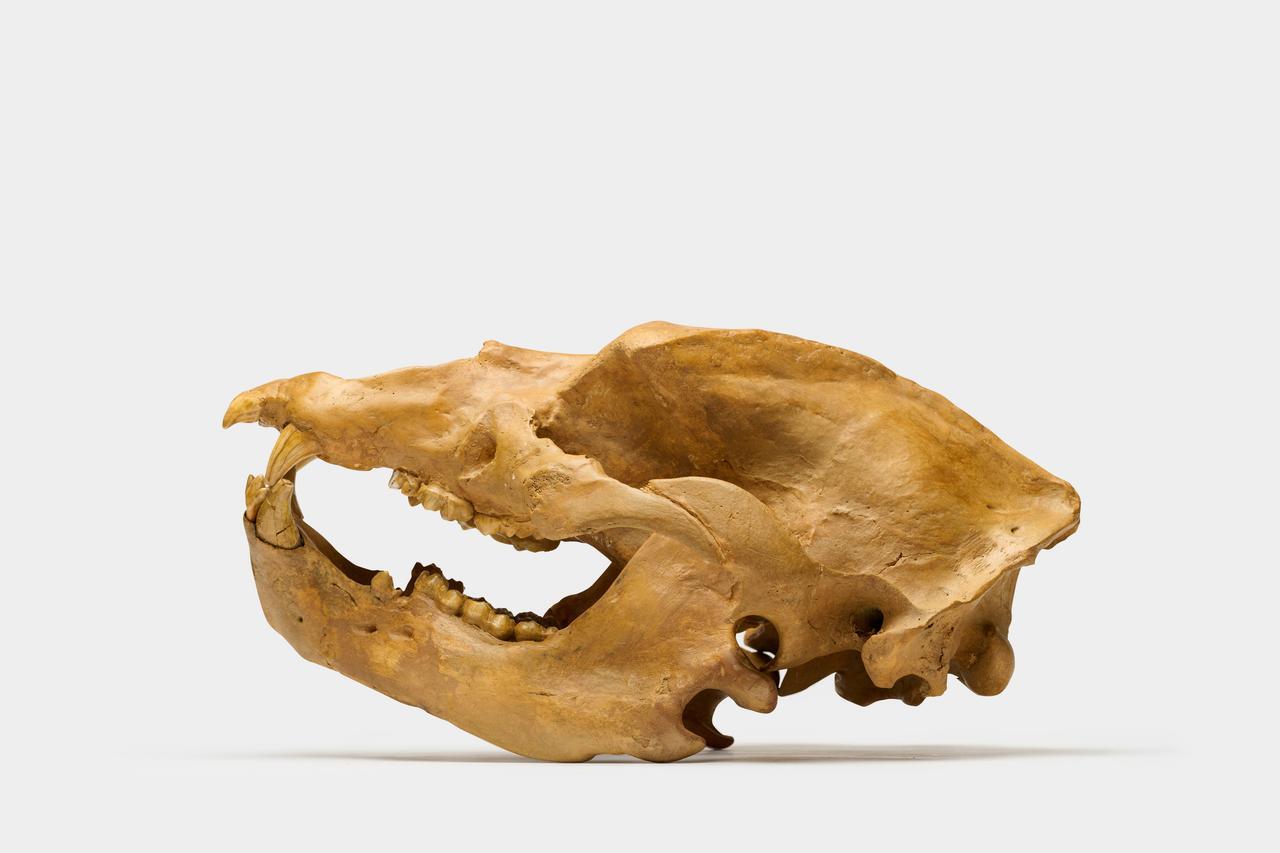
Whale - Fossil tooth - Basilosaurus - 12.4 cm - 6 cm


04
days
02
hours
57
minutes
55
seconds

5 other people are watching this object
 Bidder 1452 Bidder 1452 | €16 | |
|---|---|---|
 Bidder 0070 Bidder 0070 | €11 |
Catawiki Buyer Protection
Your payment’s safe with us until you receive your object.View details
Trustpilot 4.4 | 126253 reviews
Rated Excellent on Trustpilot.
Basilosaurus premolar tooth from a whale specimen, Morocco, dating to the Paleogene–Eocene (56–33.9 million years ago), in natural condition and conserved, weight 170 g with a length of 12.4 cm and width of 6 cm.
AI-assisted summary
Description from the seller
→12.4 cm long Basilosaurus pre-molar teeth
→6 cm wide at the widest point
→170 grams
It is a beautiful, top quality and large Basilosaurus pre-molar teeth. This teeth is a true symbol of enormous size and bite force of Basilosaurus as it ruled the shallow seas in late Eocene Epoch, approximately 41 to 34 million years ago.
This amazing teeth features 6 major side cusps or ridges and the central main ridge along with 2 small additional side cusps or projections. These ridges are key in shearing and cutting the prey which included marine life like fish, Durodon and other animals who came near water or lived in the swamps nearby like Moeritherium for example.
The crown of the teeth is in nice light chocolate brown color while the root region is light yellow-golden color. As one can notice, the teeth is double rooted, which again is characteristic feature of Basilosaurus pre-molars. The roots are also quite large as can be clearly seen in the photos. The teeth is in natural state and if one loks at the top central ridge there is change in color giving an impression that it is composite but it is absolutely not the case. It is purely due to fossilization process probably the top central ridge got used and eroded during the Basilosaurus lifetime and when it got fossilized it got different brown tone than the surrounding region. Although its a fossil where biological tissue is replaced by rock & minerals, still the root region has looks and feel of a bone to it making it very cool especially when hold it in hand and look at the underside and sides of the root region. A small elliptical region is eroded in the root region giving an insight into inside of the root layer of the teeth probably its the dentin of the teeth. Similarly a small portion in the enamel of the teeth is also eroded, revealing the layer below. The unique mix of fossilization, mineralization are very nicely revealed in this fossil. This fossil truly shows what is fossilization and how biological is converted to geology in fossilization process over million of years.
The fossil also looks like a standing man in one of the photos giving it interesting looks.
The teeth is in natural state and to best of our inspection it is not restored or repaired. The teeth has been professionally conserved as well to make it long lasting.
Please refer to detailed photos for reference. Different photos have been provided to give an idea about the shape, size, color and other features of this fantastic fossil.
→12.4 cm long Basilosaurus pre-molar teeth
→6 cm wide at the widest point
→170 grams
It is a beautiful, top quality and large Basilosaurus pre-molar teeth. This teeth is a true symbol of enormous size and bite force of Basilosaurus as it ruled the shallow seas in late Eocene Epoch, approximately 41 to 34 million years ago.
This amazing teeth features 6 major side cusps or ridges and the central main ridge along with 2 small additional side cusps or projections. These ridges are key in shearing and cutting the prey which included marine life like fish, Durodon and other animals who came near water or lived in the swamps nearby like Moeritherium for example.
The crown of the teeth is in nice light chocolate brown color while the root region is light yellow-golden color. As one can notice, the teeth is double rooted, which again is characteristic feature of Basilosaurus pre-molars. The roots are also quite large as can be clearly seen in the photos. The teeth is in natural state and if one loks at the top central ridge there is change in color giving an impression that it is composite but it is absolutely not the case. It is purely due to fossilization process probably the top central ridge got used and eroded during the Basilosaurus lifetime and when it got fossilized it got different brown tone than the surrounding region. Although its a fossil where biological tissue is replaced by rock & minerals, still the root region has looks and feel of a bone to it making it very cool especially when hold it in hand and look at the underside and sides of the root region. A small elliptical region is eroded in the root region giving an insight into inside of the root layer of the teeth probably its the dentin of the teeth. Similarly a small portion in the enamel of the teeth is also eroded, revealing the layer below. The unique mix of fossilization, mineralization are very nicely revealed in this fossil. This fossil truly shows what is fossilization and how biological is converted to geology in fossilization process over million of years.
The fossil also looks like a standing man in one of the photos giving it interesting looks.
The teeth is in natural state and to best of our inspection it is not restored or repaired. The teeth has been professionally conserved as well to make it long lasting.
Please refer to detailed photos for reference. Different photos have been provided to give an idea about the shape, size, color and other features of this fantastic fossil.
Details
Number of items
1
Specimen
Whale
Scientific name
Basilosaurus
Country of Origin
Morocco
Geological Period
Paleogene, Eocene (56 - 33.9 million years)
Condition
Natural
Treatment
Conserved
Weight
170 g
Height
12.4 cm
Width
6 cm
Sold by