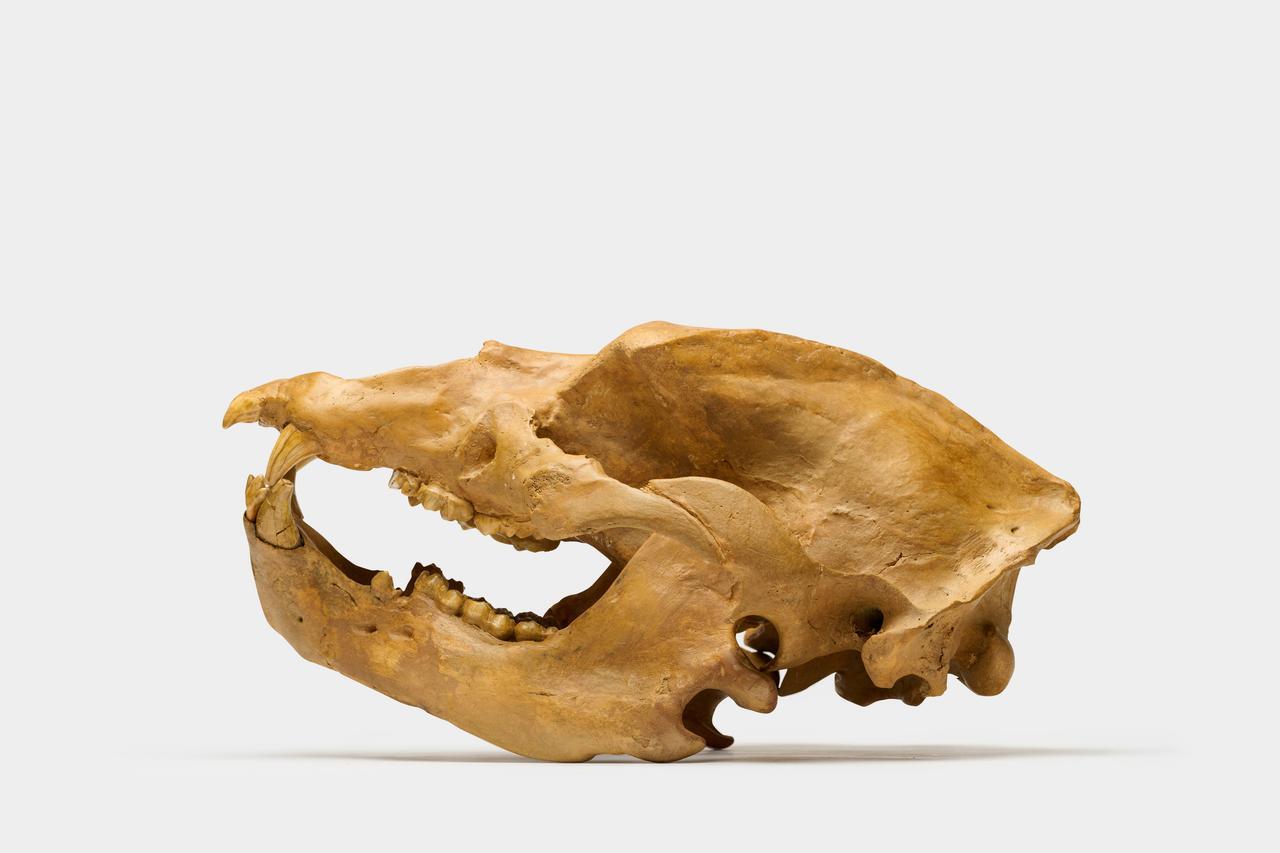
Claudiosaurus - Fossil plate matrix - Claudiosaurus sp. - 6 cm - 29 cm


03
days
15
hours
50
minutes
50
seconds

No bids placed
Catawiki Buyer Protection
Your payment’s safe with us until you receive your object.View details
Trustpilot 4.4 | 126990 reviews
Rated Excellent on Trustpilot.
Specimen Claudiosaurus; Scientific name Claudiosaurus sp.; Geological Period Permian; Country of Origin Madagascar; Condition Natural.
AI-assisted summary
Description from the seller
This is a fossil of Claudiosaurus germaini, an early reptile species from the Late Permian (~260 million years old), found in Madagascar.
Description of the fossil:
You see a fairly complete skeleton, preserved in lateral view, in a light limestone matrix.
The body is elongated and serpentine, with a clearly visible spine that arches in an arc.
Along the torso, slender ribs are visible, running outward in a fan shape.
The tail is long and easy to follow, which is typical for Claudiosaurus.
The limbs are small and relatively poorly developed, which suggests that the animal moved largely by swimming.
The bones are darker than the matrix, which makes the fossil stand out nicely and easy to read.
Why this fossil is special:
Claudiosaurus is often regarded as an early experimental stage toward marine reptiles (such as later plesiosaurs). It probably lived in shallow coastal waters and hunted small aquatic creatures. Fossils from Madagascar are also relatively rare and scientifically important, because they provide a great deal of insight into early reptile evolution in the southern hemisphere (Gondwana).
In short: an aesthetically striking, scientifically interesting, and classic Permian fossil — certainly a showpiece for a collection.
This is a fossil of Claudiosaurus germaini, an early reptile species from the Late Permian (~260 million years old), found in Madagascar.
Description of the fossil:
You see a fairly complete skeleton, preserved in lateral view, in a light limestone matrix.
The body is elongated and serpentine, with a clearly visible spine that arches in an arc.
Along the torso, slender ribs are visible, running outward in a fan shape.
The tail is long and easy to follow, which is typical for Claudiosaurus.
The limbs are small and relatively poorly developed, which suggests that the animal moved largely by swimming.
The bones are darker than the matrix, which makes the fossil stand out nicely and easy to read.
Why this fossil is special:
Claudiosaurus is often regarded as an early experimental stage toward marine reptiles (such as later plesiosaurs). It probably lived in shallow coastal waters and hunted small aquatic creatures. Fossils from Madagascar are also relatively rare and scientifically important, because they provide a great deal of insight into early reptile evolution in the southern hemisphere (Gondwana).
In short: an aesthetically striking, scientifically interesting, and classic Permian fossil — certainly a showpiece for a collection.
Details
Number of items
1
Specimen
Claudiosaurus
Scientific name
Claudiosaurus sp.
Country of Origin
Madagascar
Geological Period
Permian (298.9 - 251.9 million years)
Condition
Natural
Height
6 cm
Width
29 cm
Depth
22 cm
Sold by