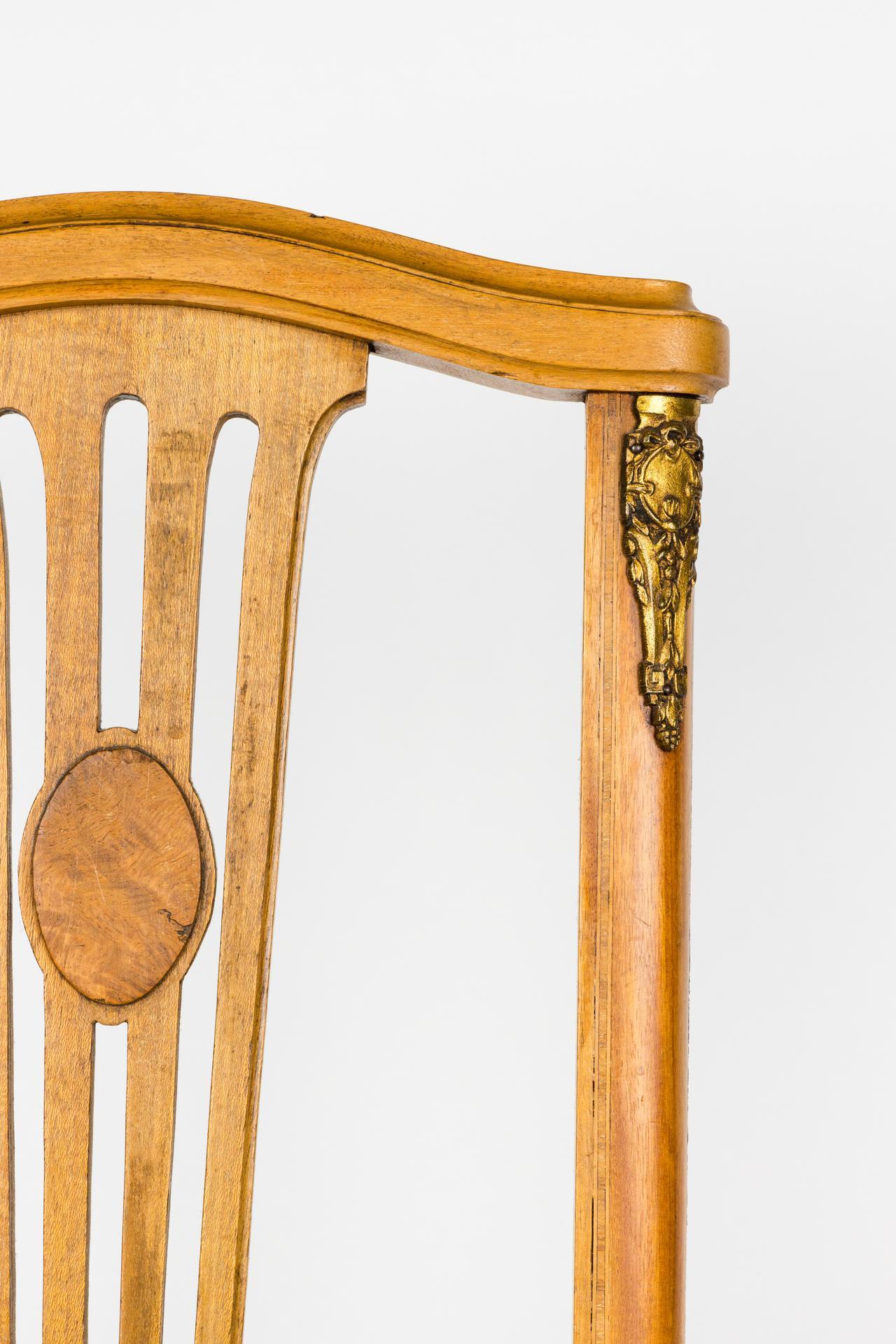
Side table - Wood, Cast iron - Turned legs


Opens Thursday
Starting bid
€ 1
Add to your favourites to get an alert when the auction starts.

Catawiki Buyer Protection
Your payment’s safe with us until you receive your object.View details
Trustpilot 4.4 | 126572 reviews
Rated Excellent on Trustpilot.
Description from the seller
This 19th-century Baroque table, carved entirely from solid walnut, embodies the solemn elegance of traditional cabinetmaking. Walnut, with its deep tone and dense grain, lends a warm and noble presence that only pieces crafted with patience and skill achieve. The tabletop, softly worn by time, preserves a rich patina of nuances: small shadows, slight irregularities, and a faint sheen that reveal decades of respectful use and a silent history.
The turned legs are perhaps its most captivating feature. Each curve and every volume seems carved with an almost sculptural sense of movement, as if the wood had been persuaded to adopt sinuous forms without losing its natural sturdiness. That play of undulating lines, so characteristic of Baroque taste, brings dynamism and visual balance.
The iron details, integrated discreetly yet with aesthetic intention, provide a sober counterpoint to the splendor of the walnut. They are not mere reinforcements: their presence introduces a dialogue between materials, a contrast between the organic warmth of the wood and the cold firmness of the hand-forged metal.
All in all, the table conveys the impression of a piece built to endure, not only because of its structural solidity but also for the harmony among its elements. It is furniture that does not simply occupy a space: it ennobles it, fills it with history and with a serene beauty that only objects crafted with genuine care can achieve.
Certified shipping and good packaging.
Seller's Story
Translated by Google TranslateThis 19th-century Baroque table, carved entirely from solid walnut, embodies the solemn elegance of traditional cabinetmaking. Walnut, with its deep tone and dense grain, lends a warm and noble presence that only pieces crafted with patience and skill achieve. The tabletop, softly worn by time, preserves a rich patina of nuances: small shadows, slight irregularities, and a faint sheen that reveal decades of respectful use and a silent history.
The turned legs are perhaps its most captivating feature. Each curve and every volume seems carved with an almost sculptural sense of movement, as if the wood had been persuaded to adopt sinuous forms without losing its natural sturdiness. That play of undulating lines, so characteristic of Baroque taste, brings dynamism and visual balance.
The iron details, integrated discreetly yet with aesthetic intention, provide a sober counterpoint to the splendor of the walnut. They are not mere reinforcements: their presence introduces a dialogue between materials, a contrast between the organic warmth of the wood and the cold firmness of the hand-forged metal.
All in all, the table conveys the impression of a piece built to endure, not only because of its structural solidity but also for the harmony among its elements. It is furniture that does not simply occupy a space: it ennobles it, fills it with history and with a serene beauty that only objects crafted with genuine care can achieve.
Certified shipping and good packaging.
Seller's Story
Translated by Google TranslateDetails
Era
1400-1900
Title additional information
Turned legs
Country of Origin
Spain
Material
Cast iron, Wood
Style
Antique
Condition
Good condition - used with small signs of aging & blemishes
Height
75 cm
Width
73 cm
Depth
45 cm
Estimated period
1850-1900
Sold by