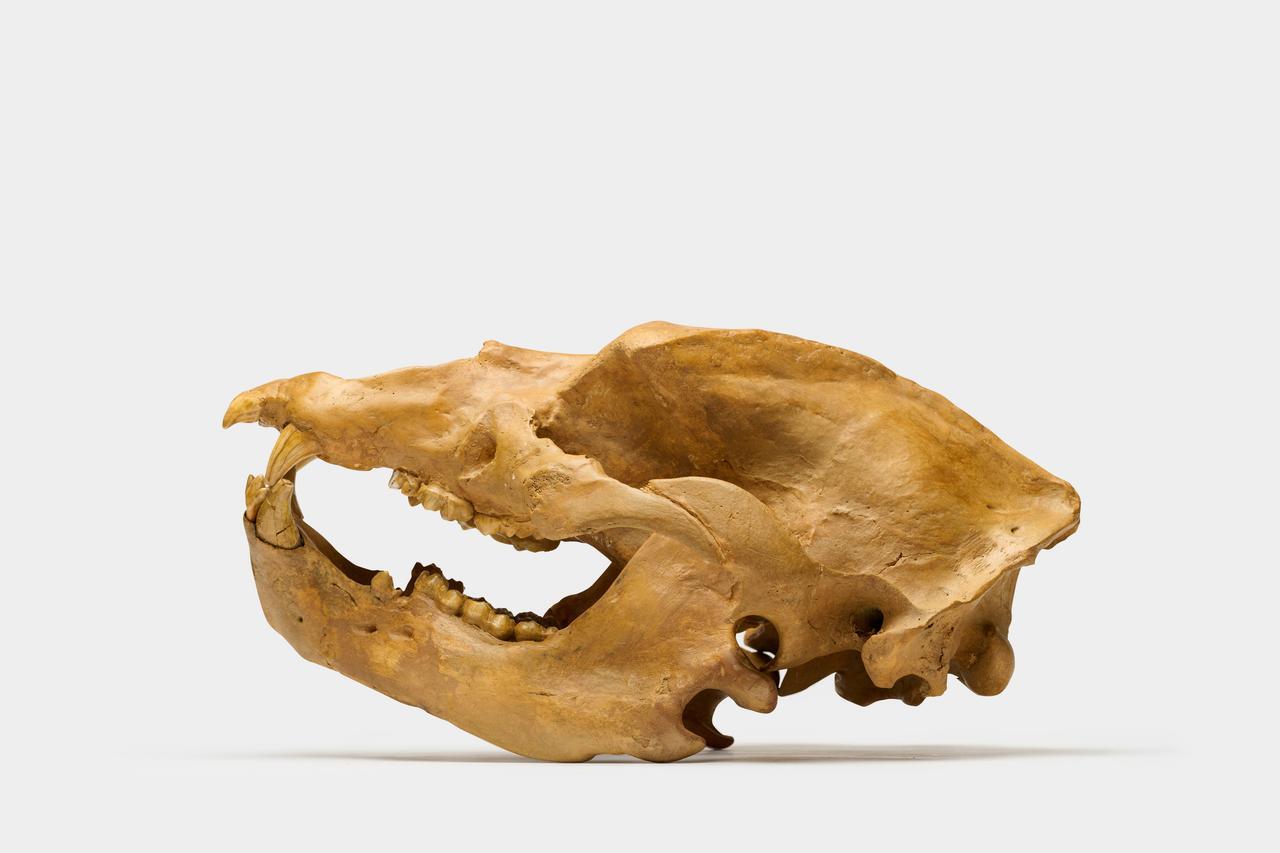
Whale - Fossil fragment - Basilosaurus - 9 cm


05
days
20
hours
57
minutes
43
seconds

4 other people are watching this object
 Bidder 5672 Bidder 5672 | €1 |
|---|
Catawiki Buyer Protection
Your payment’s safe with us until you receive your object.View details
Trustpilot 4.4 | 126740 reviews
Rated Excellent on Trustpilot.
Basilosaurus jaw fragment, 9 cm long, from a whale specimen in Morocco, dating to the Paleogene Eocene (56–33.9 million years ago); professionally conserved and restored.
AI-assisted summary
Description from the seller
→ 9 cm long Basilosaurus jaw front fragment with 2 incisors
Basilosaurus were ancient whales with a long list of unique facts about it.
One of those fascinating fact being their teeth. Their teeth can be divided into front canines and back molars with unique shapes and curves. The molars were used to cutting and shearing of the prey while the canines were used to hold onto the prey.
The presented fossil is the frontmost section of Basilosaurus jaw probably the lower jaw. The most interesting feature of this fossil is the fact that it reveals how the incisors are arranged in the jaw with one incisor laying at angle around 20 degrees and the back incisor around 45 degrees. Since the part of jaw sections are eroded so it clearly shows the orientation of this incisors. In addition very nice details and coloration of jaw bone can also be seen. The tip of front incisor is chipped away during fossil retrieval revealing the inside of the tooth while the back incisor tip have been professionally restored. Basilosaurus fossils are found couple of meters in ground or near semi mountain regions in hard ground so retrieval can be very challenging. While the Basilosaurus molars are very cool there is no doubt the incisors have unique beauty in its own way.
The presented fossil features diverse mix of fossilization, mineralization and crystallization indicating how a biological fragment is converted to geological item over the span of million of years.
The shape of overall fossil presents a ocean going ship reminding of Basilosaurus which once thrived in the shallow parts of the oceans during late Eocene epoch, roughly 41 to 34 million years ago.
Its possible that the fossil belong to another member of Basilosauridae family like Durodon or Zygorhiza.
The fossil have been professionally conserved to make it long lasting.
Please refer to photos for details about the shape, color, relative size and other features of this wonderful fossil.
→ 9 cm long Basilosaurus jaw front fragment with 2 incisors
Basilosaurus were ancient whales with a long list of unique facts about it.
One of those fascinating fact being their teeth. Their teeth can be divided into front canines and back molars with unique shapes and curves. The molars were used to cutting and shearing of the prey while the canines were used to hold onto the prey.
The presented fossil is the frontmost section of Basilosaurus jaw probably the lower jaw. The most interesting feature of this fossil is the fact that it reveals how the incisors are arranged in the jaw with one incisor laying at angle around 20 degrees and the back incisor around 45 degrees. Since the part of jaw sections are eroded so it clearly shows the orientation of this incisors. In addition very nice details and coloration of jaw bone can also be seen. The tip of front incisor is chipped away during fossil retrieval revealing the inside of the tooth while the back incisor tip have been professionally restored. Basilosaurus fossils are found couple of meters in ground or near semi mountain regions in hard ground so retrieval can be very challenging. While the Basilosaurus molars are very cool there is no doubt the incisors have unique beauty in its own way.
The presented fossil features diverse mix of fossilization, mineralization and crystallization indicating how a biological fragment is converted to geological item over the span of million of years.
The shape of overall fossil presents a ocean going ship reminding of Basilosaurus which once thrived in the shallow parts of the oceans during late Eocene epoch, roughly 41 to 34 million years ago.
Its possible that the fossil belong to another member of Basilosauridae family like Durodon or Zygorhiza.
The fossil have been professionally conserved to make it long lasting.
Please refer to photos for details about the shape, color, relative size and other features of this wonderful fossil.
Details
Number of items
1
Specimen
Whale
Scientific name
Basilosaurus
Country of Origin
Morocco
Geological Period
Paleogene, Eocene (56 - 33.9 million years)
Condition
Restored
Treatment
Conserved
Height
9 cm
Sold by