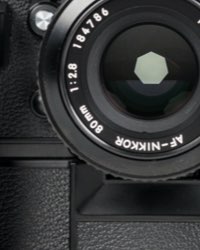
Kodak Foldon g 3a Analogue camera


04
days
12
hours
51
minutes
58
seconds

No bids placed
Catawiki Buyer Protection
Your payment’s safe with us until you receive your object.View details
Trustpilot 4.4 | 127145 reviews
Rated Excellent on Trustpilot.
Foldon g 3a folding camera, tested and working, in good vintage condition, produced circa 1970–1980.
AI-assisted summary
Description from the seller
Magnificent Kodak No. 3A Folding Brownie (Model A), produced between 1909 and 1915. This model is famous for its 'postcard' format, which used 122-format film to create large 3¼ x 5½ inch negatives (about 8 x 14 cm), perfect for direct contact printing.
What makes this specimen particularly desirable is the presence of the red bellows, a distinctive aesthetic feature of the early Kodak models that greatly increases its collecting value compared to later versions with black bellows. The shutter is an f.p.k. automatic (or TBI shutter), with the classic settings T (time), B (bulb) and I (instant, about 1/50 sec), and the aperture is adjustable via a numeric scale located under the achromatic meniscus lens.
The camera appears in good vintage condition, with the faux leather covering showing signs of wear but looking intact. The bright viewfinder positioned above the lens is another fascinating detail of the era. Although 122 film is no longer commercially produced, these devices are highly sought after as decorative objects or to be adapted for use with 120 film by experimental photographers.
Seller's Story
With 50 years of experience in the world of photography, we offer objects related to this field from a 360-degree perspective.
Translated by Google TranslateMagnificent Kodak No. 3A Folding Brownie (Model A), produced between 1909 and 1915. This model is famous for its 'postcard' format, which used 122-format film to create large 3¼ x 5½ inch negatives (about 8 x 14 cm), perfect for direct contact printing.
What makes this specimen particularly desirable is the presence of the red bellows, a distinctive aesthetic feature of the early Kodak models that greatly increases its collecting value compared to later versions with black bellows. The shutter is an f.p.k. automatic (or TBI shutter), with the classic settings T (time), B (bulb) and I (instant, about 1/50 sec), and the aperture is adjustable via a numeric scale located under the achromatic meniscus lens.
The camera appears in good vintage condition, with the faux leather covering showing signs of wear but looking intact. The bright viewfinder positioned above the lens is another fascinating detail of the era. Although 122 film is no longer commercially produced, these devices are highly sought after as decorative objects or to be adapted for use with 120 film by experimental photographers.
Seller's Story
With 50 years of experience in the world of photography, we offer objects related to this field from a 360-degree perspective.
Translated by Google TranslateDetails
Era
1900-2000
Brand
Kodak
Model/ type nr
Foldon g 3a
Physical condition
Good
Functional condition
Tested and working
Estimated Period
1970-1980
Sold by