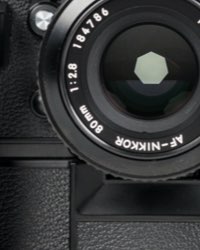
Start Ebony 35 de Luxe pinhole camera Analogue camera


07
days
00
hours
27
minutes
15
seconds

No bids placed
Catawiki Buyer Protection
Your payment’s safe with us until you receive your object.View details
Trustpilot 4.4 | 126990 reviews
Rated Excellent on Trustpilot.
Start Ebony 35 de Luxe pinhole camera, tested and working, in good condition, dating to the 1950s.
AI-assisted summary
Description from the seller
[Overview]
This item is a Japanese pinhole camera believed to date to the 1950s, a period when simple photographic devices were produced for educational, experimental, and hobby purposes. Unlike conventional cameras, pinhole cameras use a tiny aperture instead of a glass lens, projecting light directly onto film or photosensitive material. This extremely basic construction represents one of the earliest photographic principles and offers a unique visual character with soft focus and extended exposure times.
During postwar Japan, such cameras were commonly used in schools, science education, and home experimentation, allowing users to understand the fundamentals of photography. They were also enjoyed by hobbyists who valued the hands-on experience of image-making. The minimalist structure reflects an era when accessibility and learning were prioritized over precision optics.
The compact black body emphasizes functionality rather than decoration. With only essential components, this camera illustrates how photography was introduced to ordinary households and students during Japan’s reconstruction period. Devices of this type were often kept at home and brought out for educational demonstrations or casual creative use.
What makes this example appealing to collectors is its preserved condition and confirmed functionality. Many pinhole cameras from this era have been lost or discarded, making surviving working examples increasingly uncommon. Collectors value this type of item for its historical significance, primitive photographic method, display appeal, and direct connection to early amateur photography culture in Japan.
[Key Features]
• Japanese pinhole camera
• Lensless construction using small aperture (pinhole)
• Believed to date to the 1950s
• Designed for educational and hobby photography
• Simple black functional body
• Functions confirmed operational
• Suitable for display or experimental shooting
• Single item
[Estimated Period / Background]
Believed to date to the 1950s (early Showa period).
This era saw widespread use of simple cameras for education and amateur photography as Japan rebuilt its consumer culture after World War II.
[Condition]
Relatively clean condition.
Basic functions confirmed working.
No major structural damage observed.
[Dimensions / Weight]
Approximate body size:
Width: 10 cm
Height: 7 cm
Depth: 7 cm
Camera weight: approx. 215 g
Total items: 1
[Provenance / Notes]
Acquired from a traditional Japanese residence.
Known facts: Japanese pinhole camera construction.
Unknown points: exact manufacturer and original retail history.
[Shipping]
Shipped from Japan with tracking.
Delivered in approximately two weeks via Japan International Post.
Carefully packed for international transport.
[Overview]
This item is a Japanese pinhole camera believed to date to the 1950s, a period when simple photographic devices were produced for educational, experimental, and hobby purposes. Unlike conventional cameras, pinhole cameras use a tiny aperture instead of a glass lens, projecting light directly onto film or photosensitive material. This extremely basic construction represents one of the earliest photographic principles and offers a unique visual character with soft focus and extended exposure times.
During postwar Japan, such cameras were commonly used in schools, science education, and home experimentation, allowing users to understand the fundamentals of photography. They were also enjoyed by hobbyists who valued the hands-on experience of image-making. The minimalist structure reflects an era when accessibility and learning were prioritized over precision optics.
The compact black body emphasizes functionality rather than decoration. With only essential components, this camera illustrates how photography was introduced to ordinary households and students during Japan’s reconstruction period. Devices of this type were often kept at home and brought out for educational demonstrations or casual creative use.
What makes this example appealing to collectors is its preserved condition and confirmed functionality. Many pinhole cameras from this era have been lost or discarded, making surviving working examples increasingly uncommon. Collectors value this type of item for its historical significance, primitive photographic method, display appeal, and direct connection to early amateur photography culture in Japan.
[Key Features]
• Japanese pinhole camera
• Lensless construction using small aperture (pinhole)
• Believed to date to the 1950s
• Designed for educational and hobby photography
• Simple black functional body
• Functions confirmed operational
• Suitable for display or experimental shooting
• Single item
[Estimated Period / Background]
Believed to date to the 1950s (early Showa period).
This era saw widespread use of simple cameras for education and amateur photography as Japan rebuilt its consumer culture after World War II.
[Condition]
Relatively clean condition.
Basic functions confirmed working.
No major structural damage observed.
[Dimensions / Weight]
Approximate body size:
Width: 10 cm
Height: 7 cm
Depth: 7 cm
Camera weight: approx. 215 g
Total items: 1
[Provenance / Notes]
Acquired from a traditional Japanese residence.
Known facts: Japanese pinhole camera construction.
Unknown points: exact manufacturer and original retail history.
[Shipping]
Shipped from Japan with tracking.
Delivered in approximately two weeks via Japan International Post.
Carefully packed for international transport.
Details
Era
1900-2000
Brand
Start
Model/ type nr
Ebony 35 de Luxe pinhole camera
Physical condition
Good
Functional condition
Tested and working
Designer/Artist/Maker
HOEI INDUSTRIAL
Estimated Period
1950-1960
Sold by