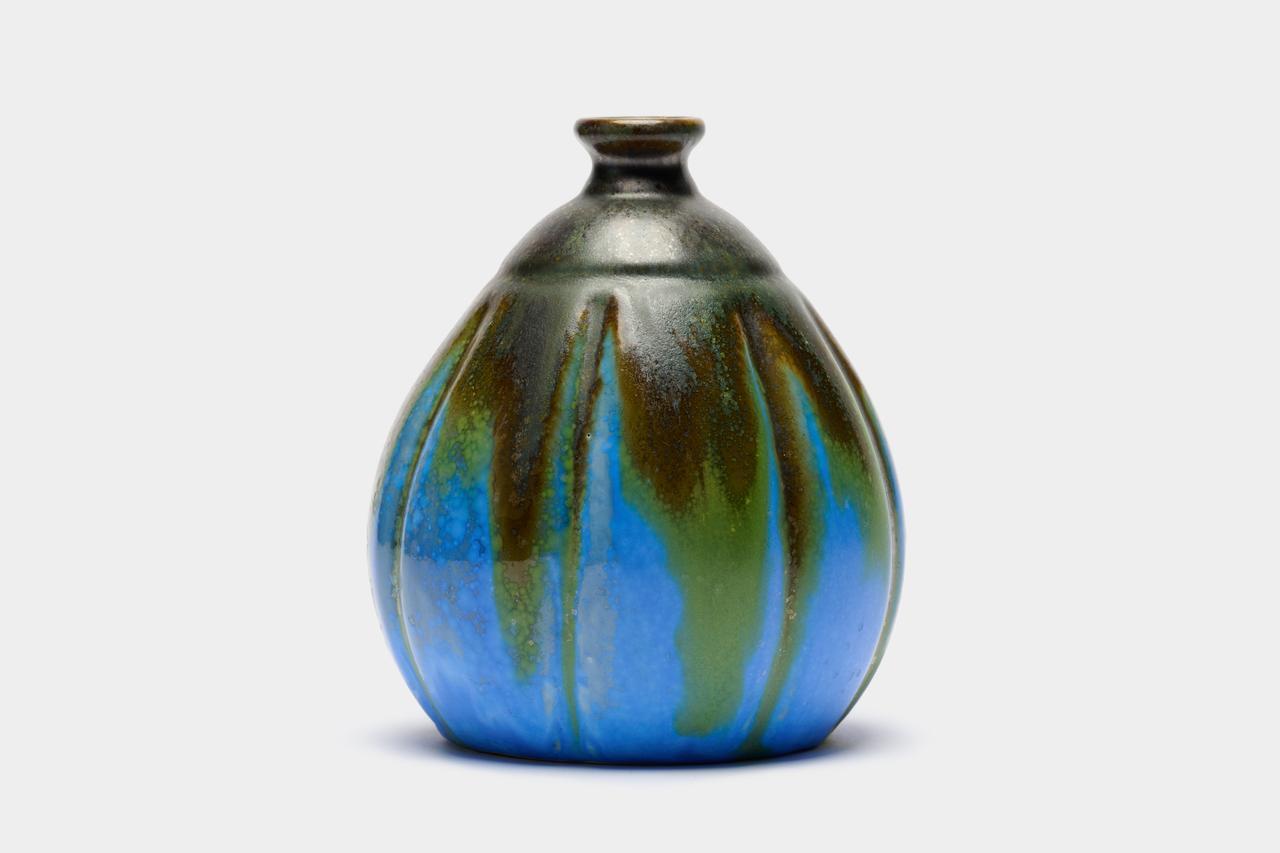
Loetz - Vase - Glass - Chalk with tears


03
days
08
hours
34
minutes
00
seconds
Starting bid
€ 1
Reserve price not met

Expert
Selected by Michel Karis
Art historian with extensive experience working at various auction houses in antiques.
Estimate € 240 - € 270
No bids placed
Catawiki Buyer Protection
Your payment’s safe with us until you receive your object.View details
Trustpilot 4.4 | 127494 reviews
Rated Excellent on Trustpilot.
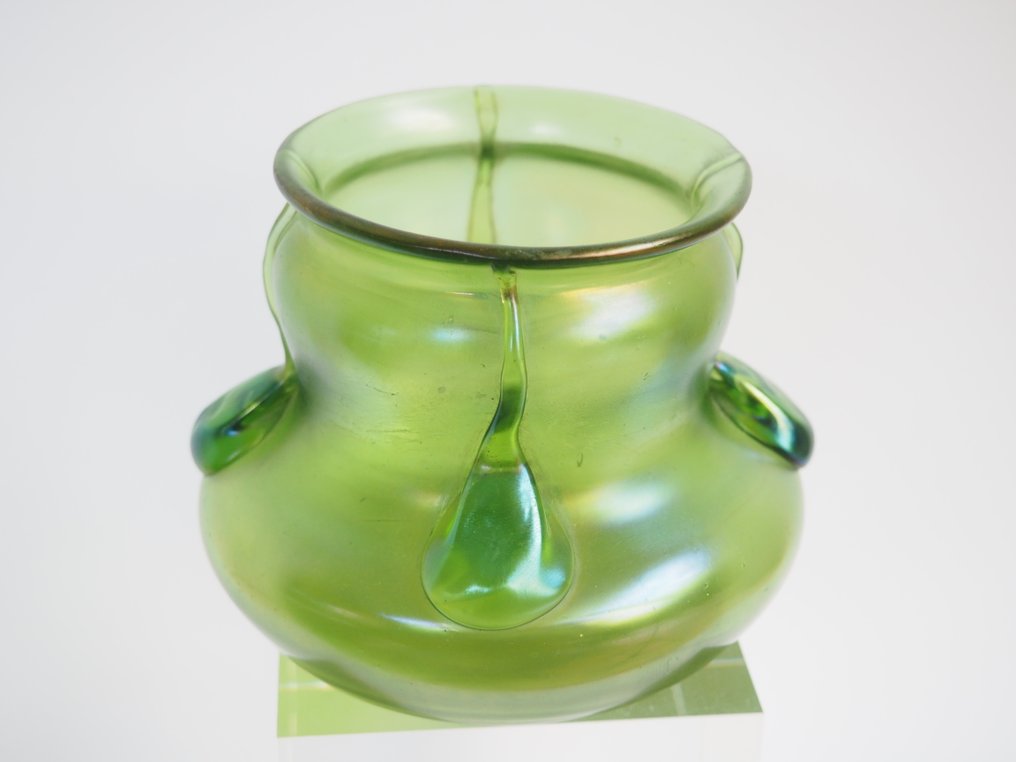
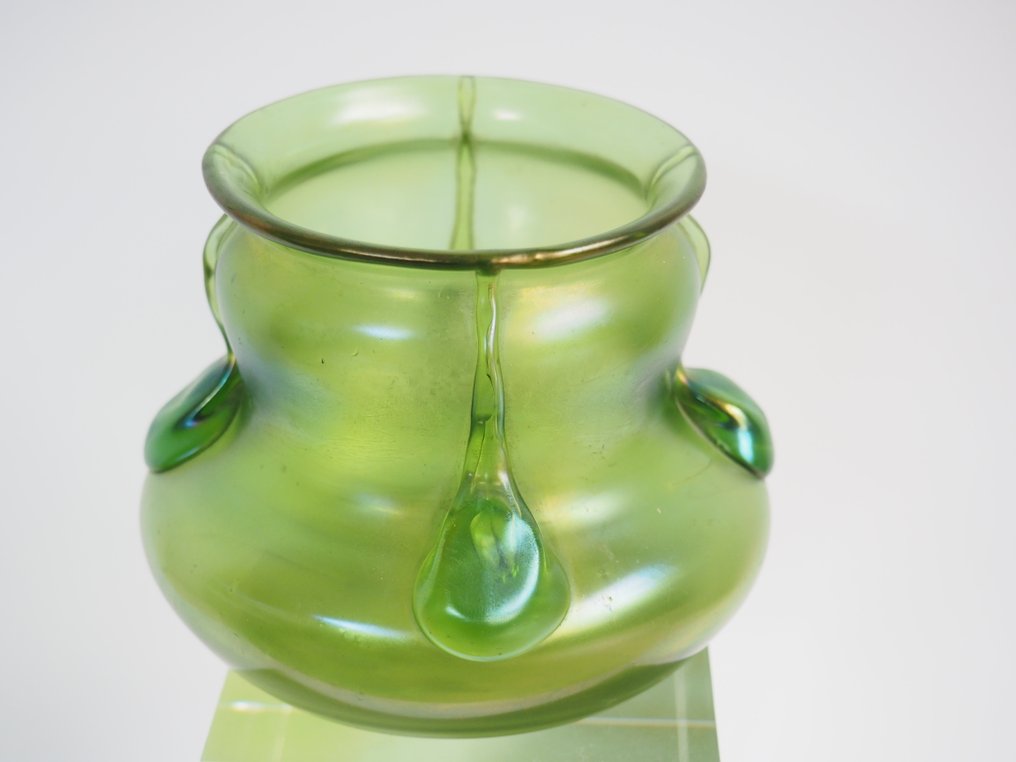
Bohemian green translucent glass vase by Johann Loetz Witwe, circa 1900–1905, measuring 8.5 cm high, 7.6 cm wide, 7.6 cm deep, with a gently bulging body, flared rim, and four hot‑worked tear‑shaped appliqués from the rim, titled “Creta con lágrimas,” in good used condition.
AI-assisted summary
Description from the seller
Johann Loetz – Vase “Creta with Tears” – Bohemia, ca. 1900–1905
Height: 8.5 cm
Maximum width: 7.6 cm
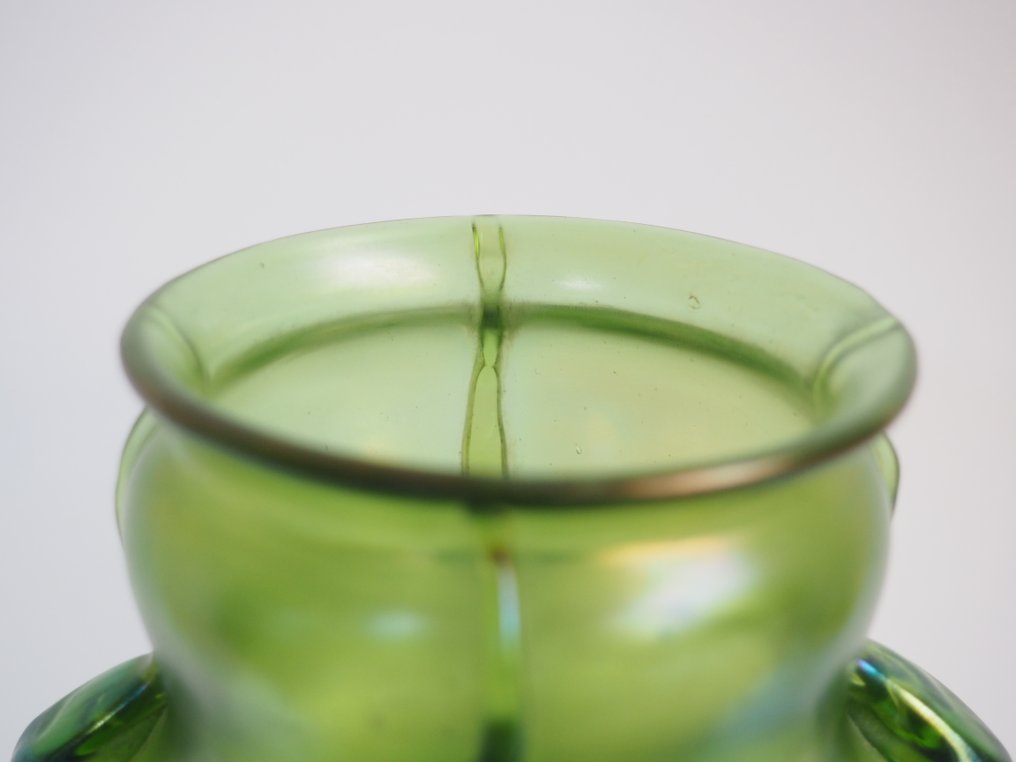
Delicate small-format vase made of green translucid blown glass over a colorless background, with a softly bulging body and an elegant bell-shaped mouth.
From the rim descend four hot-work applications in the form of drops or “tears,” done in the same green tone, which provide vertical rhythm and a pronounced organic character to the composition, reinforcing its Modernist aesthetic.
The piece features a matte, homogeneous, silky iridescence, characteristic of productions belonging to the series known as “Creta mit Silberiris” or “Creta with Tears,” developed by the prestigious glassworks Johann Loetz Witwe, based in Klostermühle (Bohemia).
Dating around 1900–1905, in the heyday of Central European Art Nouveau.
A vase of contained dimensions but of high collector interest, representative of Loetz’s decorative sensibility and of its extraordinary mastery in iridescent glass at the dawn of the 20th century.
The photographs form an essential part of the object's description. They are recommended to be examined carefully.
Johann Loetz – Vase “Creta with Tears” – Bohemia, ca. 1900–1905
Height: 8.5 cm
Maximum width: 7.6 cm
Delicate small-format vase made of green translucid blown glass over a colorless background, with a softly bulging body and an elegant bell-shaped mouth.
From the rim descend four hot-work applications in the form of drops or “tears,” done in the same green tone, which provide vertical rhythm and a pronounced organic character to the composition, reinforcing its Modernist aesthetic.
The piece features a matte, homogeneous, silky iridescence, characteristic of productions belonging to the series known as “Creta mit Silberiris” or “Creta with Tears,” developed by the prestigious glassworks Johann Loetz Witwe, based in Klostermühle (Bohemia).
Dating around 1900–1905, in the heyday of Central European Art Nouveau.
A vase of contained dimensions but of high collector interest, representative of Loetz’s decorative sensibility and of its extraordinary mastery in iridescent glass at the dawn of the 20th century.
The photographs form an essential part of the object's description. They are recommended to be examined carefully.
Details
Era
1900-2000
Specific region of origin
Bohemia
Title additional information
Chalk with tears
Country of Origin
Czechia
Material
Glass
Manufacturer/ Brand
Loetz
Condition
Good condition - used with small signs of aging & blemishes
Height
8.5 cm
Width
7.6 cm
Depth
7.6 cm
Estimated Period
1900-1910
Sold by