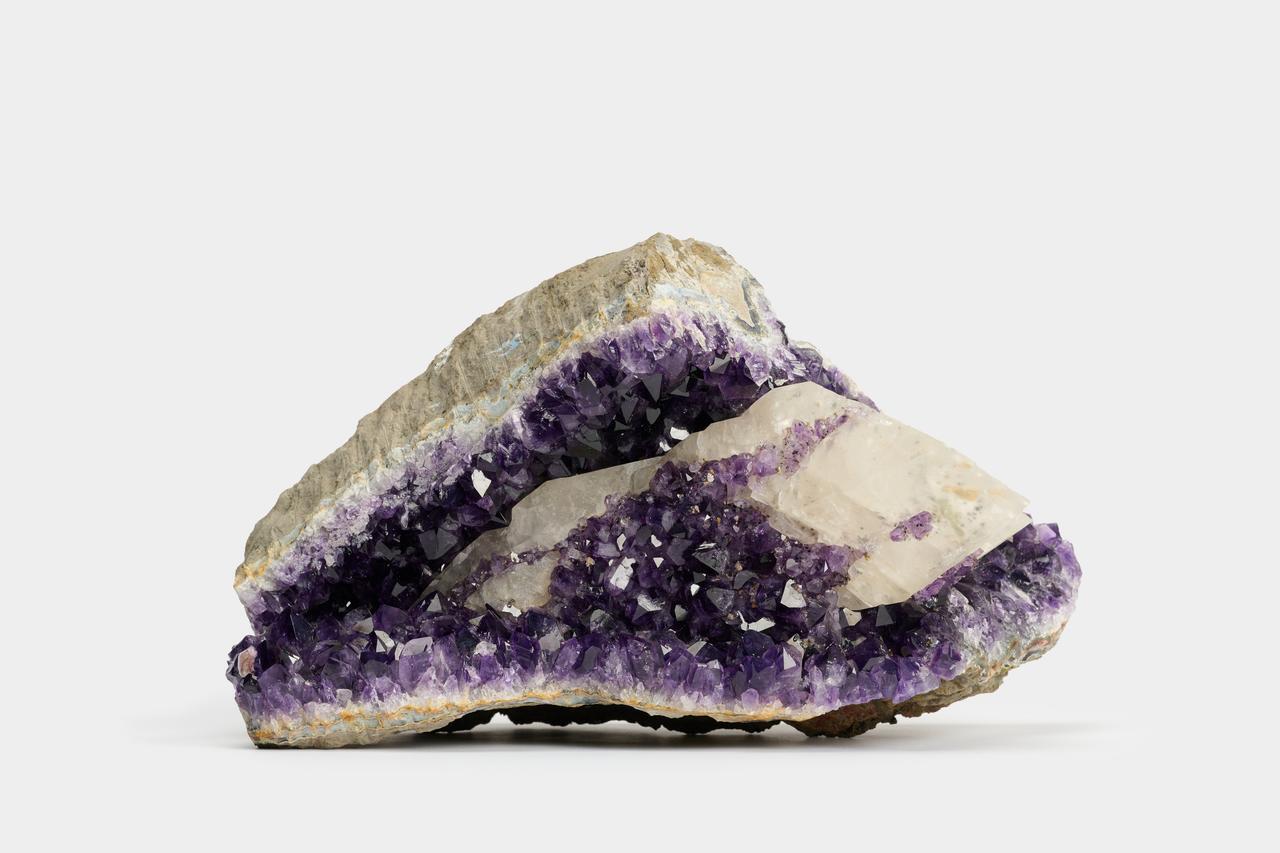
Tsavorite Crystal - Height: 20.39 mm - Width: 13.09 mm- 2.63 g - (1)


05
days
10
hours
34
minutes
21
seconds
Starting bid
€ 1
No reserve price

Expert
Selected by Georgia Foteinou
Holds BSc in geology and post-graduate qualifications in geochemistry.
Estimate € 150 - € 200
No bids placed
Catawiki Buyer Protection
Your payment’s safe with us until you receive your object.View details
Trustpilot 4.4 | 128236 reviews
Rated Excellent on Trustpilot.
Natural Tsavorite crystal from Merelani Hills, Lelatema Mountains, Simanjiro District, Tanzania; 13.15 carats, 20.39 × 13.09 × 8.29 mm, untreated and uncut.
AI-assisted summary
Description from the seller
GeoChimes: Earth’s Exclusive Edition – Legacy: Dragon
- Dragon Garnet: A specific rare variety of Tsavorite (also called "Neon Tsavorite") from Merelani Hills.
- An excellent investment grade specimen for cutting or "cabbing" or natural jewelry made by modern high-end lapidaries..
--------------------
BASIC DESCRIPTION
Professional grade 13.15 ct crystal of natural rough Tsavorite Garnet sourced from the legendary Merelani Hills in Tanzania. This authentic, unpolished crystal is characterized by its iconic intense, vivid "forest-green" saturation and pink-to-orange fluorescence.
The crystal is ideal for gemstone cutters or collectors of rare locality-specific minerals. A significant feature of this piece is the vivid pink-to-orange fluorescence, identifying it as the highly sought-after chromium-rich variety of Tsavorite.
Unlike alluvial stones, this material was recovered from a primary deposit. Some specimen may even still exhibit minor, authentic silvery graphite inclusions or remnants on their surface, serving as a geological "birthmark" that confirms their origin from the specific graphite-schist layers of the Merelani district.
--------------------
LOT DETAILS
Number of Items: 1 (Single Natural Crystal)
Approx. Total Weight: 13.15 carats
Approx. Dimensions: 20.39 x 13.09 x 8.29 mm
Color: Saturated "Vivid Green" to Emerald-green, Pink/Orange fluorescence under Long-Wave UV.
Clarity: Transparent to Translucent (Significant cutiing or specimen grade).
Treatment: 100% Natural, No Heat, No Treatment.
--------------------
TECHNICAL DETAILS
Origin: Merelani Hills, Simanjiro District, Manyara Region, Tanzania.
Type: Natural Vanadium/Chromium Grossular Garnet (Tsavorite).
Chemical Classification: Ca3Al2(SiO4)3 (Calcium Aluminum Silicate).
Crystal System: Cubic (Isotropic).
Hardness: 7.0 – 7.5 on the Mohs scale.
Specific Gravity: 3.60 – 3.68.
Refractive Index: 1.734 – 1.744.
Other Optical Properties: Light to strong Pink/Orange fluorescence under Long-Wave UV (365nm), confirming the presence of Chromium (Cr3+) alongside Vanadium (V3+), which is a key diagnostic feature for high-chromium Merelani Tsavorite.
--------------------
HISTORICAL CONTEXT
The history of Tsavorite is not measured in centuries, but in decades, making it one of the "youngest" elite gemstones in the world. Its story is inseparable from the legendary Scottish geologist Campbell Bridges.
The Discovery (1961–1967): Bridges first spotted traces of green garnet in Zimbabwe in 1961, but political instability blocked his path. He followed the geological structures north into Tanzania, where in 1967, in the Lemshuko area (near the Lelatema Mountains), he finally struck a primary deposit. It was a mineralogical revolution—the world had previously known garnets mostly in shades of red or orange.
The Tiffany & Co. Connection: After Tanzania nationalized its mines in the 1970s, Bridges tracked the geological formation (the Mozambique Belt) across the border into Kenya. It was there, near Tsavo National Park, that he found the deposits that would change history. The turning point came in 1974. Henry B. Platt, then-president of Tiffany & Co., was so captivated by the gem's "wild" green that he named it "Tsavorite" and launched a massive global campaign, marketing it as a stone "1,000 times rarer than emerald, but with more fire."
The Merelani Legacy: While Kenyan deposits defined the early market, the Merelani Hills of Tanzania—originally famous for Tanzanite—introduced a new tier of quality. The graphite-rich schists of Merelani contain a specific chemical cocktail of Vanadium and Chromium. This led to the discovery of stones with a unique "neon" glow and pink-to-orange fluorescence, a feature rarely seen in Kenyan material. Today, Merelani Tsavorite is regarded by connoisseurs as the "gold standard" for collectors. While Merelani is globally famous for Tanzanite, its Tsavorite deposits (particularly Blocks B and C) produce stones that often surpass Kenyan material in terms of brilliance and "glow" due to a unique chemical balance of Vanadium and Chromium.
Mining Tradition: Unlike large-scale industrial mining, these stones are often brought to the surface by artisanal miners working in the same complex tunnel systems as tanzanite, making high-quality Tsavorite on matrix increasingly rare and difficult to obtain.
Scientific Significance: The Merelani material is scientifically noted for its occasional fluorescence, which historically helped gemologists differentiate Tanzanian origins from the typically inert Kenyan Tsavo National Park varieties.
--------------------
GEOLOGICAL ORIGIN AND FORMATION
The geological formation of the Merelani Tsavorite is a complex narrative of extreme metamorphism occurring within the Mozambique Orogenic Belt, a major tectonic structure formed during the Pan-African orogeny approximately 600 to 800 million years ago. These gemstones originated from ancient sedimentary successions, specifically organic-rich marine silts and carbonate-heavy muds deposited on a Neoproterozoic seafloor. During the collision of East and West Gondwana, these sedimentary layers were subjected to high-grade regional metamorphism, reaching temperatures between 650°C and 850°C and lithostatic pressures of 6 to 9 kilobars. At these depths, roughly 20 to 30 kilometers below the surface, the original minerals underwent a total structural recrystallization, transforming the calcium and aluminum-rich precursors into the specific grossular garnet species known as Tsavorite with the chemical formula Ca3Al2(SiO4)3. The spatial distribution of these garnets is strictly confined to the contact zones between calc-silicate rocks and graphite schists, where the chemical gradients were most conducive to crystal growth.
The characteristic vivid green coloration is the result of a precise ionic substitution within the garnet’s crystal lattice. In the Merelani deposits, trivalent aluminum ions are replaced by vanadium (V3+) and chromium (Cr3+). While vanadium is the primary coloring agent responsible for the deep forest-green hues, the Merelani locality is scientifically distinguished by its unusually high chromium content. This specific chemical ratio is the driver behind the pink-to-orange fluorescence observed under long-wave ultraviolet light, a diagnostic feature that separates these Tanzanian garnets from the largely inert specimens found in Kenya. The presence of these trace elements was facilitated by the local geochemistry of the host rock, where pre-existing organic matter concentrated these transition metals during the initial sedimentary phase.
The presence of graphite within the host schist played a critical role in maintaining a low oxygen fugacity during the garnet's formation. This reducing environment was essential for preventing the oxidation of iron, which would otherwise imbue the stones with a duller, brownish tint. By sequestering iron in sulfide minerals like pyrite, the graphite-rich environment allowed the vanadium and chromium to express their full color potential without interference. Furthermore, the tectonic history of the Merelani Block involved significant hydrothermal activity, where hot, mineral-laden fluids moved through fractures in the schist. These fluids facilitated the transport of the coloring ions and allowed for the growth of garnets in localized pockets or nodules, often associated with secondary minerals like tanzanite, diopside, and calcite.
Because these stones are recovered from a primary deposit, they remain embedded in their original metamorphic matrix rather than being tumbled in alluvial systems. The crystals often occur as rounded nodules or highly distorted fragments, a direct result of the intense tectonic shearing and stretching forces active during the mountain-building process. The physical remnants found on the surface of the rough—specifically starlike striae of silvery graphite and traces of white calcite—are direct mineralogical evidence of this high-pressure birth. This lack of secondary transport preserves the authentic geological surface textures and internal stress patterns that define the rarest, locality-specific Merelani material.
--------------------
GEMOLOGICAL PROFILE
Crystallography: Isometric system. While many garnets form dodecahedrons, Merelani Tsavorite often occurs as rounded "nodules" or distorted crystals due to the extreme tectonic forces during formation.
The Fluorescence Signature: The most distinctive feature of this lot is the pinkish-red reaction under UV light in specific pieces. This indicates a high Chromium-to-Vanadium ratio, a trait highly prized by connoisseurs.
Optical Brilliance: With a high Refractive Index, Tsavorite has higher dispersion (fire) than Emerald, making it one of the most "alive" green gemstones when cut.
Internal Characteristics: Typical inclusions include "heat-wave" flow lines and occasional graphite platelets, which serve as a certificate of natural origin.
--------------------
MARKET INSIGHTS (2026)
Tsavorite remains one of the most expensive and investment-stable garnets on the market.
Rarity of Size: Tsavorite is estimated to be at least 200 times rarer than emerald. While small grains are relatively common, large, high-quality crystals over 10 carats—such as this 13.20 ct specimen—are exceptionally scarce and represent the top tier of the market.
The "Untreated" Premium: Unlike 99% of emeralds (which are oiled) or sapphires (which are heated), Tsavorite is never treated. This "pure" nature is its strongest selling point in 2026, appealing to the growing demand for completely natural gemstones.
The Merelani Premium: Material from the Merelani Hills, known for its "neon" saturation and unique chromium-driven fluorescence, commands a significantly higher price per carat than standard Kenyan or alluvial stones.
Investment Potential: Individual pieces that exhibit strong fluorescence ("Dragon Garnet" effect) are highly sought after by specialty collectors. For a stone of this magnitude and provenance, the value is driven not just by weight, but by its status as a world-class locality-specific mineral. Individual pieces with strong fluorescence can command a premium from collectors of specialty garnets ("Dragon garnet" - green changes to pink under UV light).
Pricing for Rough:
Standard Commercial Rough: $50–$150 per carat.
Select "Merelani Neon-green" Material: Can exceed $300+ per carat for rough capable of cutting 1ct+ stones.
--------------------
METAPHYSICAL & TRADITIONAL LORE
!!! IMPORTANT DISCLAIMER: The seller does not guarantee any medical, healing, metaphysical, magical and/or esoterical properties. The information is for context only. !!!
Birthstone: An alternative birthstone for January, representing a "modern" take on the garnet family.
The "Stone of Benevolence": In New Age circles, Tsavorite is known as a stone of wealth, vitality, and prosperity.
The "Merelani" Energy: Because these stones grow alongside Tanzanite, they are often believed to carry a "dual energy"—combining the grounding green of the Earth with the spiritual "blue" vibrations of the region.
Heart & Solar Plexus: Healers use Tsavorite to bridge the Heart Chakra (love) and the Solar Plexus (willpower), supposedly helping the wearer to manifest their dreams with confidence.
Physical Allegations: Esoterics claim it aids in recovery from trauma and supports the immune system due to its vibrant, life-affirming green color.
--------------------
DEAR COLLECTOR,
Thank you for your interest in "GeoChimes: Earth’s Exclusive Edition – Legacy: Dragon". We are keen to provide you with the best services and we treat every shipment with the utmost priority, ensuring a safe journey to your hands.
Pristine Condition: Every specimen undergoes a meticulous and careful manual cleaning process using isopropyl alcohol and water (no ultrasound used) to ensure purity and weight accuracy.
Precision Documentation: We provide exact measurements and weights for every piece, ensuring the description matches the reality of what you receive.
Selection & Storing: Each stone is professionally sorted and ready for immediate display or specific use in your project. Your order arrives in a professional, softly padded protective box, accompanied by detailed description.
The "Thank You" Bonus: We truly value your support. Every delivery includes a curated bonus gift, with its value scaled to reflect the generosity of your winning bid.
We wish you a successful auctions.
- GeoChimes
GeoChimes: Earth’s Exclusive Edition – Legacy: Dragon
- Dragon Garnet: A specific rare variety of Tsavorite (also called "Neon Tsavorite") from Merelani Hills.
- An excellent investment grade specimen for cutting or "cabbing" or natural jewelry made by modern high-end lapidaries..
--------------------
BASIC DESCRIPTION
Professional grade 13.15 ct crystal of natural rough Tsavorite Garnet sourced from the legendary Merelani Hills in Tanzania. This authentic, unpolished crystal is characterized by its iconic intense, vivid "forest-green" saturation and pink-to-orange fluorescence.
The crystal is ideal for gemstone cutters or collectors of rare locality-specific minerals. A significant feature of this piece is the vivid pink-to-orange fluorescence, identifying it as the highly sought-after chromium-rich variety of Tsavorite.
Unlike alluvial stones, this material was recovered from a primary deposit. Some specimen may even still exhibit minor, authentic silvery graphite inclusions or remnants on their surface, serving as a geological "birthmark" that confirms their origin from the specific graphite-schist layers of the Merelani district.
--------------------
LOT DETAILS
Number of Items: 1 (Single Natural Crystal)
Approx. Total Weight: 13.15 carats
Approx. Dimensions: 20.39 x 13.09 x 8.29 mm
Color: Saturated "Vivid Green" to Emerald-green, Pink/Orange fluorescence under Long-Wave UV.
Clarity: Transparent to Translucent (Significant cutiing or specimen grade).
Treatment: 100% Natural, No Heat, No Treatment.
--------------------
TECHNICAL DETAILS
Origin: Merelani Hills, Simanjiro District, Manyara Region, Tanzania.
Type: Natural Vanadium/Chromium Grossular Garnet (Tsavorite).
Chemical Classification: Ca3Al2(SiO4)3 (Calcium Aluminum Silicate).
Crystal System: Cubic (Isotropic).
Hardness: 7.0 – 7.5 on the Mohs scale.
Specific Gravity: 3.60 – 3.68.
Refractive Index: 1.734 – 1.744.
Other Optical Properties: Light to strong Pink/Orange fluorescence under Long-Wave UV (365nm), confirming the presence of Chromium (Cr3+) alongside Vanadium (V3+), which is a key diagnostic feature for high-chromium Merelani Tsavorite.
--------------------
HISTORICAL CONTEXT
The history of Tsavorite is not measured in centuries, but in decades, making it one of the "youngest" elite gemstones in the world. Its story is inseparable from the legendary Scottish geologist Campbell Bridges.
The Discovery (1961–1967): Bridges first spotted traces of green garnet in Zimbabwe in 1961, but political instability blocked his path. He followed the geological structures north into Tanzania, where in 1967, in the Lemshuko area (near the Lelatema Mountains), he finally struck a primary deposit. It was a mineralogical revolution—the world had previously known garnets mostly in shades of red or orange.
The Tiffany & Co. Connection: After Tanzania nationalized its mines in the 1970s, Bridges tracked the geological formation (the Mozambique Belt) across the border into Kenya. It was there, near Tsavo National Park, that he found the deposits that would change history. The turning point came in 1974. Henry B. Platt, then-president of Tiffany & Co., was so captivated by the gem's "wild" green that he named it "Tsavorite" and launched a massive global campaign, marketing it as a stone "1,000 times rarer than emerald, but with more fire."
The Merelani Legacy: While Kenyan deposits defined the early market, the Merelani Hills of Tanzania—originally famous for Tanzanite—introduced a new tier of quality. The graphite-rich schists of Merelani contain a specific chemical cocktail of Vanadium and Chromium. This led to the discovery of stones with a unique "neon" glow and pink-to-orange fluorescence, a feature rarely seen in Kenyan material. Today, Merelani Tsavorite is regarded by connoisseurs as the "gold standard" for collectors. While Merelani is globally famous for Tanzanite, its Tsavorite deposits (particularly Blocks B and C) produce stones that often surpass Kenyan material in terms of brilliance and "glow" due to a unique chemical balance of Vanadium and Chromium.
Mining Tradition: Unlike large-scale industrial mining, these stones are often brought to the surface by artisanal miners working in the same complex tunnel systems as tanzanite, making high-quality Tsavorite on matrix increasingly rare and difficult to obtain.
Scientific Significance: The Merelani material is scientifically noted for its occasional fluorescence, which historically helped gemologists differentiate Tanzanian origins from the typically inert Kenyan Tsavo National Park varieties.
--------------------
GEOLOGICAL ORIGIN AND FORMATION
The geological formation of the Merelani Tsavorite is a complex narrative of extreme metamorphism occurring within the Mozambique Orogenic Belt, a major tectonic structure formed during the Pan-African orogeny approximately 600 to 800 million years ago. These gemstones originated from ancient sedimentary successions, specifically organic-rich marine silts and carbonate-heavy muds deposited on a Neoproterozoic seafloor. During the collision of East and West Gondwana, these sedimentary layers were subjected to high-grade regional metamorphism, reaching temperatures between 650°C and 850°C and lithostatic pressures of 6 to 9 kilobars. At these depths, roughly 20 to 30 kilometers below the surface, the original minerals underwent a total structural recrystallization, transforming the calcium and aluminum-rich precursors into the specific grossular garnet species known as Tsavorite with the chemical formula Ca3Al2(SiO4)3. The spatial distribution of these garnets is strictly confined to the contact zones between calc-silicate rocks and graphite schists, where the chemical gradients were most conducive to crystal growth.
The characteristic vivid green coloration is the result of a precise ionic substitution within the garnet’s crystal lattice. In the Merelani deposits, trivalent aluminum ions are replaced by vanadium (V3+) and chromium (Cr3+). While vanadium is the primary coloring agent responsible for the deep forest-green hues, the Merelani locality is scientifically distinguished by its unusually high chromium content. This specific chemical ratio is the driver behind the pink-to-orange fluorescence observed under long-wave ultraviolet light, a diagnostic feature that separates these Tanzanian garnets from the largely inert specimens found in Kenya. The presence of these trace elements was facilitated by the local geochemistry of the host rock, where pre-existing organic matter concentrated these transition metals during the initial sedimentary phase.
The presence of graphite within the host schist played a critical role in maintaining a low oxygen fugacity during the garnet's formation. This reducing environment was essential for preventing the oxidation of iron, which would otherwise imbue the stones with a duller, brownish tint. By sequestering iron in sulfide minerals like pyrite, the graphite-rich environment allowed the vanadium and chromium to express their full color potential without interference. Furthermore, the tectonic history of the Merelani Block involved significant hydrothermal activity, where hot, mineral-laden fluids moved through fractures in the schist. These fluids facilitated the transport of the coloring ions and allowed for the growth of garnets in localized pockets or nodules, often associated with secondary minerals like tanzanite, diopside, and calcite.
Because these stones are recovered from a primary deposit, they remain embedded in their original metamorphic matrix rather than being tumbled in alluvial systems. The crystals often occur as rounded nodules or highly distorted fragments, a direct result of the intense tectonic shearing and stretching forces active during the mountain-building process. The physical remnants found on the surface of the rough—specifically starlike striae of silvery graphite and traces of white calcite—are direct mineralogical evidence of this high-pressure birth. This lack of secondary transport preserves the authentic geological surface textures and internal stress patterns that define the rarest, locality-specific Merelani material.
--------------------
GEMOLOGICAL PROFILE
Crystallography: Isometric system. While many garnets form dodecahedrons, Merelani Tsavorite often occurs as rounded "nodules" or distorted crystals due to the extreme tectonic forces during formation.
The Fluorescence Signature: The most distinctive feature of this lot is the pinkish-red reaction under UV light in specific pieces. This indicates a high Chromium-to-Vanadium ratio, a trait highly prized by connoisseurs.
Optical Brilliance: With a high Refractive Index, Tsavorite has higher dispersion (fire) than Emerald, making it one of the most "alive" green gemstones when cut.
Internal Characteristics: Typical inclusions include "heat-wave" flow lines and occasional graphite platelets, which serve as a certificate of natural origin.
--------------------
MARKET INSIGHTS (2026)
Tsavorite remains one of the most expensive and investment-stable garnets on the market.
Rarity of Size: Tsavorite is estimated to be at least 200 times rarer than emerald. While small grains are relatively common, large, high-quality crystals over 10 carats—such as this 13.20 ct specimen—are exceptionally scarce and represent the top tier of the market.
The "Untreated" Premium: Unlike 99% of emeralds (which are oiled) or sapphires (which are heated), Tsavorite is never treated. This "pure" nature is its strongest selling point in 2026, appealing to the growing demand for completely natural gemstones.
The Merelani Premium: Material from the Merelani Hills, known for its "neon" saturation and unique chromium-driven fluorescence, commands a significantly higher price per carat than standard Kenyan or alluvial stones.
Investment Potential: Individual pieces that exhibit strong fluorescence ("Dragon Garnet" effect) are highly sought after by specialty collectors. For a stone of this magnitude and provenance, the value is driven not just by weight, but by its status as a world-class locality-specific mineral. Individual pieces with strong fluorescence can command a premium from collectors of specialty garnets ("Dragon garnet" - green changes to pink under UV light).
Pricing for Rough:
Standard Commercial Rough: $50–$150 per carat.
Select "Merelani Neon-green" Material: Can exceed $300+ per carat for rough capable of cutting 1ct+ stones.
--------------------
METAPHYSICAL & TRADITIONAL LORE
!!! IMPORTANT DISCLAIMER: The seller does not guarantee any medical, healing, metaphysical, magical and/or esoterical properties. The information is for context only. !!!
Birthstone: An alternative birthstone for January, representing a "modern" take on the garnet family.
The "Stone of Benevolence": In New Age circles, Tsavorite is known as a stone of wealth, vitality, and prosperity.
The "Merelani" Energy: Because these stones grow alongside Tanzanite, they are often believed to carry a "dual energy"—combining the grounding green of the Earth with the spiritual "blue" vibrations of the region.
Heart & Solar Plexus: Healers use Tsavorite to bridge the Heart Chakra (love) and the Solar Plexus (willpower), supposedly helping the wearer to manifest their dreams with confidence.
Physical Allegations: Esoterics claim it aids in recovery from trauma and supports the immune system due to its vibrant, life-affirming green color.
--------------------
DEAR COLLECTOR,
Thank you for your interest in "GeoChimes: Earth’s Exclusive Edition – Legacy: Dragon". We are keen to provide you with the best services and we treat every shipment with the utmost priority, ensuring a safe journey to your hands.
Pristine Condition: Every specimen undergoes a meticulous and careful manual cleaning process using isopropyl alcohol and water (no ultrasound used) to ensure purity and weight accuracy.
Precision Documentation: We provide exact measurements and weights for every piece, ensuring the description matches the reality of what you receive.
Selection & Storing: Each stone is professionally sorted and ready for immediate display or specific use in your project. Your order arrives in a professional, softly padded protective box, accompanied by detailed description.
The "Thank You" Bonus: We truly value your support. Every delivery includes a curated bonus gift, with its value scaled to reflect the generosity of your winning bid.
We wish you a successful auctions.
- GeoChimes
Details
Number of items
1
Main Mineral
Tsavorite
Mineral Form
Crystal
Weight
2.63 g
Origin (Region/ City)
Merelani Hills, Lelatema Mts, Simanjiro District
Country of Origin
Tanzania
Height
20.39 mm
Width
13.09 mm
Depth
8.29 mm
Sold by