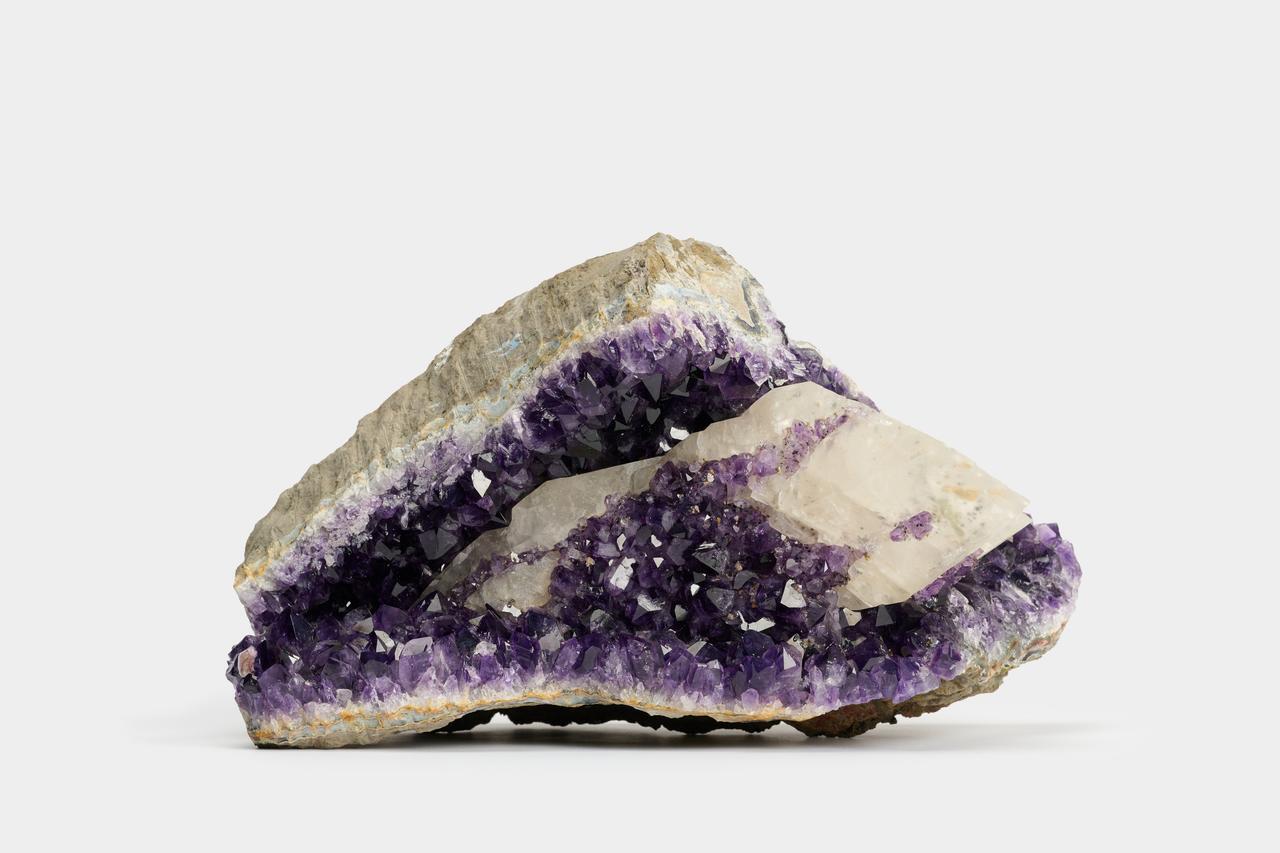
Opal Mineral Collection - Height: 4.2 cm - Width: 5.8 cm- 36 g - (1)


05
days
17
hours
43
minutes
08
seconds

No bids placed
Catawiki Buyer Protection
Your payment’s safe with us until you receive your object.View details
Trustpilot 4.4 | 127823 reviews
Rated Excellent on Trustpilot.
Opal mineral collection specimen from the Erongo Mountains, Namibia, weighing 36 g and measuring 4.2 × 5.8 × 2 cm.
AI-assisted summary
Description from the seller
Opal is an amorphous colloidal mineral, composed of hydrated silica: (SiO2·nH2O), semi-amorphous or microcrystalline, i.e., lacking a lattice structure; in fact it does not appear as crystals, but in veins, nodules and crusts of various colors, often with iridescence. The color ranges from transparent to milky white, with an infinity of different intermediates (green, red, yellow, brown, black). The water content can reach up to 20%. The formation of Opal occurs through the slow geological deposition of a colloidal silica gel at low temperature. It includes many varieties, among which common opal, precious opal, black opal, water opal, fire opal, opal-xyloid, and illite. The word “Opal” has a common root in Sanskrit ùpala, in Greek ὀπάλλιος opallios, and in Latin opălus (meaning “precious stone”).
Opal is an amorphous colloidal mineral, composed of hydrated silica: (SiO2·nH2O), semi-amorphous or microcrystalline, i.e., lacking a lattice structure; in fact it does not appear as crystals, but in veins, nodules and crusts of various colors, often with iridescence. The color ranges from transparent to milky white, with an infinity of different intermediates (green, red, yellow, brown, black). The water content can reach up to 20%. The formation of Opal occurs through the slow geological deposition of a colloidal silica gel at low temperature. It includes many varieties, among which common opal, precious opal, black opal, water opal, fire opal, opal-xyloid, and illite. The word “Opal” has a common root in Sanskrit ùpala, in Greek ὀπάλλιος opallios, and in Latin opălus (meaning “precious stone”).
Details
Number of items
1
Main Mineral
Opal
Mineral Form
Mineral Collection
Weight
36 g
Origin (Region/ City)
Erongo Mountains
Country of Origin
Namibia
Height
4.2 cm
Width
5.8 cm
Depth
2 cm
Sold by