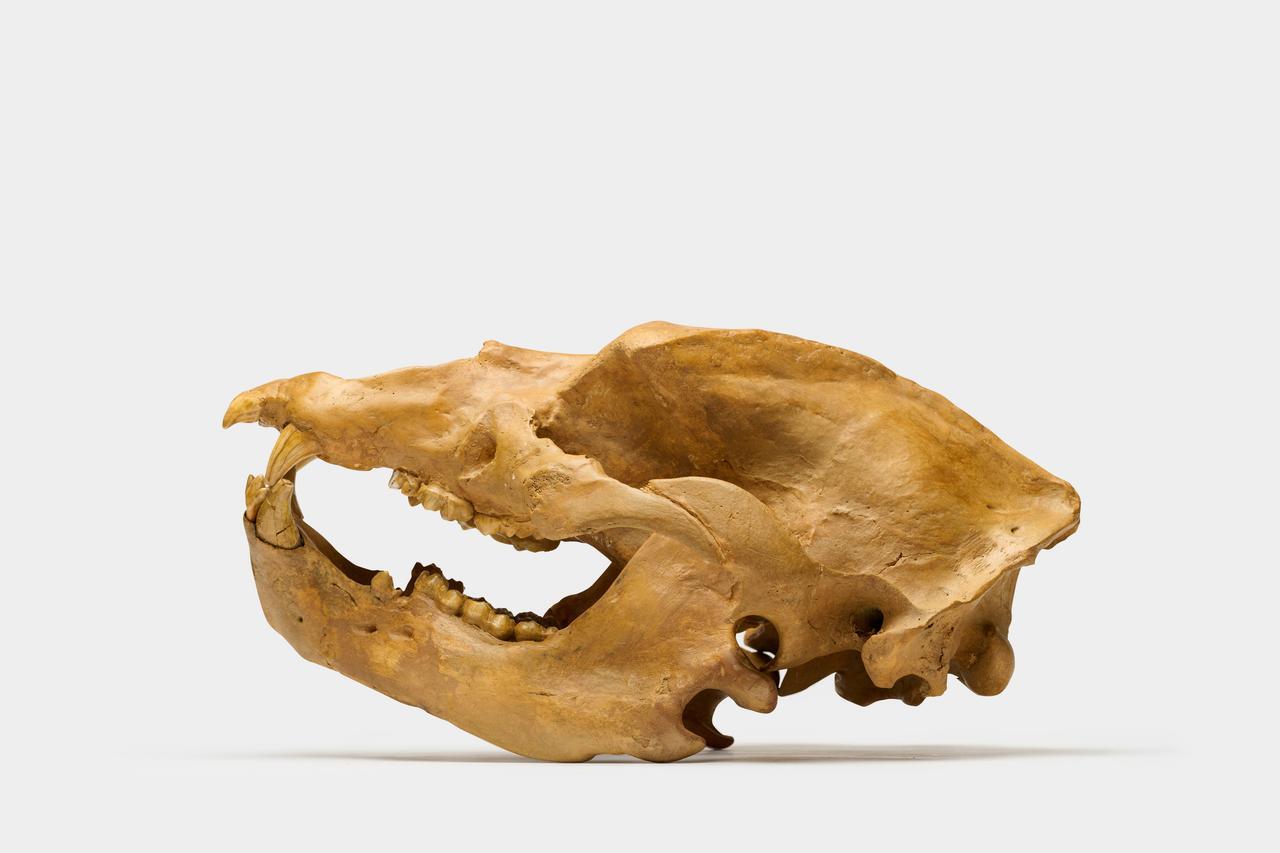
Steppe Bison - Fossil bone - Bison Priscus - 23 cm - 43 cm


05
days
00
hours
02
minutes
03
seconds

No bids placed
Catawiki Buyer Protection
Your payment’s safe with us until you receive your object.View details
Trustpilot 4.4 | 127726 reviews
Rated Excellent on Trustpilot.
Bison Priscus, a steppe bison specimen from the Quaternary, Pleistocene, in natural, untreated condition, weighing 0.684 kg with dimensions 43 × 23 × 12 cm from Siberia.
AI-assisted summary
Description from the seller
Fascinating and evocative fossil jaw of Bison Priscus, the famous Steppe Bison, one of the great mammals that inhabited Europe and Asia during the Pleistocene
The specimen is well preserved, with the dental arch almost completely intact and teeth firmly in place. The teeth clearly show the characteristic wear surfaces related to a herbivorous diet, characterized by a diet rich in abrasive grasses. The robust morphology of the jaw and the imposing ascending ramus attest to the power of the masticatory apparatus of this prehistoric bovine.
The bone displays a natural patina and ochre-brown coloration due to the fossilization and mineralization processes of the sediment. The surfaces are authentic and natural, preserving the original charm of the paleontological specimen.
The Steppe Bison is considered the direct ancestor of the European bison and the American bison. This type of specimen represents a direct testimony of the ice-age megafauna that coexisted with prehistoric humans, including Neanderthals and Homo sapiens.
A piece with a strong visual impact, ideal for paleontology collectors, private museums, or thematic exhibitions on Quaternary fauna
Species: Bison Priscus
Era: Pleistocene
Period in which it lived:
Conditions: natural, not treated nor restored
Provenance: Siberia: geographic provenance presumed based on the characteristics of the specimen and the collection of origin
Fascinating and evocative fossil jaw of Bison Priscus, the famous Steppe Bison, one of the great mammals that inhabited Europe and Asia during the Pleistocene
The specimen is well preserved, with the dental arch almost completely intact and teeth firmly in place. The teeth clearly show the characteristic wear surfaces related to a herbivorous diet, characterized by a diet rich in abrasive grasses. The robust morphology of the jaw and the imposing ascending ramus attest to the power of the masticatory apparatus of this prehistoric bovine.
The bone displays a natural patina and ochre-brown coloration due to the fossilization and mineralization processes of the sediment. The surfaces are authentic and natural, preserving the original charm of the paleontological specimen.
The Steppe Bison is considered the direct ancestor of the European bison and the American bison. This type of specimen represents a direct testimony of the ice-age megafauna that coexisted with prehistoric humans, including Neanderthals and Homo sapiens.
A piece with a strong visual impact, ideal for paleontology collectors, private museums, or thematic exhibitions on Quaternary fauna
Species: Bison Priscus
Era: Pleistocene
Period in which it lived:
Conditions: natural, not treated nor restored
Provenance: Siberia: geographic provenance presumed based on the characteristics of the specimen and the collection of origin
Details
Number of items
1
Specimen
Steppe Bison
Scientific name
Bison Priscus
Country of Origin
Siberia
Geological Period
Quaternary, Pleistocene (2.58 - 0.0117 million years)
Condition
Natural
Weight
0.68 kg
Height
23 cm
Width
43 cm
Depth
12 cm
Sold by