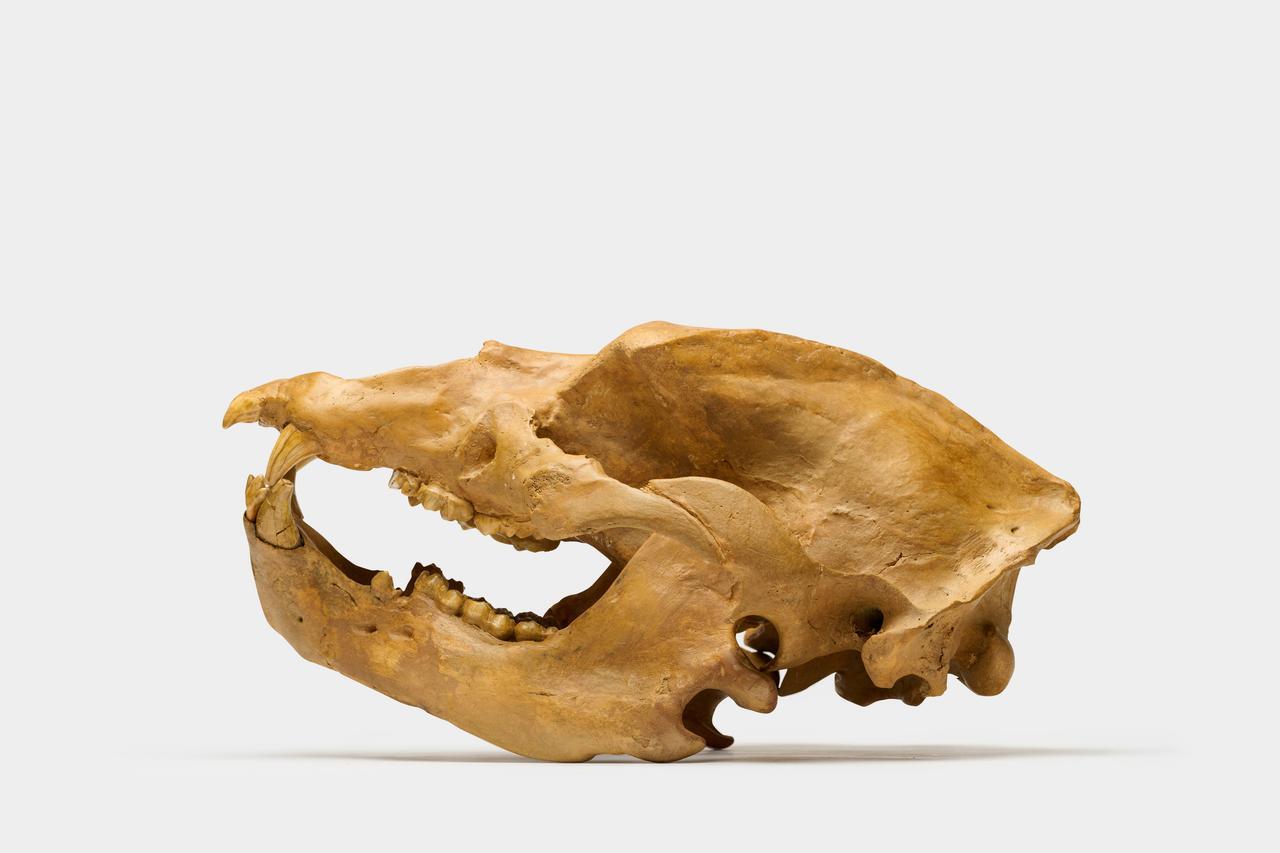
Whale - Fossil tooth - Basilosaurus - 7.4 cm - 4.6 cm


04
days
16
hours
30
minutes
04
seconds

No bids placed
Catawiki Buyer Protection
Your payment’s safe with us until you receive your object.View details
Trustpilot 4.4 | 127726 reviews
Rated Excellent on Trustpilot.
Basilosaurus whale specimen from Morocco dating to the Paleogene Eocene (56–33.9 million years ago), naturally preserved and conserved, measuring 7.4 cm high, 4.6 cm wide and 4.6 cm deep.
AI-assisted summary
Description from the seller
→7.4 cm long x 4.6 cm wide at widest point Basilosaurus pre-molar teeth
This is a very beautiful, high quality, medium-small form factor Basilosaurus pre-molar in nice brown-chocolate-yellow coloration with some interesting white and black lines & spots in it. These white lines are attributed to interaction of fossil with plant roots during the fossilization process eventually leaving these characteristic white lines. There are many Basilosaurus teeth in light brown color but this specimen has more dark tone to it making it unique in its own way. This is a medium-large size specimen as Basilosaurus teeth can be much larger than as well.
There are three and four prominent ridges on each side of the teeth and one main central ridge.
The pre-molars had the key role in chewing and shearing of the flesh from the prey in the Basilosaurus jaw as Basilosaurus was top predator during the late Eocene epoch, approximately 41 to 33.9 million years ago and lurked in the shallow coastal seas. Some part of outer layer of root is eroded giving a peek into side of the root which in technical terms is dentin of the teeth. Basilosaurus molar roots are also usually unequal and assymetrical which adds to the uniqueness. The specimen illustrates how a biological specimen which in this case is a teeth gets converted to rock and geological material during the fossilization process over million of years.
The teeth has been professionally conserved to make it long lasting. It looks like almost all of teeth is in natural state however on one side root there is some material which can be natural or it can small amount of restoration material. One of the end of one of the root is very delicate ,so we will take a lot of care so as it don't get damage during transport. Whatever the case, one can see in photos and agree to the excellent overall shape of the fossil.
The standing and side way laying down photos are very nice to look at. It resembles a person standing. The teeth is light and gives good feeling to hold it in hand.
Its possible that the fossil belong to another member of Basilosauridae family like Durodon or Zygorhiza.
Please refer to photos for reference.
→7.4 cm long x 4.6 cm wide at widest point Basilosaurus pre-molar teeth
This is a very beautiful, high quality, medium-small form factor Basilosaurus pre-molar in nice brown-chocolate-yellow coloration with some interesting white and black lines & spots in it. These white lines are attributed to interaction of fossil with plant roots during the fossilization process eventually leaving these characteristic white lines. There are many Basilosaurus teeth in light brown color but this specimen has more dark tone to it making it unique in its own way. This is a medium-large size specimen as Basilosaurus teeth can be much larger than as well.
There are three and four prominent ridges on each side of the teeth and one main central ridge.
The pre-molars had the key role in chewing and shearing of the flesh from the prey in the Basilosaurus jaw as Basilosaurus was top predator during the late Eocene epoch, approximately 41 to 33.9 million years ago and lurked in the shallow coastal seas. Some part of outer layer of root is eroded giving a peek into side of the root which in technical terms is dentin of the teeth. Basilosaurus molar roots are also usually unequal and assymetrical which adds to the uniqueness. The specimen illustrates how a biological specimen which in this case is a teeth gets converted to rock and geological material during the fossilization process over million of years.
The teeth has been professionally conserved to make it long lasting. It looks like almost all of teeth is in natural state however on one side root there is some material which can be natural or it can small amount of restoration material. One of the end of one of the root is very delicate ,so we will take a lot of care so as it don't get damage during transport. Whatever the case, one can see in photos and agree to the excellent overall shape of the fossil.
The standing and side way laying down photos are very nice to look at. It resembles a person standing. The teeth is light and gives good feeling to hold it in hand.
Its possible that the fossil belong to another member of Basilosauridae family like Durodon or Zygorhiza.
Please refer to photos for reference.
Details
Number of items
1
Specimen
Whale
Scientific name
Basilosaurus
Country of Origin
Morocco
Geological Period
Paleogene, Eocene (56 - 33.9 million years)
Condition
Natural
Treatment
Conserved
Height
7.4 cm
Width
4.6 cm
Depth
4.6 cm
Sold by