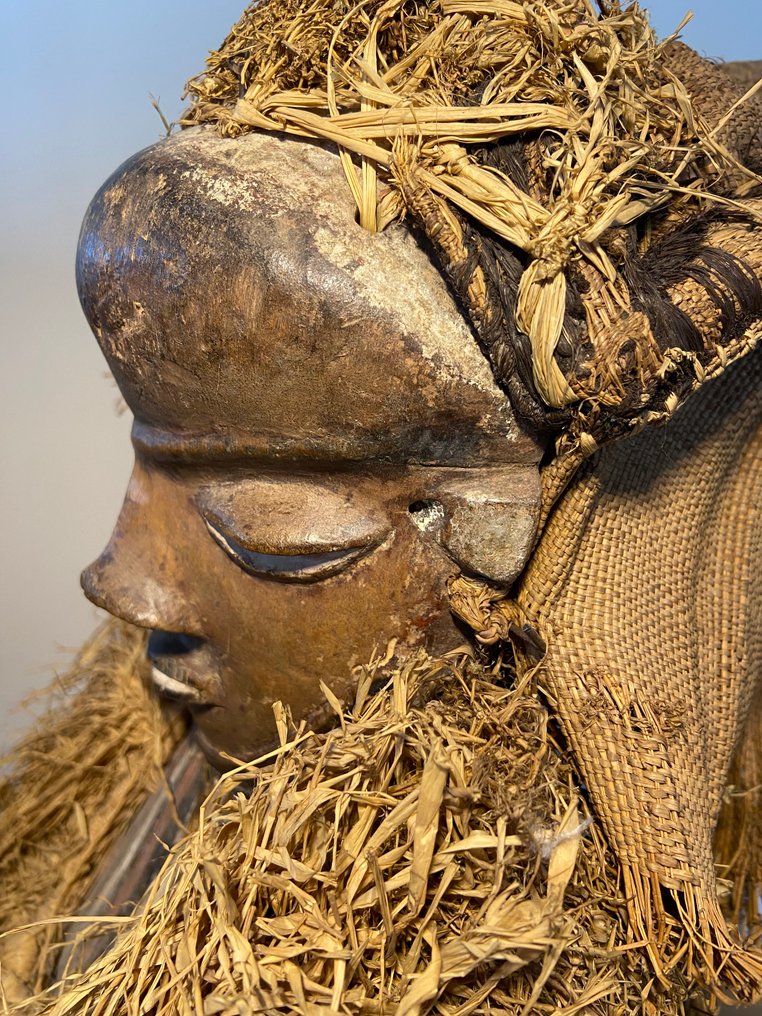
Pende mask - Pende - DR Congo
03
days
16
hours
13
minutes
50
seconds
Starting bid
€ 1
Reserve price not met

Expert
Selected by Dimitri André
Holds a postgraduate degree in African studies and 15 years experience in African art.
Estimate € 220 - € 250
No bids placed
Catawiki Buyer Protection
Your payment’s safe with us until you receive your object.View details
Trustpilot 4.4 | 128070 reviews
Rated Excellent on Trustpilot.
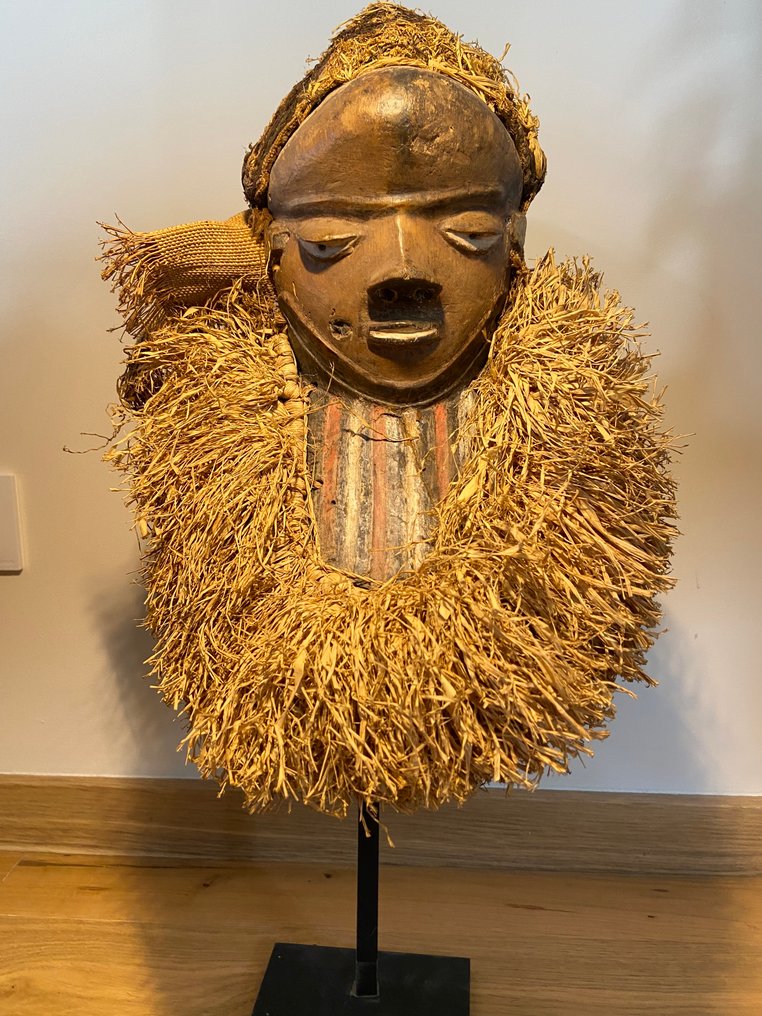
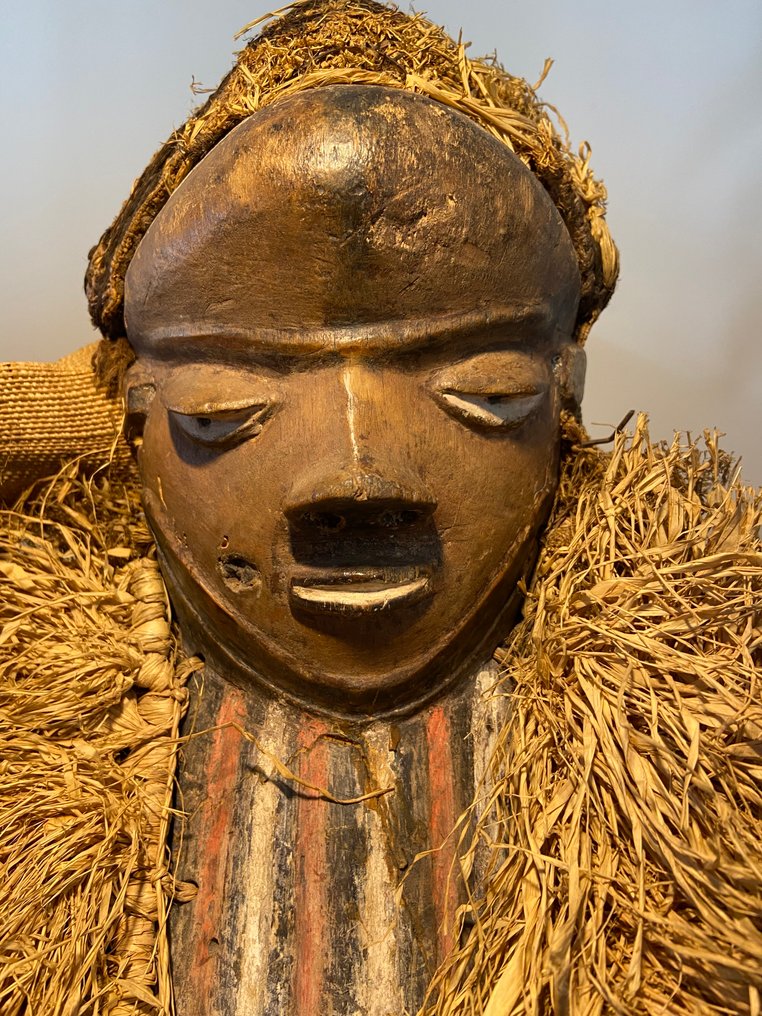
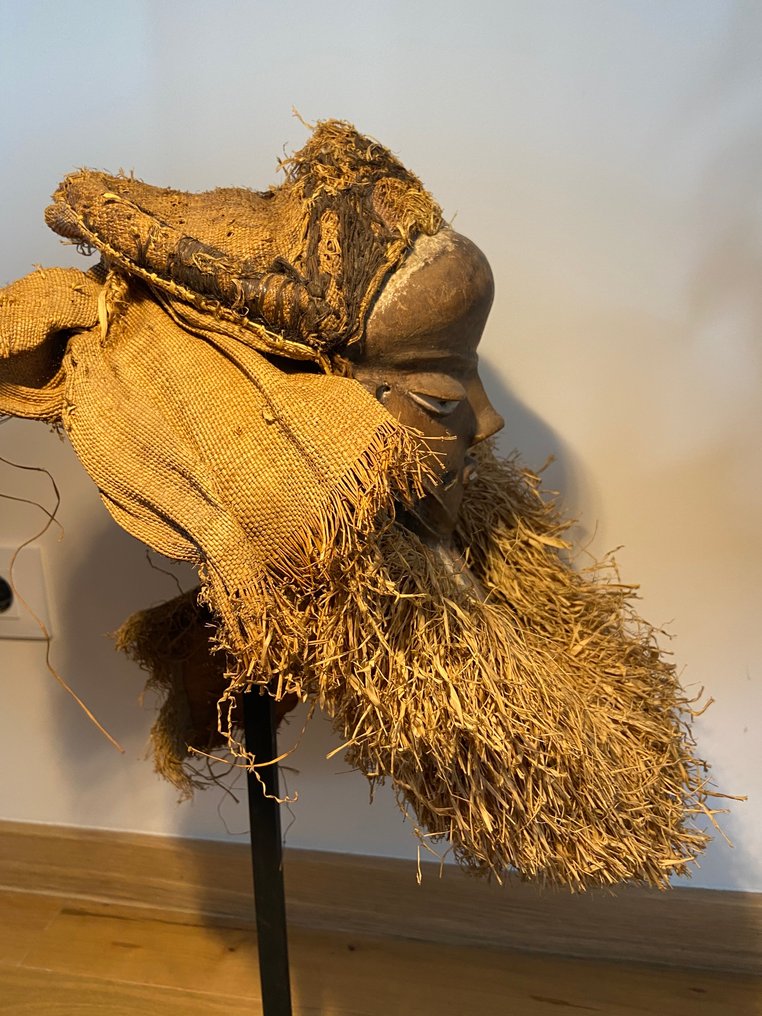
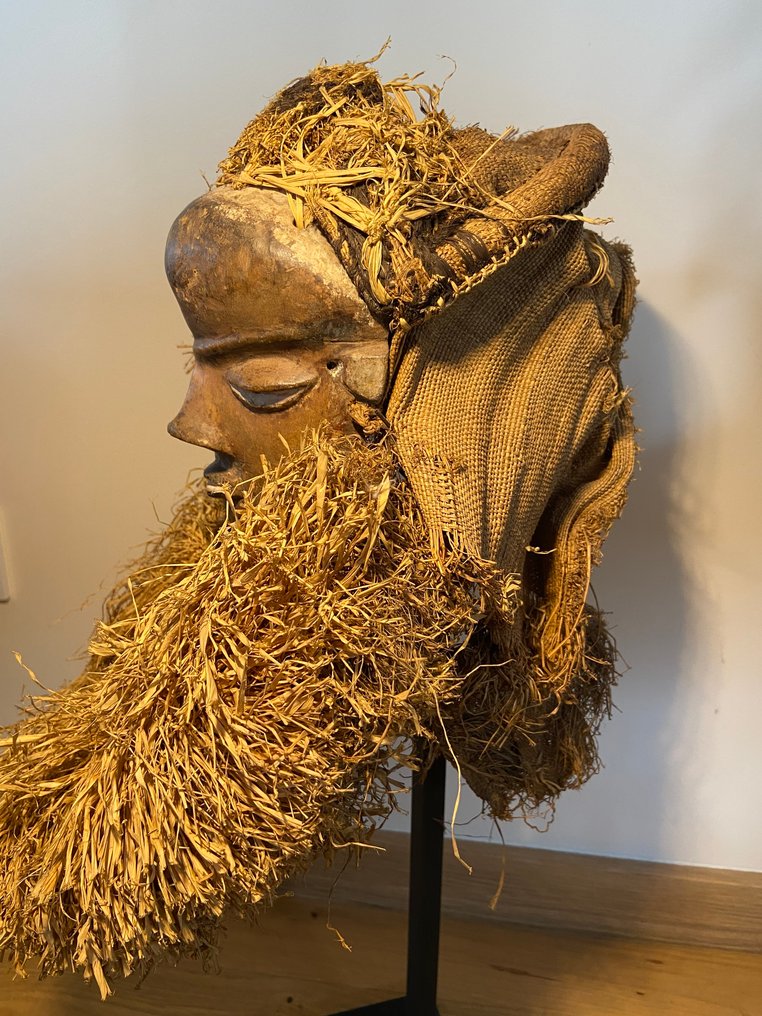
Pende mask, carved wood from the Democratic Republic of Congo, by the Pende people in the late 20th century, 42 cm high, in good condition, sold without a stand; provenance Berthe Hartert, Barcelona and Argiles Collection, Barcelona.
AI-assisted summary
Description from the seller
Much speculation has been devoted to the interpretation of the projection extending from the chin on these masks. Most Westerners have assumed that it represents a beard. This assumption always amazes the Pende, who rarely see beards longer than two inches. The technical name for the projection is “gilanga,” but Pende sculptors in the center jokingly call it “snout” (mutumbi). If possible, the Pende like to wait one or two nights before burying their dead. The women wash the body, lay it out, and cover it with a sheet. In the past, this sheet was made of raffia cloth, but later it was replaced by white cotton cloth. In the past, they sometimes pulled the sheet up to the chin and cut a strip of cloth to cover the mouth and keep it closed. In this case, the chin was exposed. The representation of a corpse explains the half-open eyes, with their unfocused gaze. The elegant abstraction of the body explains the shape of the projection, which in many cases curves upward at the end as the feet would. The mouth is half-open. For esthetic reasons, the artists have chosen to reinforce the jawline with the end of the covering sheet and depict the mouth without the line of fabric.
Provenance: Berthe Hartert, Barcelona
Argiles Collection, Barcelona
Much speculation has been devoted to the interpretation of the projection extending from the chin on these masks. Most Westerners have assumed that it represents a beard. This assumption always amazes the Pende, who rarely see beards longer than two inches. The technical name for the projection is “gilanga,” but Pende sculptors in the center jokingly call it “snout” (mutumbi). If possible, the Pende like to wait one or two nights before burying their dead. The women wash the body, lay it out, and cover it with a sheet. In the past, this sheet was made of raffia cloth, but later it was replaced by white cotton cloth. In the past, they sometimes pulled the sheet up to the chin and cut a strip of cloth to cover the mouth and keep it closed. In this case, the chin was exposed. The representation of a corpse explains the half-open eyes, with their unfocused gaze. The elegant abstraction of the body explains the shape of the projection, which in many cases curves upward at the end as the feet would. The mouth is half-open. For esthetic reasons, the artists have chosen to reinforce the jawline with the end of the covering sheet and depict the mouth without the line of fabric.
Provenance: Berthe Hartert, Barcelona
Argiles Collection, Barcelona
Details
No. of items
1
Ethnic group/ culture
Pende
Country of Origin
DR Congo
Period
Late 20th century
Material
Wood
Sold with stand
No
Condition
Good condition
Title of artwork
Pende mask
Height
42 cm
