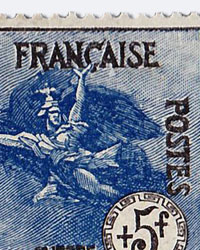
GDR - Phase Prints, GDR - Michel


04
days
15
hours
01
minute
27
seconds

No bids placed
Catawiki Buyer Protection
Your payment’s safe with us until you receive your object.View details
Trustpilot 4.4 | 128965 reviews
Rated Excellent on Trustpilot.
Geographic origin: Deutsche Demokratische Republik (DDR); Title: Phasendrucke DDR; Condition: Postfris; Catalogue name and number: Michel.
AI-assisted summary
Description from the seller
Small collection of phase prints, mint (never hinged)
Michel value exceeds €1,265.00
What phase prints are:
Anyone who loves painting, whether as an artist or a DIY enthusiast, knows the inescapable truth: after the actual work comes the big clean-up — and sometimes that is as nerve-wracking as the work itself. It may be a small consolation that others are in the same boat. Every industry that works with paint faces the same problem. In the graphic industry, ink rollers and printing plates must be continuously cleaned to expose the ink cells and thus guarantee a consistent ink uptake and print quality. However, this cleaning is not done with cloths and soap, but with dry ice, ultrasonic sound, or lasers.
When stamping stamps, these cleaning processes not only produce razor-sharp, high-quality stamps, but they also create philatelic features that beautifully document the stamp production process. After cleaning, the cleanliness of the printing plates is tested before the actual printing process begins. This results in proofs, printing plates, or test prints.
In multi-color printing, the stamp image is built up step by step using different printing plates. This means that several quality checks are required for a single stamp — after all, each color must originate from a perfectly clean printing plate. At the same time, the registration accuracy of the different printing plates must also be checked. Therefore, every phase of the printing process is tested separately. The result are so-called phase prints.
The process can be visualized with the DDR stamp issue, for example (not included in this lot) "20 Years of the Association for Sport and Technology" from 1972. The design of the stamp MiNr. 1777 consists of four colors: gray, turquoise, olive yellow, and ultraviolet.
In the first stage of the printing test, only gray ink is applied to unperforated paper. It is still impossible to guess what the motif depicts. In the second printing stage, gray and turquoise ink are used, producing an image that could resemble a rotor. In the third stage olive yellow is added. Now we can clearly see that it concerns shipping and that the registration is correct.
Small collection of phase prints, mint (never hinged)
Michel value exceeds €1,265.00
What phase prints are:
Anyone who loves painting, whether as an artist or a DIY enthusiast, knows the inescapable truth: after the actual work comes the big clean-up — and sometimes that is as nerve-wracking as the work itself. It may be a small consolation that others are in the same boat. Every industry that works with paint faces the same problem. In the graphic industry, ink rollers and printing plates must be continuously cleaned to expose the ink cells and thus guarantee a consistent ink uptake and print quality. However, this cleaning is not done with cloths and soap, but with dry ice, ultrasonic sound, or lasers.
When stamping stamps, these cleaning processes not only produce razor-sharp, high-quality stamps, but they also create philatelic features that beautifully document the stamp production process. After cleaning, the cleanliness of the printing plates is tested before the actual printing process begins. This results in proofs, printing plates, or test prints.
In multi-color printing, the stamp image is built up step by step using different printing plates. This means that several quality checks are required for a single stamp — after all, each color must originate from a perfectly clean printing plate. At the same time, the registration accuracy of the different printing plates must also be checked. Therefore, every phase of the printing process is tested separately. The result are so-called phase prints.
The process can be visualized with the DDR stamp issue, for example (not included in this lot) "20 Years of the Association for Sport and Technology" from 1972. The design of the stamp MiNr. 1777 consists of four colors: gray, turquoise, olive yellow, and ultraviolet.
In the first stage of the printing test, only gray ink is applied to unperforated paper. It is still impossible to guess what the motif depicts. In the second printing stage, gray and turquoise ink are used, producing an image that could resemble a rotor. In the third stage olive yellow is added. Now we can clearly see that it concerns shipping and that the registration is correct.
Details
Geographic Origin
GDR
Condition
MNH (Mint never hinged)
Catalogue name + catalogue number(s) of the stamp(s)
Michel
Title
Phase Prints, GDR
Has certificate
No
Has expert signature
No
Sold by